
Heavy Lift Project Cargo Logistics is becoming a strategic capability, not merely a transport service. Oversized transformers, wind-turbine components, refinery modules, and bridge sections demand accurate engineering. One missed millimetre can affect an entire route.
UNCTAD’s Review of Maritime Transport 2024 confirms that more than 80% of global merchandise trade moves by sea. Meanwhile, the International Energy Agency’s Renewables 2024 report forecasts almost 5,500 gigawatts of new renewable capacity by 2030. These figures suggest stronger demand for specialized lifting, port handling, inland haulage, and multimodal coordination. The connection is clear, but not automatic. Project volumes do not guarantee efficient execution.
Jan Kleijn, former CEO of Mammoet, has repeatedly emphasized the importance of safety and preparation, stating, “Safety is not a department; it is everyone’s responsibility.” That principle remains practical beside a 600-ton transformer or a 100-meter turbine blade. Reliable providers combine route surveys, engineered lifting plans, certified equipment, weather monitoring, and experienced crews. The World Bank’s Logistics Performance Index 2023 also shows why predictability matters, especially in international supply chains.
Still, even strong planning has limits. Port congestion, bridge restrictions, inaccurate cargo data, and sudden weather changes can disrupt schedules. A credible Heavy Lift Project Cargo Logistics partner therefore needs more than cranes. It needs evidence, communication, contingency planning, and the humility to challenge its own assumptions.
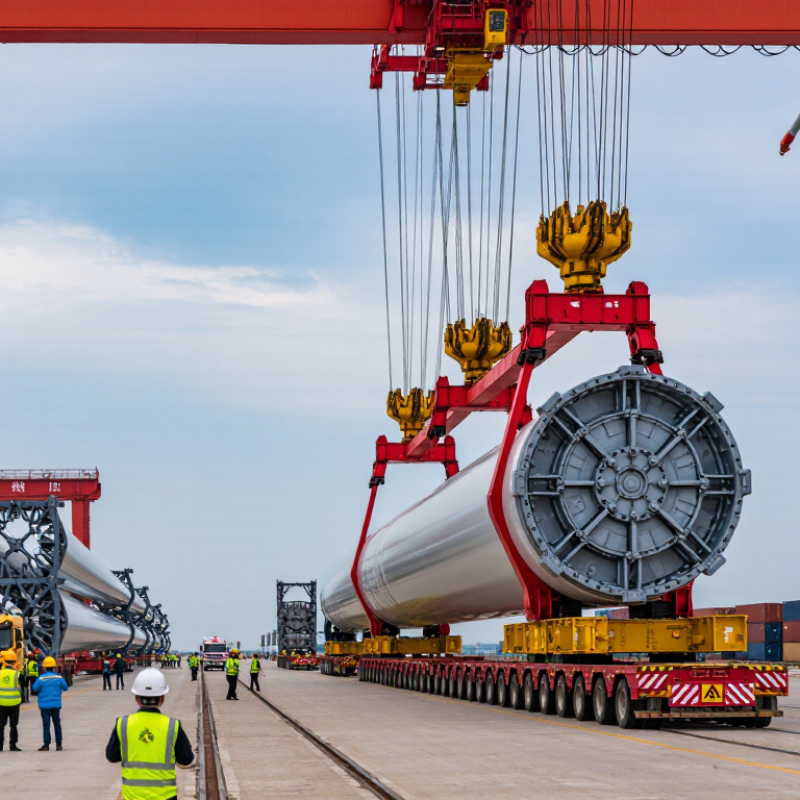
Heavy Lift Project Cargo Logistics: Definition and Scope
Heavy lift project cargo refers to oversized, overweight, or indivisible equipment requiring specialized planning and handling. Examples include power transformers, industrial vessels, turbines, and modular steel structures. Standard freight methods rarely provide enough lifting capacity, stability, or route clearance.
The logistics scope begins with cargo measurement, weight verification, lifting-point inspection, and packaging design. Engineers may prepare lifting studies, temporary works, and center-of-gravity calculations. Route surveys then check bridge limits, turning radii, overhead cables, road grades, port access, and site conditions. A 180-ton transformer can require months of coordination before its first movement.
Execution may involve hydraulic trailers, self-propelled modular transporters, barges, heavy-lift vessels, and cranes with certified operators. Reliable teams record each handover, inspect securing systems, and monitor weather during loading and transport. Permits, insurance, customs documents, and local safety rules must remain aligned. Small errors matter.
Plans can still miss reality. Rain may soften a construction entrance, or a surveyed clearance may change after roadside work. Experienced coordinators keep contingency routes and lifting windows available. Clear communication between engineers, carriers, port staff, and the receiving site protects both cargo and people. That discipline is the real scope of heavy lift logistics.
| Evaluation Dimension | Definition or Service Scope | Typical Planning Data | Best-Practice Requirement for 2026 |
|---|---|---|---|
| Service Definition | Specialized logistics for indivisible, oversized, overweight, high-value, or technically complex cargo that cannot be handled through standard freight processes. | Cargo dimensions, gross weight, center of gravity, lifting points, delivery sequence, origin, destination, and required delivery date. | A documented project plan covering engineering, transport, lifting, compliance, safety, contingency, and final positioning. |
| Cargo Categories | Power-generation equipment, transformers, turbines, industrial modules, pressure vessels, reactors, construction machinery, offshore components, and renewable-energy equipment. | Cargo may be project-specific, non-containerized, non-stackable, weather-sensitive, or subject to strict handling tolerances. | Classify each item by weight, dimensions, fragility, lifting method, transport mode, and installation priority before requesting quotations. |
| Heavy-Lift Threshold | There is no single worldwide legal definition of “heavy lift”; the threshold depends on the equipment, route, port, carrier, and local regulations. | As a planning reference, loads above approximately 50 metric tons often require specialized handling; larger or irregular cargo may require engineered lifting even below that level. | Use a cargo-specific lift plan instead of relying on weight alone. Confirm crane capacity, radius, ground bearing pressure, lifting points, and stability. |
| Transport Modes | Road, rail, inland waterway, ocean transport, roll-on/roll-off operations, heavy-lift vessels, barges, and specialized air freight for urgent smaller components. | Mode selection depends on payload, dimensions, route restrictions, port access, schedule, weather exposure, and total landed cost. | Compare at least two feasible multimodal routes and include transshipment, storage, escort, fuel, port, lifting, and demurrage costs. |
| Engineering and Route Survey | Technical assessment of bridges, roads, turning radii, gradients, overhead clearances, port infrastructure, quays, laydown areas, and final-site access. | Survey outputs commonly include route drawings, clearance checks, axle-load calculations, turning simulations, ground assessments, and lifting studies. | Complete the route survey before committing to equipment or a fixed delivery date, particularly for abnormal road movements. |
| Lifting and Handling Equipment | Self-propelled modular transporters, hydraulic modular trailers, girder bridges, strand jacks, crawler cranes, mobile cranes, gantry systems, spreader beams, and lifting frames. | Equipment selection is governed by load distribution, lift radius, site access, ground conditions, tandem-lift requirements, and available working space. | Require current inspection records, certified lifting accessories, qualified operators, engineered lift calculations, and a controlled exclusion zone. |
| Permits and Compliance | Coordination of abnormal-load permits, road closures, police or escort services, customs documentation, port rules, dangerous-goods requirements, and local operating approvals. | Approval timing varies by jurisdiction, route complexity, cargo classification, axle configuration, and movement dimensions. | Maintain a permit matrix with responsible parties, submission dates, expiry dates, operating windows, and contingency procedures. |
| Safety Management | Risk assessment and control of lifting, transport, traffic, weather, working-at-height, marine, environmental, and interface hazards. | Core documents include method statements, job safety analysis, emergency response plans, toolbox briefings, lift plans, and incident-reporting procedures. | Use stop-work authority, clear communication protocols, designated supervisors, weather limits, and documented pre-movement inspections. |
| Schedule and Lead Time | Integrated planning from design release and factory readiness through pickup, transport, delivery, site lifting, installation, and handover. | Simple domestic moves may take several weeks to plan; complex international movements can require several months because of surveys, permits, vessel space, fabrication, and site readiness. | Use a milestone schedule with float for weather, port congestion, permit delays, equipment breakdowns, and customs inspections. |
| Packaging and Cargo Protection | Preparation, securing, preservation, moisture protection, vibration control, impact protection, and condition monitoring for exposed or sensitive cargo. | Protection requirements depend on corrosion sensitivity, shock limits, center of gravity, lifting points, transit duration, and environmental exposure. | Record pre-shipment condition with photographs, inspection reports, shock or tilt indicators where appropriate, and seal-control procedures. |
| Cost Structure | Total project cost may include engineering, surveys, permits, escorts, loading, transport, ocean or inland freight, storage, cranes, insurance, customs, and site installation. | A low line-haul rate may not represent the lowest project cost if it excludes access works, port handling, waiting time, route modifications, or lifting services. | Request a line-item quotation with assumptions, exclusions, validity period, fuel basis, detention terms, change-order rules, and liability limits. |
| Insurance and Liability | Coverage for cargo loss or damage, marine and inland transit, loading and unloading, storage, delay exposure, and third-party risks. | Coverage should reflect the declared cargo value, contractual liability, transport conventions, deductibles, exclusions, and project-specific hazards. | Verify policy wording and liability limits before movement; do not assume a standard freight liability clause covers the full cargo value. |
| 2026 Selection Criteria | The strongest service proposal combines technical capability, transparent pricing, compliance control, safety performance, schedule reliability, and measurable project governance. | Compare engineering quality, route feasibility, equipment availability, contingency depth, reporting frequency, claims process, and documented experience with comparable cargo. | Select the solution with the best risk-adjusted total value rather than choosing solely by quoted transport price or headline capacity. |
Note: Weight bands, lead times, permit requirements, equipment availability, and costs are indicative planning references only. Final requirements must be confirmed through a cargo-specific engineering review, route survey, carrier assessment, and applicable local regulations.
Route conditions determine which equipment can move safely. Inspect bridges, turning radii, gradients, cables, culverts, and temporary roads. A digital model helps. Field checks remain essential.
Record the cargo weight, center of gravity, lifting points, and rigging angles. Mark exclusion zones and emergency controls. Independent engineering review can expose weak assumptions.
Match equipment to cargo dimensions, axle limits, and route conditions. Modular transporters suit precise site movement. Hydraulic trailers may carry heavy transformers, but calculations still matter.
Confirm berth availability, crane reach, vessel timing, and water depth. Inland permits must match the shipping schedule. Weather can close exposed terminals quickly.
Requirements vary between jurisdictions. Plan route permits, bridge approvals, port clearances, traffic controls, and escort arrangements. One permit may not cover every movement.
Confirm cargo classification, declared value, origin records, serial numbers, and temporary-entry conditions. Incorrect paperwork can delay equipment and crews. Paperwork is not a minor detail.
Request route surveys, lift calculations, comparable project records, insurance documents, and training evidence. Visit the worksite and inspect slings, radios, barriers, and supervision. Claims alone are insufficient.
Consider cargo damage, severe weather, cyber incidents, missed connections, and changing road conditions. Photograph every handover and preserve seal records. Historic routes can become unreliable. Our assumptions may still fail.
Heavy Lift Project Cargo Logistics in 2026 requires careful coordination for oversized, overweight, and complex cargo such as industrial machinery, energy equipment, and infrastructure components. Successful planning begins with accurate assessment of cargo weight, dimensions, center of gravity, fragility, and handling requirements. Logistics teams must then design practical routes, evaluate bridges, roads, ports, and clearance restrictions, and select suitable cranes, trailers, lifting frames, vessels, and other specialized equipment. Detailed lift studies and sequencing plans help ensure efficient movement from origin to destination.
Reliable execution also depends on safety procedures, qualified personnel, accurate documentation, permits, customs compliance, insurance, contingency planning, and continuous risk monitoring. When selecting a service provider, project owners should assess technical expertise, equipment capacity, safety records, communication systems, geographic coverage, scheduling reliability, and the ability to manage multiple transport stages. The best partner should offer a transparent, customized plan that balances cost, timing, compliance, and operational safety throughout the entire project.