FMC-Licensed NVOCC · CTPAT Certified Authority

The Definitive Guide to NVOCC Freight Forwarding: Mitigating Risks, Optimizing Landed Costs & Navigating Global Trade

Empowering global buyers, enterprise importers, and supply chain leaders with FMC-bonded ocean freight solutions, direct carrier allocations, and end-to-end multi-modal logistics backed by over 40 years of operational expertise.

Over 40 Years of Proven NVOCC & Multimodal Freight Forwarding Expertise

40+Years Combined Experience
4Owned Strategic Hubs
FMCLicensed & Bonded NVOCC
CTPATCertified Security Partner
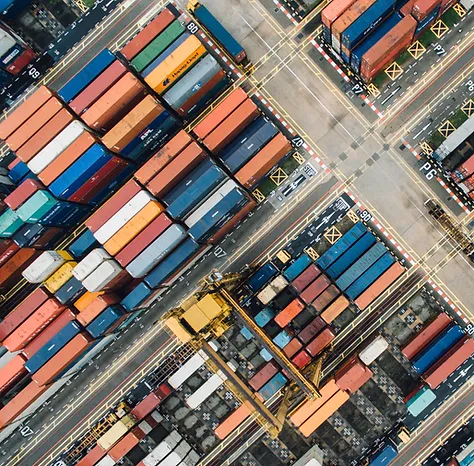
Aerial view of container yard managed under NVOCC ocean freight forwarding infrastructure

User Intent Mining & Strategic Logistics Insight

Demystifying NVOCC Freight Forwarding: What Every Global Buyer Must Know

In an increasingly volatile global trade ecosystem, international procurement directors, logistics managers, and supply chain strategists frequently face a critical question: How does an FMC-licensed Non-Vessel Operating Common Carrier (NVOCC) differ from a standard freight forwarder, and why is this distinction paramount for risk mitigation?

At its core, NVOCC Freight Forwarding represents the highest level of regulatory accountability in ocean transport. Unlike a conventional freight broker who merely arranges transport, an FMC-licensed NVOCC acts as a legally recognized ocean carrier under 46 CFR Part 515 of the U.S. Code of Federal Regulations. An NVOCC issues its own proprietary House Bills of Lading (HBL), publishes official ocean tariffs, assumes full common carrier liability for cargo movement, and negotiates service contracts directly with Vessel Operating Common Carriers (VOCCs).

For global buyers, partnering with an established NVOCC like Intertrans Express Inc. provides direct information gain: transparent freight rate structures, immune protection against unauthorized shipping roll-overs, direct in-house Automated Manifest System (AMS) and Importer Security Filing (ISF 10+2) transmissions, and seamless terminal execution across major global trade corridors.

Regulatory Compliance & Legal Framework

NVOCC vs. Traditional Freight Forwarder vs. Ocean Carrier: A Comparative Analysis

Understanding the operational hierarchy of international maritime shipping is essential for supply chain risk management. When purchasing goods under various Incoterms 2020 (such as FOB, EXW, DDP, or CIF), global buyers must evaluate the liability, contract power, and compliance scope of their logistics partner.

FMC-Licensed NVOCC

Entity Type: Non-Vessel Carrier (Legal Principal)

Bill of Lading: Issues proprietary House B/L as legal carrier of record.

Tariff Authority: Mandatory public tariff filing with FMC; direct contract leverage with VOCC alliances.

Cargo Liability: Direct carrier liability under Carriage of Goods by Sea Act (COGSA) & IMDG regulations.

Traditional Freight Forwarder

Entity Type: Logistics Agent / Intermediary

Bill of Lading: Acts purely as an agent; forwards master ocean carrier B/L.

Tariff Authority: Operates under agent markups; dependent on third-party carrier filing.

Cargo Liability: Limited agency liability unless specified under specialized freight contracts.

Vessel Operator (VOCC)

Entity Type: Physical Ship Owner / Operator

Bill of Lading: Issues Master Bill of Lading (MBL) for container slot allocations.

Tariff Authority: Strict fixed schedule tariffs; limited flexibility for customized small/medium enterprise needs.

Cargo Liability: Maritime vessel operator liability subject to international port conventions.

Tailored Logistics Solutions

Comprehensive NVOCC Freight Forwarding Product Recommendations

To meet the dynamic demands of modern cross-border commerce, Intertrans Express Inc. provides an end-to-end suite of engineered logistics services designed to minimize transit times, prevent port demurrage, and maintain total visibility.

Our flagship NVOCC product offers high-volume importers and exporters dedicated container allocation across premier ocean carrier alliances (20’GP, 40’GP, 40’HC, 45’HC, Reefer, Flat Rack, and Open Top equipment). By leveraging long-term service contracts with Tier-1 ocean liners, we deliver reliable space allocations even during peak shipping seasons.

  • Direct Carrier Service Contracts: Access to multiple vessel sailings weekly on core Transpacific, Intra-Asia, and North American routes.
  • Chassis & Terminal Management: Proactive container tracking, early gate-in coordination, and container drayage optimization.
  • FMC Bonded Coverage: Issuance of negotiable and non-negotiable NVOCC Bills of Lading protecting buyers' financial interests.
Designed for mid-tier procurement volumes, our LCL consolidation programs pool freight from multiple suppliers into shared, tightly packed containers. Operating our own Container Freight Station (CFS) workflows across Los Angeles, New York, Toronto, and Bangkok, we ensure zero co-loader delays and optimal cubic utilization.

  • Pay-Per-CBM Pricing: Transparent volumetric freight calculations without hidden destination fees.
  • Buyer's Consolidation Hubs: Combining partial orders from multiple origin vendors into a single FCL container to minimize destination clearance costs.
  • Rapid CFS Stripping: Accelerated container offloading and cargo availability within 24–48 hours of port discharge.

When factory production schedules compress or market demand surges, air freight becomes a necessity. Intertrans Express provides tailored air cargo services, including priority uplift, consolidated air freight, deferred air options, and hybrid Sea-Air multimodal routing that delivers up to 40% cost savings compared to pure air transport.

  • IATA Certified Handling: Full documentation control, direct airway bill (AWB) issuance, and TSA security compliance.
  • Temperature-Controlled & High-Value Air Freight: Secure chain-of-custody protocols for pharmaceuticals, high-tech electronics, and luxury consumer goods.
  • Airport-to-Door Delivery: Integrated airport drayage and hot-shot trucking directly to distribution center docks.

Handling specialized freight requires strict regulatory mastery. Our certified hazardous material technicians manage Class 2 through Class 9 IMDG and IATA dangerous goods, ensuring proper packaging verification, dangerous goods declarations, and UN-certified container segregation. Additionally, our heavy-lift project cargo team coordinates breakbulk, flat-rack lashing, crane operations, and over-dimensional highway permits.

  • IMDG & Hazardous Material Compliance: In-house review of Safety Data Sheets (SDS), UN numbers, and packing group classifications.
  • Over-Dimensional Project Cargo: Engineered lashing plans, marine surveyor approvals, and specialized low-boy heavy haul transport.
  • Port-Side Operational Supervision: On-site supervisors overseeing vessel loading, discharge, and terminal staging for heavy machinery.

Smooth sea transit means nothing if cargo is impounded at the port of entry. As a CTPAT-certified partner, Intertrans Express connects directly with U.S. Customs and Border Protection (CBP) via the Automated Commercial Environment (ACE) portal to execute error-free customs clearance, duty management, partner government agency (PGA) filings, and mandatory AMS/ISF 10+2 submissions.

  • In-House AMS & ISF Submissions: Direct electronic filings completed well prior to origin vessel loading to eliminate $5,000 late-filing fines.
  • CTPAT Supply Chain Protection: Expedited customs processing, reduced non-intrusive container examination rates, and priority inspection positioning.
  • HTS Classification & Duty Optimization: Professional tariff analysis to ensure legal compliance and avoid duty overpayment.

Unmatched E-E-A-T Credentials

Why Global Buyers Choose Intertrans Express Inc. for NVOCC Freight Forwarding

For over four decades, Intertrans Express Inc. has built an ironclad reputation founded on operational Experience, technical Expertise, regulatory Authoritativeness, and unwavering Trustworthiness.

Formed in 1999 by logistics veterans whose maritime careers spanned decades prior, Intertrans Express Inc. combines deep historical industry knowledge with modern supply chain technology. Our senior operational directors oversee every file, ensuring that potential logistics hurdles are mitigated long before cargo hits the port.

We maintain full Federal Maritime Commission (FMC) license authority, backed by official ocean freight tariffs and financial bonding. Our validated CTPAT partnership status offers global buyers reduced physical customs examinations, direct communication with CBP officers, and priority processing during macro port disruptions.

Unlike forwarders who rely entirely on unvetted third-party agents, Intertrans Express operates brick-and-mortar office hubs in critical trade gateways: Los Angeles (Alhambra HQ), New York (Valley Stream), Toronto (Etobicoke), and Bangkok (Thailand). This owned network ensures end-to-end operational accountability across the entire Transpacific and Intra-Asia shipping lanes.

We handle all documentation, ocean carrier booking, customs filings, and final-mile drayage in-house under a single file number. Shippers interact directly with dedicated account managers—never call centers—ensuring rapid response times, clear tracking, and flawless compliance.

Our massive aggregated freight volume allows us to negotiate tier-1 ocean carrier service contracts. We pass these competitive contract rates, extended container free-time allowances, and equipment availability guarantees directly on to our global buying clientele.

Our Owned Global Gateway Network

Local Expertise on Both Ends of Your Supply Chain

Our owned offices across the United States, Canada, and Southeast Asia streamline origin loading, customs compliance, and destination delivery.

Los Angeles (Global HQ)

Intertrans Express Inc.
2209 W Valley Blvd.
Alhambra, CA 91803, USA(626) 299-1822

New York Gateway

Intertrans Express Inc.
20 W Lincoln Ave. Suite 102
Valley Stream, NY 11580, USA(516) 812-8500

Toronto Hub (Canada)

Intertrans Express (Canada), Inc.
65 International Blvd. Suite 204
Etobicoke, ON M9W 6L9, Canada(416) 674-9888

Bangkok Branch (Asia)

Intertrans Express, Inc.
582 Soi On Nut 17, Suan Luang
Bangkok 10250, Thailand02-1143360

Global Buyer FAQs & Knowledge Base

Frequently Asked Questions on NVOCC Freight Forwarding

In-depth answers to common questions asked by international buyers, procurement officers, and supply chain managers.

An FMC-licensed NVOCC (Non-Vessel Operating Common Carrier) is legally authorized by the U.S. Federal Maritime Commission to issue its own House Bills of Lading, publish tariff rates, and assume carrier liability under maritime law. This legal standing ensures transparent pricing, compliance with 46 CFR Part 515, direct accountability, and contract flexibility with tier-1 ocean carriers.

A VOCC (Vessel Operating Common Carrier) Master Bill of Lading (MBL) is issued by the ocean vessel operator to the NVOCC. The NVOCC House Bill of Lading (HBL) is issued directly to the shipper/consignee, acting as a legally binding document of title, receipt of goods, and contract of carriage. The HBL grants buyers carrier-level accountability while protecting commercial invoice confidentiality and securing flexible destination release protocols.

CTPAT (Customs Trade Partnership Against Terrorism) certification indicates that an NVOCC meets strict supply chain security criteria validated by U.S. Customs and Border Protection (CBP). CTPAT partners experience significantly reduced risk-scoring in ACE (Automated Commercial Environment), resulting in fewer non-intrusive container examinations, priority processing during port disruptions, and faster release times at destination ports.

Importer Security Filing (ISF 10+2) must be successfully transmitted to U.S. CBP no later than 24 hours prior to cargo loading at the foreign port of origin. Automated Manifest System (AMS) data must be submitted 24 hours prior to vessel departure. Non-compliance or late filings result in mandatory $5,000 liquid damages penalties per violation, automated holds, and customs rejections at the port of entry.

NVOCC Less-than-Container Load (LCL) consolidation aggregates smaller cargo volumes from multiple shippers into shared 40HQ or 45HQ containers. By managing designated Container Freight Stations (CFS) in key trading hubs like Los Angeles, New York, Toronto, and Bangkok, NVOCCs enable buyers to pay only for the exact cubic space (CBM) and weight (MT) used, eliminating the need to wait for full container volumes while maintaining regular inventory velocity.

Through active milestone monitoring, early pre-clearance filing (7 days prior to vessel arrival), optimized free-time negotiations with ocean carriers, and synchronized port drayage dispatching, Intertrans Express prevents container idle time at marine terminals and rail ramps, eliminating costly demurrage and storage penalties for importers.

Dangerous Goods shipments require a certified IMO Dangerous Goods Declaration (DGD), Material Safety Data Sheets (MSDS / SDS), proper UN-certified hazard packaging, UN labeling, and container segregation compliance under the International Maritime Dangerous Goods (IMDG) Code for ocean transit or IATA regulations for air transport.

Ready to Optimize Your Ocean Freight Logistics?

Partner with an FMC-licensed NVOCC and CTPAT-certified freight forwarder. Contact our logistics specialists today to analyze your trade lanes, optimize landed costs, and secure reliable ocean capacity.

Contact Us

Intertrans Express Inc. global NVOCC ocean freight container shipping operational hub