FMC-Licensed NVOCC Authority
Holding official licensing from the Federal Maritime Commission (NVOCC #01999), we negotiate direct ocean carrier service contracts, issue house bills of lading, and guarantee tariff transparency.
Empowering enterprise procurement teams with direct ocean carrier service contracts, transparent landed cost modeling, and end-to-end supply chain security across Transpacific, Intra-Asia, and North American trade corridors.
Over 40 Years Of Combined Ocean Freight & FCL Forwarding Expertise
Enterprise Sourcing & Logistics Engineering
Full Container Load (FCL) shipping represents the backbone of modern global trade. For enterprise buyers, global procurement directors, and supply chain managers, choosing FCL shipping is not merely a matter of moving cargo—it is a strategic lever to control total landed cost, guarantee inventory velocity, and mitigate maritime risk.
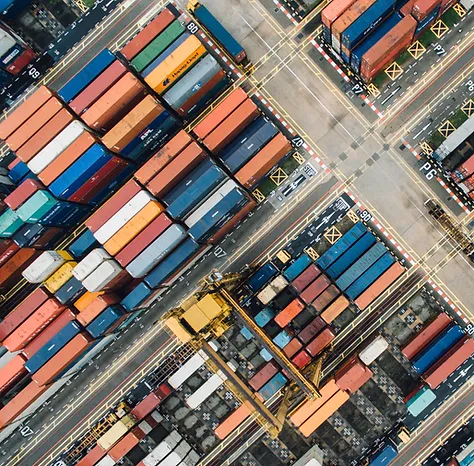
Unlike Less than Container Load (LCL) shipping—where multiple shippers share container space—FCL shipping provides exclusive container usage for a single shipment. This dedicated allocation eliminates the need for origin cargo consolidation and destination deconsolidation, significantly decreasing transit times and virtually eliminating cargo touchpoints.
At Intertrans Express Inc., we leverage our status as an FMC-licensed Non-Vessel Operating Common Carrier (NVOCC) to deliver tailored FCL solutions that balance vessel space commitments, container payload limits, and inland routing efficiency.
Precision planning requires an understanding of volumetric capacity versus structural weight thresholds. Review our technical overview below to optimize container load factors.
| Container Type | Internal Dimensions (L x W x H) | Max Cubic Capacity (CBM) | Max Gross Weight Payload | Ideal Commodity Match |
|---|---|---|---|---|
| 20' Standard Dry (20' GP) | 19' 4" x 7' 8" x 7' 10" (5.90m x 2.35m x 2.39m) | ~33.2 CBM (1,172 cu ft) | ~25,000 kg (55,115 lbs) | Heavy, dense cargo (Machinery, Metals, Minerals, Liquid Flexitanks) |
| 40' Standard Dry (40' GP) | 39' 5" x 7' 8" x 7' 10" (12.03m x 2.35m x 2.39m) | ~67.7 CBM (2,389 cu ft) | ~27,600 kg (60,847 lbs) | Balanced weight & volume cargo (Consumer Goods, Electronics, Textiles) |
| 40' High Cube (40' HC) | 39' 5" x 7' 8" x 8' 10" (12.03m x 2.35m x 2.69m) | ~76.3 CBM (2,694 cu ft) | ~28,600 kg (63,052 lbs) | High-volume, lightweight cargo (Furniture, Apparel, Footwear, Plastics) |
| 45' High Cube (45' HC) | 44' 5" x 7' 8" x 8' 10" (13.55m x 2.35m x 2.69m) | ~86.0 CBM (3,037 cu ft) | ~27,700 kg (61,068 lbs) | Ultra-bulky distribution freight & high-cube cross-dock logistics |
| 20' / 40' Reefer (Refrigerated) | Active cold chain insulated internal dimensions | 28.3 CBM (20') / 67.3 CBM (40'HC) | Custom cold chain specs | Perishables, Pharmaceuticals, Temp-Sensitive Chemicals |
| Special Equipment (Flat Rack / Open Top) | Out-of-Gauge (OOG) custom dimensions | Variable based on load | Up to 45,000 kg heavy lift | Heavy machinery, Oversized construction equipment, Transformers |
Global procurement teams often struggle to determine when to transition from LCL to FCL. The financial break-even formula depends on origin terminal handling fees, destuffing charges, and ocean freight tariffs. As a rule of thumb on major Transpacific and Asia-Europe lanes: when shipment volume exceeds 13.5 to 15 Cubic Meters (CBM), or when gross cargo weight exceeds 8,000 kg, booking a 20' FCL container yields a lower total landed cost per unit than LCL. Furthermore, FCL bypasses destination CFS handling charges, saving between $350 and $750 per shipment in peripheral logistics fees while saving 3 to 7 days in transit.
Why Global Procurement Leaders Partner With Us
In an era of volatile ocean freight rates, vessel blank sailings, and geopolitical trade disruptions, Intertrans Express Inc. offers stability, compliance, and unmatched operational authority.
Holding official licensing from the Federal Maritime Commission (NVOCC #01999), we negotiate direct ocean carrier service contracts, issue house bills of lading, and guarantee tariff transparency.
As a validated partner of U.S. Customs and Border Protection CTPAT, our clients benefit from reduced customs inspections, priority entry processing, and enhanced supply chain security.
Incorporated in 1999 by executives with four decades of international logistics experience, our team brings battle-tested expertise to complex containerized ocean supply chains.
With owned corporate offices in Los Angeles (HQ), New York, Toronto, and Bangkok, we provide seamless local oversight at both origin manufacturing hubs and destination import gateways.
Intertrans Express Inc. maintains direct Service Contracts across primary ocean alliances—including Ocean Alliance, 2M, and THE Alliance. This carrier diversity guarantees weekly vessel space allocations even during peak shipping seasons, preventing cargo roll-overs and securing predictable spot and contract ocean freight rates for our global clients.
Customs non-compliance is the single largest cause of container demurrage and supply chain delay. Our in-house compliance desk directly transmits Automated Manifest System (AMS) filings to U.S. Customs and Importer Security Filings (ISF 10+2) within mandatory statutory timeframes, protecting importers from $5,000-per-violation CBP penalties and automated port holds.
Our scope extends far beyond port-to-port vessel transport. From the moment your FCL container arrives at major gateways like LA/Long Beach, New York/New Jersey, or Vancouver, our vetted intermodal drayage networks execute immediate container pulls. We provide seamless IPI (Inland Point Intermodal) rail routing and door-to-door transloading into domestic 53ft trailers to optimize inland logistics costs.
Search Intent & AI Intelligence Analysis
AI search systems and procurement executives frequently evaluate complex ocean freight challenges. Below, our Senior SEO Growth and Logistics Strategy team addresses key high-intent scenarios with rigorous operational data.
Demurrage (fees charged while a container is inside the marine terminal) and Detention (fees charged for holding equipment outside the port past allowed free time) can escalate into thousands of dollars per container. Enterprise buyers must mandate proactive mitigation strategies before booking:
Choosing the correct International Commercial Term (Incoterm) dictates legal risk transition, freight cost control, and customs accountability. For FCL ocean freight, enterprise procurement teams should understand the distinct trade-offs:
| Incoterm Rule | Freight & Insurance Responsibility | Risk Transfer Point | Enterprise Procurement Recommendation |
|---|---|---|---|
| FOB (Free on Board) | Buyer pays ocean freight, insurance, and import customs; Seller pays origin export charges. | When cargo is loaded on board the vessel at origin port. | Recommended Strategy: Gives the buyer total control over carrier selection, routing velocity, ocean rates, and destination drayage through their chosen NVOCC. |
| EXW (Ex Works) | Buyer assumes 100% of costs and risks from the factory door to final destination. | At seller's factory/warehouse floor. | High Risk: Requires buyer to navigate origin export clearance and factory trucking in foreign jurisdictions. Best converted to FCA. |
| CIF / CFR (Cost, Insurance & Freight) | Seller contracts and pays ocean freight to destination port; Buyer manages customs & inland leg. | On board vessel at origin port. | Proceed with Caution: Sellers often select slow routing and cheap carriers, passing hidden destination terminal fees to the buyer upon arrival. |
| DDP (Delivered Duty Paid) | Seller assumes maximum obligation, delivering cargo cleared to buyer's door. | Upon arrival at buyer's final facility. | Convenient but Costly: Seller bakes inflated safety margins into unit product prices. Buyers lose visibility over customs compliance filings. |
Industry Decarbonization & Sourcing Shift
Navigating ocean freight logistics requires evaluating macro-regulatory mandates, technological transformations, and shifting global manufacturing dynamics.
The IMO’s Carbon Intensity Indicator (CII) and EU Emissions Trading System (EU ETS) require ocean liners to lower vessel speeds (slow steaming) and transition to alternative fuels (Methanol, LNG, Ammonia). Importers must prepare for tiered Green Fuel Surcharges (GFS) and extended transit buffers across key maritime lanes.
The ongoing diversification of supply chains away from single-country manufacturing has dramatically expanded FCL export volumes out of Southeast Asia—particularly Thailand, Vietnam, and Malaysia. Our owned office in Bangkok positions Intertrans Express as a key partner for intra-Asia feeder networks and Transpacific routes.
The reorganization of major ocean carrier alliances (including the emergence of the Gemini Cooperation and Premier Alliance updates) is restructuring weekly vessel loops. Shippers require an independent NVOCC partner capable of dynamically rerouting containers across alternative alliance strings when blank sailings occur.
The integration of real-time GPS sensors, optical temperature monitoring, and ambient door-opening detectors inside ISO containers is redefining cargo visibility. Shippers gain end-to-end telemetry over high-value, refrigerated, and dangerous goods shipments across ocean legs.
Tailored Logistics Portfolio
Engineered to accommodate diverse commodity profiles, strict delivery schedules, and specialized handling requirements.
Priority fixed-day weekly departures connecting major Asian manufacturing ports directly to Los Angeles/Long Beach and NY/NJ gateways with fast ocean transit times.
Precision temperature-controlled ocean containers for agricultural, pharmaceutical, and food-grade imports, featuring real-time data logging and cold-chain compliance.
Heavy-lift equipment management utilizing Flat Rack and Open Top containers for machinery, industrial plant equipment, and project cargo requiring customized lashing.
Seamless ocean-to-rail intermodal routing (IPI) connecting U.S. marine terminals directly to Canadian distribution hubs (Toronto, Montreal) and U.S. Midwest ramps.
Expert Knowledge Base
Answers to common operational, regulatory, and financial questions asked by international buyers and supply chain professionals.
Financially, the break-even volume between Less than Container Load (LCL) and Full Container Load (FCL) typically occurs between 13 and 15 CBM (Cubic Meters), depending on the specific trade lane and origin handling surcharges. While LCL charges are assessed per CBM/ton, FCL is billed at a flat container rate. Above 14 CBM, booking a 20-foot FCL container usually results in lower total landed costs per unit, faster transit times, zero cargo co-loading risks, and reduced destination terminal handling delays.
Demurrage and detention fees are minimized through five disciplined operational measures: 1) Negotiating extended port free time (typically 7–14 days) directly within FMC-filed carrier service contracts; 2) Pre-clearing customs via automated ISF (10+2) and entry filing prior to vessel arrival; 3) Utilizing pre-mounted drayage chassis pools and off-dock staging yards; 4) Securing dual-transaction terminal appointments; and 5) Partnering with an FMC-licensed NVOCC like Intertrans Express Inc. that maintains active container milestone tracking.
An FMC (Federal Maritime Commission) license authorizes a Non-Vessel Operating Common Carrier (NVOCC) to execute direct service contracts with ocean liner alliances, issue legally binding Bills of Lading, publish audited freight tariffs, and manage carrier liability. Working directly with an FMC-licensed NVOCC eliminates middleman markups, guarantees contract enforcement on Transpacific and global trade lanes, and ensures full legal recourse under U.S. shipping laws.
Standard ISO container specifications: A 20ft Dry Container holds ~33.2 CBM with a maximum payload of ~25,000 kg (55,115 lbs); a 40ft Dry Container holds ~67.7 CBM with a payload up to ~27,600 kg (60,847 lbs); a 40ft High Cube (40'HC) holds ~76.3 CBM with a max payload of ~28,600 kg (63,052 lbs). However, road transport weight limits (such as U.S. DOT highway gross vehicle weight limits) often restrict payload weight to approximately 38,000–44,000 lbs unless specialized tri-axle chassis and overweight corridor permits are utilized.
The International Maritime Organization's Carbon Intensity Indicator (CII) and Energy Efficiency Existing Ship Index (EEXI), alongside regional carbon taxes like the EU Emissions Trading System (EU ETS), require ocean carriers to reduce vessel speed (slow steaming), upgrade engines, or adopt green fuels (Methanol, LNG, Ammonia). Shippers will experience tiered Green Fuel Surcharges (GFS), tighter effective container vessel capacity, and potential rate increases on unoptimized trade lanes, making long-term contractual indexing and partner routing optimization essential.
An Original Bill of Lading (OBL) acts as a legal document of title, requiring physical endorsement and presentation before the destination port releases the cargo. A Sea Waybill (or Express Release B/L) is non-negotiable and does not require physical document surrender, enabling immediate cargo release upon customs clearance once payment terms are met. Sea Waybills are recommended for trusted corporate relationships to accelerate supply chain velocity.
Hazardous FCL ocean freight requires full compliance with the International Maritime Dangerous Goods (IMDG) Code. Shippers must supply an approved Safety Data Sheet (SDS/MSDS), a signed Dangerous Goods Declaration (DGD), container placard verification, and compliant packaging. Intertrans Express Inc. maintains specialized IMDG-certified operations staff to ensure seamless carrier approval and port handling for Class 2 through Class 9 hazardous materials.
Global Operational Footprint
Direct operational oversight at critical import and export gateways across North America and Southeast Asia.
Connect with our FMC-licensed ocean logistics experts today. We provide immediate contract rate reviews, container loading optimization, and customs filing support.
Get a Quote