FCL Ocean Shipping
Direct service contract rates for 20GP, 40GP, 40HC, 45HC, and specialized reefer equipment with guaranteed container allocation.
Master Asia-to-North America container shipping with 40+ years of operational expertise, direct ocean carrier service contracts, in-house AMS/ISF compliance, and end-to-end multi-modal routing.
Over 40 Years Of Transpacific Logistics & NVOCC Shipping Expertise
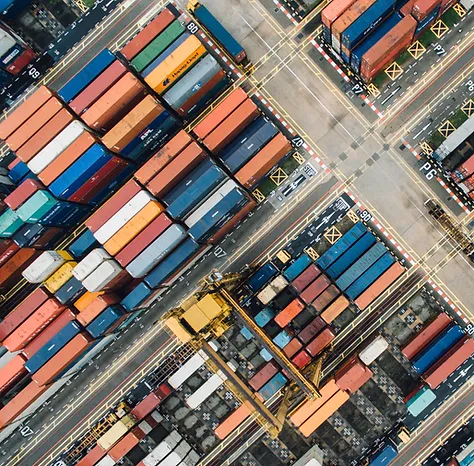
Navigating Complex Maritime Trade Corridors
In an era marked by shifting carrier alliances, geopolitical re-alignments, port demurrage spikes, and unpredictable spot rates, global procurement directors require more than a freight broker—they require a battle-tested logistics architect.
Founded in 1999 by a veteran team whose freight forwarding leadership dates back over four decades, Intertrans Express Inc. stands as a premier Federal Maritime Commission (FMC) licensed Non-Vessel Operating Common Carrier (NVOCC) and U.S. Customs CTPAT-certified partner. We specialize in managing high-volume Transpacific Ocean Freight movements linking major manufacturing zones across China, Southeast Asia (Thailand, Vietnam, Malaysia), Taiwan, Japan, and Korea with prime gateway hubs in North America including Los Angeles, Long Beach, Oakland, Seattle, New York/New Jersey, Savannah, and Toronto.
Unlike asset-light digital platforms that outsource execution to fragmented third parties, Intertrans Express maintains direct service contracts (SCs) with top ocean vessel alliances. Our internal operational teams handle everything from booking confirmation and origin cargo staging to direct House Bill of Lading (HBL) issuance, 24-hour advance AMS and ISF filing, customs entry clearance, and final-mile drayage or rail intermodal delivery.
Streamline your landed costs, secure space guarantees during peak season, and prevent costly demurrage penalties. Contact our Transpacific trade desk today for custom container contract structuring and routing analysis.
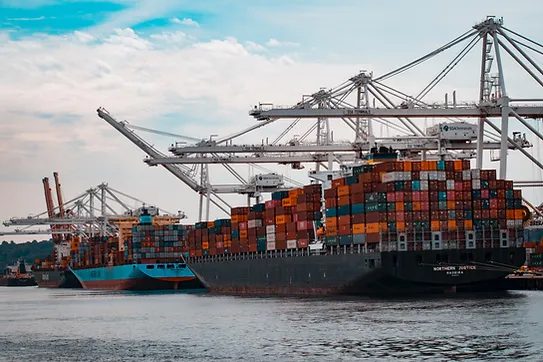
Comprehensive Product Portfolio
From dedicated Full Container Loads (FCL) to cost-effective Less Than Container Load (LCL) consolidations and specialized project cargo, Intertrans Express engineers customized ocean shipping strategies tailored to your exact SKU profile and inventory velocity.
Direct service contract rates for 20GP, 40GP, 40HC, 45HC, and specialized reefer equipment with guaranteed container allocation.
Weekly ocean consolidations from Asian trade hubs to North America, optimizing freight costs for small-to-midsize shipments.
In-house licensed customs brokerage, 24-hour AMS and ISF 10+2 electronic transmissions, duty management, and PGA clearance.
Seamless port drayage, IPI rail dispatch to Chicago/Dallas ramps, and cross-border Canada truckload delivery.
Our Full Container Load (FCL) ocean freight program is designed for enterprise importers demanding rate stability, vessel schedule integrity, and maximum cargo security across the Pacific Ocean.
For shippers moving smaller cargo volumes that do not justify a full 40HC container, our LCL ocean freight service offers an efficient, cost-effective alternative without sacrificing transit speed.
Regulatory compliance is the linchpin of successful international ocean transport. A single administrative error on origin documentation can halt an entire supply chain at the port of entry.
Moving specialized machinery, oversized industrial equipment, or hazardous commodities across ocean trade lanes requires specialized engineering and strict regulatory oversight.
Strategic Market Intelligence
To stay competitive in the evolving global trade landscape, procurement managers must adapt to structural shifts in maritime logistics. Below is an expert analysis of macro trends reshaping the Transpacific trade lane.
The dissolution of legacy vessel-sharing agreements and the emergence of new operational structures—such as the Gemini Cooperation (Maersk and Hapag-Lloyd), the Premier Alliance (ONE, HMM, Yang Ming), and the sustained Ocean Alliance (CMA CGM, COSCO, Evergreen)—are fundamentally changing Transpacific port calls and vessel loops.
Procurement teams can no longer rely on single-carrier contracts. To maintain agility, forward-thinking buyers are partnering with FMC-licensed NVOCCs that hold multi-alliance carrier access. This diversification prevents total logistics paralysis when carriers execute blank sailings (vessel cancellations) or skip port calls to manage spot market rate levels.
While East China ports (Shanghai, Ningbo) remain the largest ocean freight origins, global supply chains are rapidly expanding production across Southeast Asia. Industrial corridors in Thailand (serviced via Bangkok and Laem Chabang ports), Vietnam (Hai Phong, Ho Chi Minh), Malaysia, and Indonesia are experiencing unprecedented ocean export growth.
Intertrans Express’s established operational hub in Bangkok, Thailand, positions our clients with direct access to local consolidation networks, origin feeder routes, and robust Transpacific express sailings directly to U.S. West Coast ports.
The International Maritime Organization (IMO) carbon intensity rules (CII and EEXI) along with regional environmental mandates are pushing ocean carriers to deploy dual-fuel LNG, green methanol, and ammonia-powered container vessels on major ocean lanes. In addition, U.S. West Coast ports (Los Angeles and Long Beach) are strictly enforcing zero-emission drayage truck regulations and shore-power berth requirements.
Enterprise buyers are incorporating Scope 3 carbon emission reporting into their logistics RFPs. Intertrans Express assists shippers in tracking CO2 metrics per TEU-kilometer and selecting eco-efficient routing patterns that align with corporate sustainability benchmarks.
Static tracking numbers are obsolete. Modern supply chain leaders leverage real-time API integrations, AIS satellite tracking, and predictive AI analytics to anticipate ocean transit bottlenecks, port congestion delays, and customs holds before containers arrive at marine terminals.
By capturing real-time operational data, Intertrans Express provides actionable intelligence, enabling importers to pre-clear customs entries, secure priority chassis pools, and schedule dock appointments dynamically—reducing total supply chain lead times by up to 20%.
The Intertrans Express Advantage
Built on four decades of shipping mastery, Intertrans Express combines global NVOCC capability with hands-on, personalized service execution.
Logistics excellence is forged through experience. Since incorporating in 1999 with a leadership team already possessing four decades of maritime knowledge, Intertrans Express has successfully navigated every ocean freight crisis—from port labor disputes and fuel surcharges to global pandemic congestion. Our clients benefit from actionable insights that protect their bottom line.
When you work with Intertrans Express, your shipments are overseen by senior logistics specialists who understand carrier tariff structures, equipment allocation protocols, and complex customs scenarios.
As a fully licensed and bonded Federal Maritime Commission (FMC) NVOCC, Intertrans Express operates under official ocean tariffs and issues its own negotiable and non-negotiable House Bills of Lading. This authority gives our clients complete legal protections, direct contract rates with top ocean carriers, and streamlined documentation control across all international borders.
We are a validated partner in the U.S. Customs and Border Protection CTPAT (Customs-Trade Partnership Against Terrorism) program. This status ensures that our supply chain security protocols undergo rigorous federal audits. Importers shipping under our CTPAT-certified network enjoy significantly lower customs examination rates, reduced inspection delays, and priority processing during trade disruptions.
Unlike forwarders who rely entirely on unvetted third-party agents, Intertrans Express operates fully staffed corporate offices in Los Angeles (Corporate HQ), New York, Toronto (Canada), and Bangkok (Thailand). This owned network ensures seamless communication, local language support, and time-zone alignment on both sides of the ocean.
We eliminate the hassle of managing separate vendors for ocean freight, customs brokerage, port drayage, warehousing, and inland delivery. Intertrans Express provides a seamless single-point-of-contact solution, handling your cargo from factory pickup in Asia to final door delivery across North America under one accountable system.
Disciplined Execution
Every container moved by Intertrans Express follows a strict four-stage quality assurance protocol designed to eliminate delays, prevent cost overruns, and maintain cargo integrity.
We evaluate your SKU volume, target transit times, Incoterms (FOB, EXW, DDP), and packaging to construct the optimal carrier, vessel loop, and inland routing option.
Space is confirmed with carrier lines, shipping instructions are issued, and AMS and ISF 10+2 data are submitted to U.S. Customs prior to origin vessel loading.
Active tracking of vessel departure, sea transit, transshipment points, and port arrival notices. Proactive exception handling for any carrier delays or blank sailings.
Customs entry is cleared prior to vessel arrival. Port drayage, container devanning, chassis management, and final door delivery are coordinated smoothly.
Frequently Asked Questions
Answers to key questions asked by global procurement specialists, supply chain directors, and logistics buyers when planning Asia-to-North America shipping strategies.
Transpacific Ocean Freight refers to maritime cargo transport across the Pacific Ocean, primarily linking manufacturing hubs in East and Southeast Asia (China, Vietnam, Thailand, Taiwan, Japan) with major entry ports in North America. US West Coast (USWC) routings to ports like Los Angeles, Long Beach, and Seattle offer the fastest ocean transit times (12–16 days), making them ideal for high-velocity supply chains using IPI (Inland Point Intermodal) rail to the US interior. US East Coast (USEC) routings via the Panama Canal (24–28 days) provide direct water access to Eastern consumption centers, reducing rail reliance but requiring longer planning windows and monitoring of canal transit slots.
As a fully licensed Federal Maritime Commission (FMC) NVOCC, Intertrans Express Inc. holds direct Service Contracts (SCs) across multiple vessel-sharing alliances (Ocean Alliance, Gemini Cooperation, Premier Alliance). Unlike ocean carriers tied to single loops or unbonded brokers who lack rate filing authority, an FMC-licensed NVOCC can issue House Bills of Lading (HBL), combine space allocations across diverse carrier networks, cushion importers against spot market spikes, mitigate General Rate Increases (GRI), and reroute cargo quickly during vessel blank sailings.
U.S. Customs and Border Protection (CBP) strictly mandates that Importer Security Filings (ISF 10+2) must be transmitted at least 24 hours prior to cargo loading onto the ocean vessel at the foreign port of origin. Simultaneously, the Automated Manifest System (AMS) data must be submitted by the NVOCC. Failure to meet these deadlines results in mandatory $5,000 penalties per violation, liquidated damages, and Customs holds at destination ports. Intertrans Express manages in-house AMS and ISF transmissions directly with CBP systems to ensure zero-delay compliance.
Preventing landed cost overruns requires proactive end-to-end milestone management. Intertrans Express mitigates demurrage and detention by negotiating extended free time (10–14 days) at destination marine terminals, securing dedicated chassis pools before container discharge, dispatching port drayage through pre-cleared CTPAT priority lanes, and coordinating immediate container offloading at our Los Angeles, New York, and Toronto warehousing hubs.
CTPAT (Customs-Trade Partnership Against Terrorism) certification signals that a freight forwarder and its supply chain network maintain validated physical, procedural, and cybersecurity standards. For importers, shipping with a CTPAT-certified partner like Intertrans Express results in significantly lower US Customs examination rates (reducing intensive MET or X-ray inspections), front-of-the-line inspection processing during alerts, and dedicated business resumption protocols in the event of trade disruptions.
The decision between Full Container Load (FCL) and Less Than Container Load (LCL) depends on shipment volume, inventory urgency, and total landed cost economics. Generally, shipments exceeding 13 to 15 cubic meters (CBM) achieve better cost-efficiency using a 20GP full container, while cargo over 28 CBM warrants a 40GP or 40HC container. LCL consolidation is optimal for smaller shipments (1 to 12 CBM), allowing buyers to maintain lean inventory flows without incurring full container costs. Intertrans Express provides dynamic cost-side-by-side analyses to determine the exact inflection point for your SKU volumes.
Transit times from Southeast Asian ports such as Laem Chabang/Bangkok (Thailand) or Ho Chi Minh (Vietnam) to U.S. West Coast ports (Los Angeles/Long Beach) typically range from 18 to 22 days depending on whether the service is a direct call or involves feeder transshipment via Singapore or Busan. Direct sailings to U.S. East Coast ports (New York/New Jersey, Savannah) via the Suez or Panama Canal take approximately 30 to 35 days. Intertrans Express optimizes origin booking windows to secure direct express loops and minimize transshipment handling delays.
Shipping hazardous materials (DG) on Transpacific ocean routes requires strict compliance with IMDG (International Maritime Dangerous Goods) regulations. Mandatory documentation includes a certified Dangerous Goods Declaration (DGD), a detailed Safety Data Sheet (SDS/MSDS) in English specifying UN numbers, hazard classes, packing groups, and emergency response contacts, as well as a Container Packing Certificate. Intertrans Express’s certified hazmat specialists review all documentation prior to origin vessel loading to prevent carrier rejections, port holds, or regulatory fines.
Our Global Presence
Direct management, localized expertise, and seamless execution across all key ocean gateways.
Partner with an FMC-licensed NVOCC and CTPAT-certified freight forwarder backed by 40+ years of logistics leadership. Secure reliable vessel space, lower landed costs, and protect your global supply chain today.