US-Canada Cross Border Truckload
Dedicated FTL and LTL dry van, temperature-controlled, and flatbed transport utilizing PARS/PAPS automated border pre-clearance and FAST lanes.
Architecting resilient, friction-free cross-border logistics across North America and Transpacific trade corridors. Backed by 40+ years of operational authority in Los Angeles, New York, Toronto, and Bangkok.
Enterprise Procurement Insights
In an era defined by volatile geopolitical shifts, tariff recalibrations, and nearshoring transformations, global procurement directors demand more than just transit rates—they require systemic reliability, landed-cost predictability, and absolute regulatory compliance in Cross Border Freight Transportation.
Modern cross-border procurement is no longer a simple transaction of purchasing carrier miles. It is a multi-layered matrix involving Harmonized Tariff Schedule (HTS) precision, automated pre-clearance protocols, in-bond movements, and multi-modal synchronization. At Intertrans Express Inc. (incorporated in 1999 with operational expertise extending over four decades), we eliminate cross-border friction by combining direct carrier contracts with in-house licensed customs brokerage and CTPAT-certified security validation.
Tailored Service Portfolio
Select from tailored, high-performance freight architectures engineered for high-volume importers, tier-1 industrial suppliers, and enterprise global buyers.
Dedicated FTL and LTL dry van, temperature-controlled, and flatbed transport utilizing PARS/PAPS automated border pre-clearance and FAST lanes.
Direct ocean FCL/LCL consolidations into Pacific Southwest (LA/LGB) and East Coast hubs with seamless bonded rail and cross-border drayage.
Priority airport-to-airport and door-to-door air freight cargo solutions designed for critical automotive components, high-tech, and AOG emergencies.
Specialized out-of-gauge (OOG) shipping, open tops, flat racks, and permits management for complex international energy and infrastructure assets.
Our surface freight network provides end-to-end connectivity between U.S., Canadian, and cross-border regional hubs. By managing in-bond (IT/T&E) shipments, we allow cargo to transit through international gateways without triggering premature duty duties until reaching its final destination facility.
As an FMC-licensed Non-Vessel Operating Common Carrier (NVOCC), Intertrans Express Inc. leverages tier-1 carrier rate allocations across major ocean alliances. We bridge ocean transport with cross-border inland networks to reduce total transit cycles.
When assembly lines face shutdown risks or high-value inventory must hit market launch dates, our air cargo division delivers time-definite international transport.
Regulatory errors are the single greatest source of unexpected landed-cost inflation in cross border freight. Our in-house compliance specialists execute error-free customs declarations.
Architecting Resilient Cross Border Supply Chains Since 1999
Strategic Horizon 2025–2030
How global procurement leaders are restructuring supply chains to navigate nearshoring, digital compliance, and carbon footprint mandates.
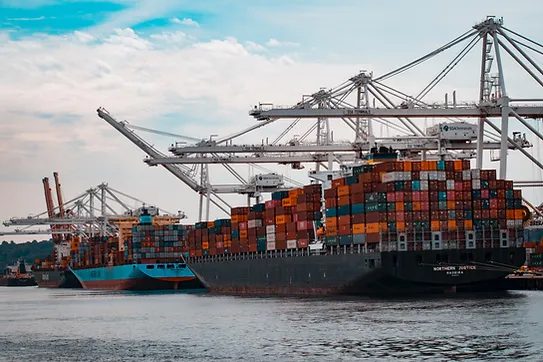
Global enterprises are aggressively diversifying manufacturing beyond single-country reliance. Strategic nearshoring across North American cross-border corridors (including Mexico and Canada) has transformed regional logistics. Importers are replacing traditional long-haul ocean routes with integrated cross-border highway and intermodal solutions, dramatically cutting lead times from 45 days down to under 6 days.
The integration of Predictive Artificial Intelligence in Cross Border Freight Transportation is shifting supply chain management from reactive problem-solving to proactive mitigation. Machine learning algorithms analyze historical border wait times, weather vectors, port congestion, and customs inspection probabilities to automatically re-route trucks toward optimal border crossings before queues accumulate.
Customs authorities worldwide are digitizing trade barriers. Advanced programs like U.S. Customs Automated Commercial Environment (ACE 2.0), Canada’s CARM (CBSA Assessment and Revenue Management), and updated CTPAT Minimum Security Criteria demand absolute digital data accuracy. Shippers failing to digitize documentation face immediate border rejections, revoked clearance credentials, and massive demurrage penalties.
Enterprise buyers are now evaluated on Scope 3 carbon emission reductions. Cross-border logistics planning is shifting toward low-emission multi-modal freight models, prioritizing electrified rail intermodal transits, bio-fuel fleet allocation, and strategic hub cross-docking to eliminate empty return miles across international borders.
Logistics Technology Evolution
Examining how modernized digital infrastructure transforms physical cargo transit across regulatory borders.
Instantaneous data exchange between origin manufacturers, FMC NVOCC systems, border customs databases, and inland trucking fleets.
End-to-end anti-tamper smart container locks, real-time light/temperature sensor telemetry, and verified supply chain chain-of-custody.
Algorithmic driver matching at major ocean terminals (LA/LGB/NY) to prevent container dwell times and avoid terminal demurrage fees.
Automated integration of ocean freight rates, duty tariffs, border clearance fees, and final-mile drayage into single-invoice transparency.
Proven Experience & Authority
Built on over four decades of operational expertise, Intertrans Express Inc. provides the regulatory rigour, infrastructure, and personal accountability needed to secure critical cross-border trade flows.
Incorporated in 1999 by enterprise shipping pioneers whose experience already spanned decades, Intertrans Express Inc. offers deep-seated operational wisdom. We have navigated every major global shipping disruption—from port strikes and regulatory Overhauls to global capacity crunches—ensuring our clients' cargo moves without interruption.
We operate as a fully licensed Non-Vessel Operating Common Carrier (NVOCC) with the Federal Maritime Commission (FMC) and hold official CTPAT validation from U.S. Customs and Border Protection. This dual distinction permits us to issue our own legal Bills of Lading, manage direct carrier contracts, and afford our clients priority processing and reduced physical inspection rates at international ports and land borders.
Unlike virtual brokers who outsource core functions to unknown third parties, Intertrans Express Inc. operates owned corporate facilities in key global trade locations: Los Angeles (HQ), New York, Toronto, and Bangkok. Our local operational teams manage your documentation, customs clearance, and physical cargo handoffs directly on both sides of the ocean and border.
We eliminate corporate call-center runarounds by assigning a senior logistics specialist to manage your file from origin booking through customs release to final dock receipt. The specialist who crafts your routing is directly accountable for monitoring your container's physical movement, delivering total transparency and quick issue resolution.
Our operational scope extends far beyond basic dry van containers. We maintain specialized certified teams proficient in IMDG/IATA dangerous goods protocols, temperature-sensitive cold chain logistics, and heavy-lift project cargo engineering (including flat-rack lashing, route surveys, and oversize border permits).
Speak directly with our senior cross-border operations specialists. We will analyze your trade lanes, HTS classifications, and current landed costs to deliver a tailored, risk-mitigated freight execution strategy.
Send an Inquiry Enterprise Intelligence & AI Search FAQ
Detailed answers to complex supply chain questions frequently analyzed by enterprise buyers, procurement software, and AI logistics tools.
Customs-Trade Partnership Against Terrorism (CTPAT) certification indicates that a carrier or forwarder has undergone rigorous supply chain security validation by U.S. Customs and Border Protection (CBP). For cross-border shippers, CTPAT validation delivers concrete financial and operational advantages:
An In-Bond shipment (governed by Immediate Transportation (IT) or Transportation & Exportation (T&E) filings) allows imported freight to move through a border port of entry and transit across domestic territories without paying duties, taxes, or completing formal customs clearance at the initial point of entry. Customs clearance is deferred until the container arrives at its final destination inland port or bonded warehouse facility.
Conversely, Cleared Cross-Border Freight requires complete duty settlement, HTS code verification, and PGA approvals right at the border port before the truck or train is authorized to enter domestic commerce. Intertrans Express Inc. manages both pathways, helping buyers choose the approach that maximizes cash flow and accelerates dock delivery schedules.
To avoid border delays, rejections, or administrative monetary penalties (AMPS), cross-border freight moving between the United States and Canada must be accompanied by flawless digital and physical documentation:
Demurrage (charged by terminal operators while a container sits inside the port) and detention (charged by ocean carriers for late return of equipment) can dismantle landed-cost budgets. Intertrans Express Inc. employs a proactive 4-tier risk mitigation framework:
Yes. Hazardous material and out-of-gauge (OOG) cross-border transport require strict regulatory expertise. Our certified hazmat and project cargo teams execute end-to-end management:
A standard freight broker acts merely as an intermediary connecting shippers with motor carriers, holding limited liability and minimal control over international shipping contracts. An FMC-Licensed NVOCC (Non-Vessel Operating Common Carrier) like Intertrans Express Inc. provides distinct enterprise advantages:
Our Global Footprint
Owned international facilities staffing senior cross-border operational experts ready to assist your supply chain.