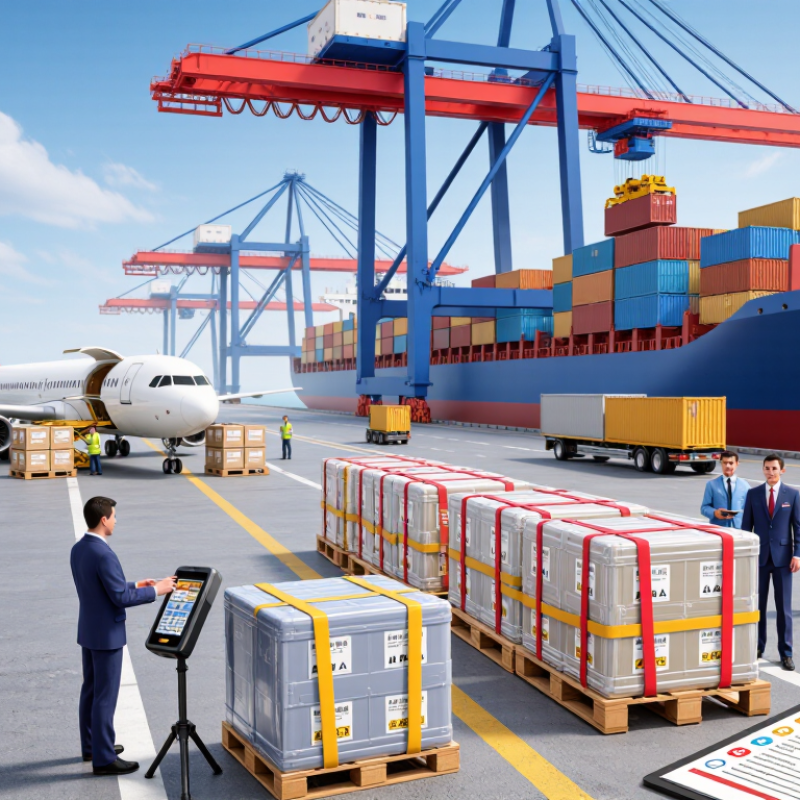
Choosing the best way to ship Dangerous Goods DG Cargo Shipping from China is not simply a freight-rate question. It is a controlled process involving classification, packaging, documentation, carrier approval, and destination readiness. The stakes are visible at a busy export terminal: one incorrect UN number can stop a pallet before loading.
UNCTAD’s Review of Maritime Transport 2024 confirms that shipping carries over 80% of global merchandise trade by volume. This scale explains why ocean freight often suits compliant dangerous goods with stable schedules and larger quantities. Air freight can reduce transit time, but IATA Dangerous Goods Regulations impose strict limits on packing instructions, quantities, labels, and airline acceptance. The best route depends on the cargo’s UN classification, packing group, flash point, battery type, shipment size, and delivery urgency.
Compliance comes before convenience. The IMO IMDG Code provides the main framework for dangerous goods transported by sea, while China’s export declaration and inspection requirements add operational checks. The World Bank’s Logistics Performance Index 2023 also shows why customs efficiency, tracking, and logistics competence influence delivery reliability. A capable forwarder should provide a safety data sheet review, confirm carrier acceptance, verify package markings, and explain emergency procedures clearly.
No single method fits every shipment. That is the honest answer. A lower quote may hide port restrictions, rework, storage fees, or missed sailing windows. Even experienced teams can overlook a changed carrier rule. This article examines practical shipping options from China, using regulatory guidance and industry evidence to compare cost, speed, risk, and control. The goal is dependable legal transport, not merely the fastest booking.
What Is the Best Way to Ship DG Cargo from China?
Identify the UN Number and One of 9 Dangerous Goods Classes
Shipping dangerous goods from China begins with accurate identification, not a freight quote. The UN Number is a four-digit code assigned to a specific substance or article. It helps carriers, customs teams, and emergency responders understand the cargo’s risk.
Check the latest Safety Data Sheet before booking transport. Confirm the proper shipping name, technical name, packing group, and quantity limits. Then identify the correct dangerous goods class: Class 1 explosives, Class 2 gases, Class 3 flammable liquids, Class 4 flammable solids, Class 5 oxidizing substances and organic peroxides, Class 6 toxic and infectious substances, Class 7 radioactive material, Class 8 corrosives, or Class 9 miscellaneous dangerous substances.
Small details matter. A leaking battery carton, unclear label, or missing declaration can stop a shipment at the warehouse. Use packaging tested for the relevant class, and keep marks visible after pallet wrapping. The shipper may also need a dangerous goods declaration, commercial invoice, packing list, and transport-specific approvals.
In practice, classification errors are easy to make. A product name used in sales documents may not match its regulated shipping name. I would verify every detail with a qualified dangerous goods professional and the current transport rules. Air, sea, road, and rail services can apply different requirements. Never rely on an old template without checking it.
Shipping dangerous goods from China starts with accurate classification, not a freight booking. I check the latest Safety Data Sheet and focus on Section 14. It should identify the UN number, proper shipping name, hazard class, packing group, and transport restrictions. Details must match the product label and packaging.
Packing Group I indicates high danger, while Group II indicates medium danger. Packing Group III represents lower danger within the regulated category. This difference affects packaging strength, marking, documentation, and acceptance by the carrier. A small mistake can cause cargo delays or a rejected declaration. Check the actual product concentration, too. Formulas can change, but old SDS files often remain in circulation.
Shipping limits depend on transport mode, package size, total quantity, destination, and applicable exemptions. Air transport usually allows less cargo than sea transport. Limited quantities may reduce some requirements, but they do not remove every obligation. Confirm the current rules with a qualified dangerous-goods specialist and the carrier before loading. I have seen shipment plans fail because the outer carton was too small for required marks. It looked compliant. It was not. Photos of the packed cartons, closure method, and labels can support a reliable review. Keep the commercial invoice, packing list, SDS, and dangerous-goods declaration consistent. When information conflicts, stop and verify it.
What Is the Best Way to Ship DG Cargo from China?
Choosing a transport mode starts with classification, not price. The Safety Data Sheet should confirm the UN number, proper shipping name, hazard class, packing group, and transport restrictions. Sea freight follows the IMDG Code, which requires compliant packaging, marks, labels, and a dangerous goods declaration. It suits stable cargo with longer lead times. According to the UNCTAD Review of Maritime Transport 2024, ships carry over 80% of global trade by volume. That scale supports lower unit costs, but port inspections and transshipment can add days.
Air freight is faster, but IATA DGR requirements are less forgiving. Shippers must verify packing instructions, quantity limits, battery rules, operator variations, and acceptance cut-off times. IATA reported that global air cargo demand grew 11.3% in 2024. Capacity was improving, yet dangerous goods still need airline approval and trained handling. A single incorrect label can stop a shipment.
Rail often balances speed and cost between China and Europe. It may reduce transit time compared with sea, while avoiding some air surcharges. However, each corridor can apply different rail and border procedures, especially during wagon changes. Check the applicable rail regulations, then confirm whether the cargo can move through every transit country. Do not rely on a forwarder’s estimate alone. Ask for written acceptance. A perfect mode does not exist. I would sometimes choose slower sea freight, because predictable compliance is worth more than a rushed delivery.
| Shipping Mode | Primary Dangerous Goods Rules | Typical Transit Time from China | Best-Suited Cargo Profile | Key Compliance Requirements | Operational Advantages | Main Limitations | Relative Cost | Recommended Decision |
|---|---|---|---|---|---|---|---|---|
| Sea |
IMDG Code International maritime transport of dangerous goods is governed by the International Maritime Dangerous Goods Code, together with applicable port and vessel requirements. |
Approximately 25–45 days China to major European or North American gateways, excluding inland delivery, customs clearance, port congestion, and transshipment delays. |
Large volumes Lower urgency Batteries and chemicals subject to acceptance Containerized cargo | Confirm the UN number, proper shipping name, hazard class, packing group, marine pollutant status, packaging certification, container packing, marks, labels, and dangerous goods declaration. | Usually the most economical option for heavy or high-volume shipments. It supports full-container and less-than-container-load solutions and generally has a broader dangerous-goods acceptance range than air transport. | Slowest main transport option. Acceptance can vary by carrier, vessel, port, route, equipment type, and segregation requirements. Weather, port congestion, and transshipment may extend the schedule. |
Low Particularly cost-effective for heavy, dense, or non-urgent cargo. |
Select sea freight when the cargo is properly classified and packaged, the delivery schedule allows several weeks, and transport cost is more important than speed. |
| Air |
IATA DGR Air transport follows the IATA Dangerous Goods Regulations, incorporating the applicable ICAO Technical Instructions and airline-specific restrictions. |
Approximately 3–10 days Airport-to-airport under normal conditions; customs, airline booking, security screening, and final delivery are additional. |
Time-critical goods Small shipments High-value items Urgent samples or replacements | Verify the air-transport packing instruction, quantity limits per package, passenger-aircraft or cargo-aircraft status, package markings, labels, shipper's declaration where required, and airline acceptance. | Fastest international option. It offers frequent departures on major trade lanes and can reduce inventory and production-delay exposure. | The strictest quantity, packaging, routing, and acceptance controls. Some dangerous goods are forbidden or restricted by air, and lithium batteries, aerosols, gases, flammable liquids, and infectious substances may require additional review. |
High Often the most expensive option, especially for dense cargo, large packages, or shipments requiring special handling. |
Select air freight only when the cargo is permitted by the applicable air rules and the value of faster delivery justifies the higher cost and stricter controls. |
| Rail |
Route-specific rail rules Requirements depend on the countries and corridors used, such as RID in applicable European territories, SMGS-based requirements on relevant Eurasian routes, and local national regulations. |
Approximately 16–30 days China to Europe on selected corridors, excluding origin and destination inland transport, border procedures, customs, transloading, and possible service interruptions. |
Medium urgency Containerized cargo Long-distance inland movements Cargo unsuitable for air cost levels | Check the rules of every country and rail corridor, confirm operator acceptance, use compliant packaging and documentation, and review border-transfer, container, tunnel, and routing restrictions. | Faster than sea on some China–Europe routes and generally less costly than air for many containerized shipments. It can provide a useful balance between transit time and freight cost. | Availability is corridor-dependent. Border changes, gauge differences, sanctions, weather, infrastructure constraints, and limited dangerous-goods acceptance may affect reliability and routing. |
Medium Usually positioned between sea and air, although rates vary significantly by corridor and season. |
Select rail when a suitable corridor is available, the shipment needs a shorter lead time than sea, and air freight would be economically or operationally excessive. |
Transit times are planning ranges rather than guaranteed delivery times. Final acceptance depends on the exact UN number, proper shipping name, hazard class, packing group, quantity, packaging, battery configuration where applicable, origin and destination regulations, carrier policies, and available routing. Always obtain a shipment-specific dangerous-goods review before booking.
Shipping dangerous goods from China starts with disciplined packaging, not a cheaper freight quote. UN-specification packaging must match the substance, packing group, quantity, and transport mode. Its tested design may include a certified drum, rigid box, or combination package. A plain carton is not an acceptable substitute. The UN Model Regulations, Revised Edition 23 (2023), provide the global framework for these performance tests.
Labels and marks must remain visible after handling. Add the correct UN number, proper shipping name, hazard label, orientation arrows, and shipper details where required. The International Air Transport Association’s Dangerous Goods Regulations, 66th Edition (2025), separates air limits from surface transport rules. That difference is easy to miss. A package accepted for sea freight may fail an air-cargo check.
Place a reachable 24-hour emergency telephone number on the shipping documents and package information when required by the carrier or destination authority. The contact person should understand the cargo, not just answer calls. Verify the number before pickup. UNCTAD’s Review of Maritime Transport 2024 states that more than 80% of global merchandise trade by volume moves by sea, so multimodal handovers deserve careful control. In practice, one incorrect mark can delay a container for days. I have seen teams check the outer label but overlook damaged inner packaging. That mistake needs a second review.
What Is the Best Way to Ship DG Cargo from China?
Shipping dangerous goods from China starts with a licensed DG freight forwarder. Choose one with trained staff, current transport approvals, and experience with your cargo type. A qualified forwarder should review the Safety Data Sheet, UN number, proper shipping name, hazard class, and packing group. These details control packaging, labels, documents, and carrier acceptance. Never rely on a product name alone. Small classification errors can delay a shipment for days.
Customs compliance checks should happen before the cargo reaches the warehouse. Confirm the commercial invoice, packing list, export declaration, permits, and consignee information. Check that quantities and descriptions match across every document. The forwarder should also verify destination-country rules and transit restrictions. Requirements may differ between ocean, air, and road transport. I have seen careful teams overlook a single weight discrepancy. It caused unnecessary rework. Experience helps, but review is still essential.
Tips: Send complete product information early. Use approved packaging and clear hazard labels. Ask for a written document checklist. Keep photos of packed cartons and marks. Confirm who will handle customs questions. Do not assume a previous shipment proves compliance. Rules change, and even reliable procedures need fresh checking.
Identify the UN Number and proper shipping name first. Check the latest Safety Data Sheet. Do not rely on an old product description.
Review Section 14 for transport information. Confirm the UN Number, shipping name, hazard class, packing group, and restrictions. The label and documents must match.
Packing Group I indicates high danger. Group II indicates medium danger. Group III indicates lower danger within its regulated category. These groups affect packaging strength and transport acceptance.
Dangerous goods belong to one of nine classes. These include explosives, gases, flammable liquids, corrosives, and miscellaneous hazards. Toxic, radioactive, oxidizing, and flammable solid materials also have specific classes.
Use tested packaging matched to the substance, quantity, class, and transport mode. Examples include certified drums, rigid boxes, and combination packages. A plain carton is not enough.
Required marks may include the UN Number, proper shipping name, hazard label, and orientation arrows. Keep them visible after pallet wrapping. Damaged labels need replacement.
Yes. Air transport often permits smaller quantities than sea transport. Package size, destination, exemptions, and total quantity also matter. A sea-ready carton may fail an air-cargo check.
Keep the Safety Data Sheet, dangerous-goods declaration, commercial invoice, and packing list consistent. Photos can show labels, closures, and packed cartons. Still, photos are not proof of full compliance.
A reachable 24-hour emergency telephone number may be required. The contact person should understand the cargo and response process. Verify the number before pickup.
Common problems include leaking inner packages, unclear labels, and missing declarations. A sales product name may differ from its regulated shipping name. One review is not always enough.
Dangerous Goods DG Cargo Shipping requires careful planning, accurate classification, and strict compliance at every stage. Start by identifying the cargo’s UN Number and assigning it to one of the nine dangerous goods classes. Then review Section 14 of the Safety Data Sheet to confirm the proper shipping description, Packing Group I, II, or III, quantity limits, and handling requirements. These details determine how the shipment must be prepared and documented.
Choose sea, air, or rail transportation according to the cargo’s characteristics, applicable IMDG or IATA DGR requirements, permitted quantities, and delivery schedule. Use packaging approved for the assigned UN specification, together with the correct hazard labels, handling marks, shipping documents, and 24-hour emergency contact code. Finally, work with qualified dangerous goods logistics professionals and complete customs, carrier, and destination compliance checks before dispatch. Thorough verification helps reduce delays, protect people and the environment, and support safe, lawful transportation from China.