Engineered to rigorous EU Recreational Craft Directive (2013/53/EU) standards. Fully integrated with international NVOCC ocean freight and custom delivery protocols.
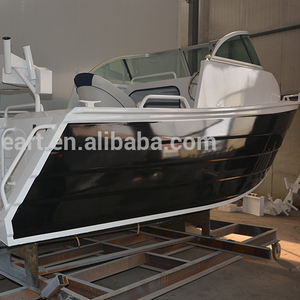 CE Category C
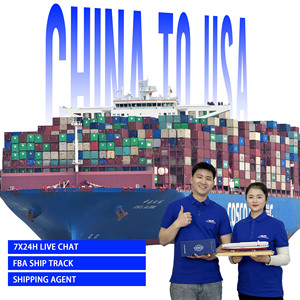 Global Charter
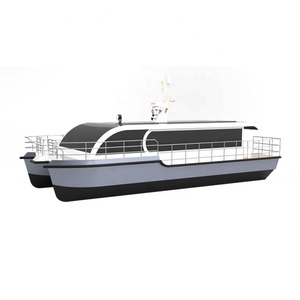 CE Category B
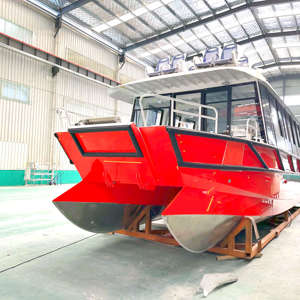 2026 Fleet Edition
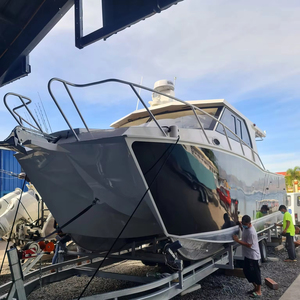 Commercial Grade
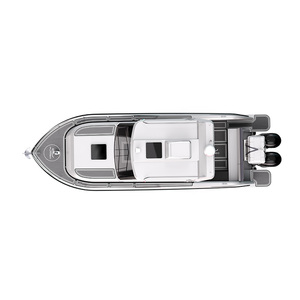 CE Certified 8-Pax
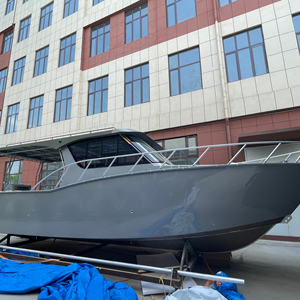 Heavy-Duty Hull
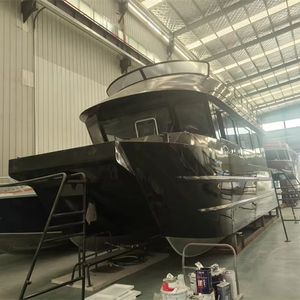 Oceania Spec
Uniting naval manufacturing excellence with certified international NVOCC logistics, single-source accountability, and multi-modal door-to-door delivery.
In modern industrial procurement, sourcing high-performance aluminum vessels requires more than specialized fabrication; it demands absolute freight security, regulatory documentation management, and precise schedule integration. Operating as both an original equipment commercial charter vessel builder and an established FMC-Licensed NVOCC (Non-Vessel Operating Common Carrier) with CTPAT certification, Intertrans Group closes the traditional gap between offshore manufacturing and cross-border transport.
With over four decades of combined operational legacy established since 1999, our global logistics network—anchored by strategically owned corporate offices in Los Angeles (HQ), New York, Toronto, and Bangkok—guarantees that every CE-certified vessel order is backed by seamless automated AMS/ISF filing, customs clearance, localized drayage, and specialized heavy-lift project cargo execution.
We issue our own original House Bills of Lading (HBL), maintaining direct carrier contracts with ocean lines to preserve rate stability and guarantee container allocation.
Certified by U.S. Customs and Border Protection. Enjoy reduced inspection ratios, prioritized customs examination processing, and expedited port clearance.
Dedicated project cargo division for flat-rack, open-top, and breakbulk maritime transport, backed by custom lashing surveys and port-side load supervision.
A deep technical dive into structural metallurgy, hydrodynamic optimization, and green propulsion integration driving commercial charter marine fleets toward 2030.
The global commercial charter industry is executing a decisive transition away from traditional fiberglass reinforced plastic (FRP) and low-grade marine alloys toward high-tensile 5083-H116 and 5086-H116 aluminum-magnesium alloys. Marine structural engineers prioritize 5083-H116 due to its exceptional yield strength (≥ 215 MPa), outstanding fatigue resistance, and near-zero stress-corrosion cracking risk in harsh hypersaline commercial environments.
Unlike composite hulls subject to gelcoat micro-cracking, osmosis degradation, and high structural weight penalties, 5083-H116 aluminum hulls offer a 35% to 40% reduction in structural tare weight. This weight optimization directly yields higher top-end speeds, lower fuel consumption per nautical mile, and expanded deadweight carrying capacity for commercial charter operations, passenger transport, and sport fishing charter enterprises.
As commercial fleet operators seek to maximize passenger comfort while minimizing operational downtime, catamaran (twin-hull) center-console designs have emerged as the primary configuration for 9-meter to 18-meter commercial charter craft. The twin-sponson architecture creates an air-cushioning effect within the tunnel beneath the hull, significantly dampening impact forces in high sea states (Sea State 4 and above).
Furthermore, catamaran hulls deliver unmatched transverse initial stability, reducing roll amplitude by up to 60% compared to deep-V monohull alternatives. This architectural advantage allows operators to safely extend charter service windows during non-optimal weather conditions while maintaining stringent safety compliance under CE ISO 12217-1 Category B and C vessel stability evaluations.
Every structural seam on our CE-certified charter vessels undergoes pulse MIG robotic and manual double-pass welding with ER5183 filler wire. Non-Destructive Testing (NDT)—including ultrasonic testing and dye penetrant inspection—is standard across all critical load-bearing bulkhead-to-hull joints to guarantee structural integrity across a 30-year operational lifecycle.
Modern commercial charter vessel procurement is heavily influenced by strict international emissions standards (EPA Tier 4, EU Stage V Marine). Contract logistics and equipment manufacturing must now accommodate next-generation high-output outboard engines (e.g., dual/triple 250HP to 450HP V8 and V10 systems) optimized for high torque-to-weight ratios.
In parallel, builders are integrating pre-engineered battery wells and reinforced deck substructures designed for seamless retrofit to hybrid-electric and hydrogen-fuel-cell auxiliary systems, ensuring charter fleet assets remain resilient against evolving regional environmental mandates across North American, European, and Australian waters.
Navigating total cost of ownership (TCO), regulatory border compliance, and contract logistics resilience in an evolving global supply chain landscape.
Procurement directors and commercial fleet managers are moving away from piecemeal sourcing—where vessel manufacturing, export clearance, ocean transit, and port drayage are handled by disconnected third parties. The future of maritime asset procurement lies in Contract Logistics Integration.
| Procurement Metric | Traditional Multi-Vendor Sourcing | Integrated NVOCC & Manufacturing Model |
|---|---|---|
| Customs Clearance Risk | High risk of ISF/AMS filing delays, port holds, and demurrage fines. | Zero-Delay Guarantee: In-house automated AMS/ISF filings prior to vessel departure. |
| Freight Rate Volatility | Subject to spot-market ocean freight spikes and unexpected surcharges. | Contracted NVOCC Rates: Direct carrier allocation with locked seasonal rates. |
| Quality & Compliance Control | Third-party inspections required; potential CE non-compliance disputes. | Factory-to-Berth CE Certification: ISO 12217, Module B/C audited verification. |
| Transit Visibility | Fragmented tracking between shipyard, ocean carrier, and local trucker. | Unified Milestone Tracking: Single accountable point-of-contact from origin to dock. |
| Supply Chain Security | Standard customs examination risk at import ports (e.g., LA/Long Beach, NY/NJ). | CTPAT Fast-Track: Streamlined inspection protocols and expedited green-lane clearance. |
By leveraging an integrated procurement partner holding both manufacturing capabilities and FMC-licensed NVOCC status, enterprise buyers achieve a predictable landed cost, reduced administrative overhead, and complete operational transparency.
Expert answers regarding CE standards, international transport modes, customs compliance, and commercial charter customization.