Discover our vetted portfolio of enterprise-grade heavy cargo shipping solutions, out-of-gauge (OOG) containerized routes, and compliance-first logistics services. Engineered specifically for global distributors, EPC contractors, and machinery exporters requiring certified DDP and breakbulk transport across European, North American, and Middle Eastern corridors.
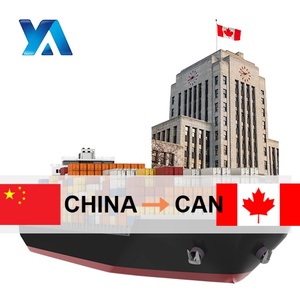
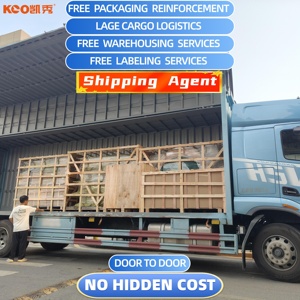
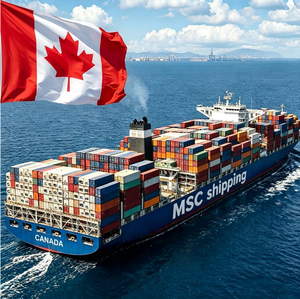



Operating at the intersection of heavy industrial manufacturing and complex multimodal logistics, Intertrans Express Inc. serves as a licensed NVOCC and certified CTPAT partner. With over four decades of operational excellence, our company integrates factory-floor compliance with origin-to-destination transport security.
Direct issuance of House Bills of Lading (HBL), in-house AMS/ISF filings, and priority U.S./Canada customs clearance through validated supply chain security standards.
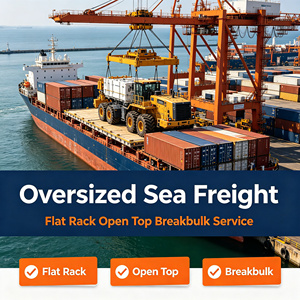
Proprietary load-securing calculations, flat rack blocking & bracing, breakbulk chartering, and multi-axle heavy haulage coordination for oversized industrial assets.
Complete tariff prepayment, Duty Paid customs entry handling, tax compliance, and seamless final-mile delivery directly to job sites, plants, or distribution hubs globally.
Executive Summary: Procuring heavy machinery and out-of-gauge (OOG) equipment from overseas manufacturing hubs demands strict alignment between European Union Directives (CE Marking), international packaging standards (ISPM-15), structural rigging dynamics, and multimodal customs clearance frameworks. This section outlines the engineering and regulatory parameters governing high-value oversized cargo exports.
For international buyers and importers sourcing industrial equipment, standard compliance is non-negotiable. The CE mark signifies that oversized machinery meets fundamental health, safety, and environmental protection requirements established under European Directives. Specifically, heavy industrial exporters must conform to:
Engineered out-of-gauge cargo undergoes severe physical dynamics during ocean voyage and multimodal transit. Roll, pitch, heave, and extreme weather forces at sea require factories to incorporate dedicated lifting lugs (pad eyes) validated via Finite Element Analysis (FEA). Lashing points must be rated to withstand dynamic accelerations exceeding 1.8g along longitudinal and transverse axes.
| Regulatory Standard / Standard Code | Primary Scope & Focus | Impact on Oversized Cargo Export | Compliance Verification Method |
|---|---|---|---|
| CE Directive 2006/42/EC | Machinery Safety & Risk Assessment | Mandatory for EU/EEA market entry; prevents customs seizure at European ports. | Technical Construction File (TCF) & Notified Body Certificate |
| IMO / ILO / UNECE CTU Code | Cargo Transport Unit Packing & Lashing | Governs center-of-gravity (CoG) calculation and ocean securing on Flat Racks. | Marine Surveyor Lashing Certification & Friction Testing |
| ISPM-15 Wood Packaging | Phytosanitary International Standards | Prevents biological pest transport via dunnage, wooden saddles, and heavy crates. | Heat Treatment (HT) Stamp & Fumigation Certification |
| US Customs CTPAT & FMC | Supply Chain Security & NVOCC Filing | Accelerates clearance, bypasses physical customs holds, permits in-bond transit. | Automated Manifest System (AMS) & ISF 10+2 Direct Transmission |
The global procurement landscape for oversized industrial machinery is undergoing a paradigm shift driven by technological automation, green shipping mandates, and tariff restructuring. Importers, project managers, and supply chain directors must adapt to four critical structural trends:
Uncertainties surrounding cross-border trade tariffs, anti-dumping duties, and complex local customs fees have made Traditional FOB (Free on Board) procurement risk-averse for buyers. Modern EPC contractors increasingly demand turn-key DDP pricing models. Specialized freight forwarders now absorb customs liability by utilizing pre-filed tariff compliance pathways, protecting buyers from unexpected demurrage, storage penalties, and clearance delays at destination ports.
To reduce expensive on-site assembly costs in North America and Europe, global factories are manufacturing larger, fully assembled industrial modules. Heavy skids, pre-wired control centers, and super-heavy reactor vessels are shipped as monolithic units. This trend drives increased demand for 40' High-Cube Flat Racks, Open Tops with removable headers, and dedicated Breakbulk Heavy Lift Vessel (HLV) charters equipped with shipboard cranes rated above 500 metric tons.
High-value industrial machinery incorporates micro-electronics and calibrated tolerances sensitive to mechanical shocks. Procurement contracts now mandate real-time cellular/satellite IoT transponders mounted directly to cargo skid bases. These sensors transmit real-time telemetry regarding G-force impacts, ambient humidity, tilt angles, and GPS locations. Forwarders must maintain zero-incident operational protocols verified by continuous data logs.
With the International Maritime Organization (IMO) enforcing strict carbon intensity indicators (CII), major logistics networks are transitioning oversized freight onto dual-fuel LNG and methanol-powered project vessels. Procurement officers evaluating vendor tenders now weigh Scope 3 carbon emission metrics alongside transit times and landed costs.
Shipping out-of-gauge equipment requires overcoming spatial limitations imposed by standard marine containers and highway infrastructure. Below is a detailed breakdown of equipment engineering innovations transforming heavy lift transport:
Advanced 3D stowage modeling permits over-width and over-height cargo to fit securely onto collapsable-end Flat Racks. Custom steel outriggers and heavy-duty corner castings ensure maximum payload weight distribution without exceeding container vessel bay slot allowances.
For cargo exceeding standard axle weight restrictions on North American and European highways, forwarders deploy Self-Propelled Modular Transporters (SPMTs) and multi-axle hydraulic trailers. Precision hydraulic levelling protects heavy castings from torsional flex during final-mile delivery.
Integration of bonded warehousing facilities adjacent to ocean terminals allows short-term holding, re-rigging, and customs inspection deferral. In-bond transfers (IT entries) eliminate immediate duty payments while cargo undergoes destination site preparation.
Selecting the optimal shipping mode for oversized assets requires balancing transit speed against payload constraints and budget limits. Review the strategic matrix below to guide your procurement decisions:
| Transport Mode | Ideal Cargo Profile | Dimensional & Weight Limits | Transit Speed | Cost Profile |
|---|---|---|---|---|
| Flat Rack (40' HC) | Over-width / Over-height industrial skids | Max Payload ~45,000 kg; OOG overhang allowable | Standard Ocean Schedule | Moderate / High Efficiency |
| Open Top Container | Over-height machinery loaded by overhead crane | Standard length/width; Top over-height unlimited | Standard Ocean Schedule | Economical for height OOG |
| Breakbulk Project Vessel | Extreme heavy lift, turbines, massive boilers | No dimensional limits; Unit weights > 500 Tons | Flexible Charter Schedules | Capital Intensive / Project Rates |
| Charter Air Freight | Urgent replacement parts, high-value components | Nose-door loading (B747F / An-124 limits) | Expedited (24–72 Hours) | Premium Air Freight Rates |
Connect directly with our senior logistics engineers and trade compliance specialists. Receive a comprehensive route survey, tariff analysis, and door-to-door DDP quote for your next oversized machinery move.
Get a Quote