Precision-Engineered Passenger, Charter, and Commercial Marine Vessels Built to ISO 12217 & CE Directive 2013/53/EU Standards
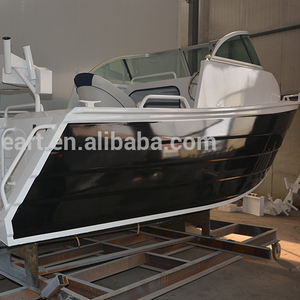
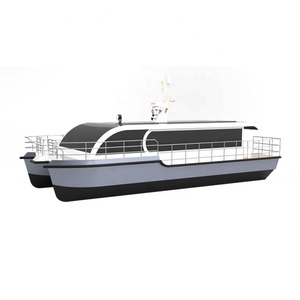
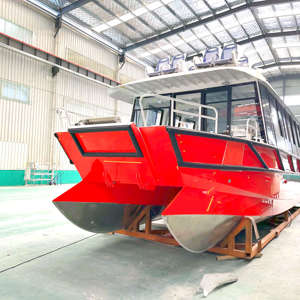
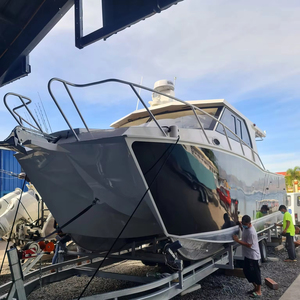
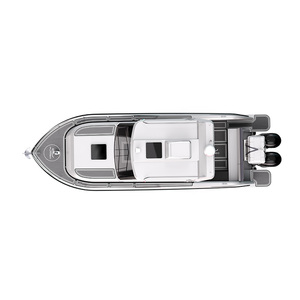
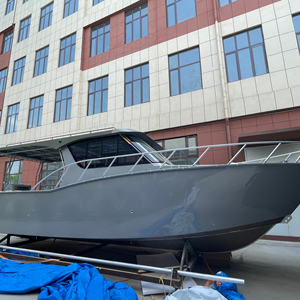
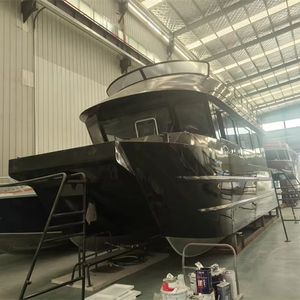
In the rapidly evolving global maritime procurement sector, sourcing commercial aluminum vessels—ranging from 5m mini cuddy cabin yachts to heavy-duty 18m catamaran charter fishing vessels—requires a sophisticated understanding of marine engineering standards, international regulatory compliance, and cross-border supply chain security. Navigating the modern marine industry demands more than just identifying a manufacturing facility; it mandates partnering with an integrated factory supply chain ecosystem capable of delivering verified structural integrity under CE Directive 2013/53/EU, coupled with seamless international logistics execution.
Historically, B2B buyers in North America, Europe, Australia, and East Asia encountered severe friction during vessel acquisition: Fragmented communication between shipbuilders, independent naval architects, third-party certification bodies (such as DNV, Lloyd’s Register, and RINA), and international freight forwarders frequently led to cost overruns, delayed deliveries, and import compliance holds at port terminals. Today’s leading OEM/ODM supply chain factories in manufacturing hubs like Qingdao have rewritten this paradigm by establishing end-to-end, vertically integrated manufacturing and logistical channels.
"True information gain in marine procurement lies at the nexus of metallurgical precision, hull hydrodynamics, and verified NVOCC freight compliance. A CE-certified hull is only as valuable as the secure, uncompromised logistics chain that delivers it to its home port."
This whitepaper serves as an authoritative guide for commercial charter operators, passenger vessel fleet managers, marine rental enterprises, and government procurement agencies. By evaluating metallurgical properties, automated pulse-MIG welding protocols, modular hull design principles, and CTPAT-certified freight forwarding frameworks, this document outlines how global buyers can de-risk their maritime capital expenditure while maximizing fleet operational uptime.
Premier aluminum boat manufacturing facilities—exemplified by industry leaders such as Gospel Boat and Furreo Marine—utilize advanced marine-grade plate alloys specifically formulated to resist galvanic corrosion while providing exceptional strength-to-weight ratios. The structural backbone of every commercial vessel in our portfolio relies on certified 5083-H116 and 5086-H116 aluminum alloys, recognized globally for superior yield strength and stress-corrosion cracking resistance in harsh saltwater environments.
Commercial catamaran and center console deep-V designs undergo extensive Computational Fluid Dynamics (CFD) modeling prior to precision CNC laser cutting. The structural engineering emphasizes:
Structural longevity hinges upon weld execution quality. Certified marine supply chain factories employ automated pulse-MIG welding systems operated by ISO 9606-2 certified aluminum welders. Full-penetration butt welds are executed on bottom plating ranging from 5mm to 8mm thickness, reinforced by continuous longitudinal girders and closely spaced transverse frames. Non-Destructive Testing (NDT), including ultrasonic thickness testing and liquid penetrant inspection, is performed across primary load-bearing joints to eliminate structural void risks.
Tensile strength ≥ 305 MPa, Proof stress ≥ 215 MPa. Superior marine corrosion resistance without structural fatigue.
Notified Body verification covering structural design, fuel system safety, fire protection, and electrical grounding systems.
Self-draining deck design combined with high-density closed-cell poly-foam filling for level flotation guarantee under ISO 12217.
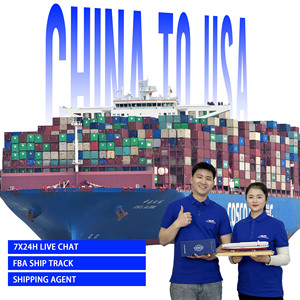
A critical structural advantage of our procurement ecosystem is the seamless integration of vessel manufacturing with robust international logistics networks. In collaboration with Intertrans Express Inc.—an established, FMC-licensed NVOCC (Non-Vessel Operating Common Carrier) and CTPAT-certified freight forwarding partner with over 40 years of shipping expertise—we eliminate the traditional logistics bottlenecks associated with oversized marine cargo movement.
Transporting commercial vessels from primary shipbuilding hubs in Qingdao to major destination ports in the USA (Los Angeles, Long Beach, New York/New Jersey), Canada (Vancouver, Toronto), Europe (Rotterdam, Hamburg, Le Havre), and Australia requires specialized intermodal execution:
| Vessel Length / Class | Recommended Shipping Mode | Logistics Protection Protocol | Compliance & Clearance Requirements |
|---|---|---|---|
| 5m - 7m Mini Boats | 40ft High Cube (HC) Container / RORO | Custom steel shipping cradles, shrink-wrap protection | AMS / ISF Filing, EPA Engine Certification |
| 9m - 11.6m Catamarans | 40ft Flat Rack (FR) or Open Top (OT) | Heavy-duty polyester web lashing, tarpaulin shielding | FMC NVOCC B/L, CTPAT Security Inspection |
| 12m - 18m Commercial Ships | Breakbulk / Deck Stowage / RORO | IACS-certified lifting lug calculations, marine insurance | Customs Brokerage, Port Authority Oversize Permits |
By leveraging owned corporate offices in Los Angeles (HQ), New York, Toronto, and Bangkok, our integrated supply chain ensures direct control over master bill of lading issuance, Automated Manifest System (AMS) filings, Importer Security Filings (ISF 10+2), and final-mile drayage or launch site delivery. Overseas buyers deal with a single accountable entity from structural aluminum cutting to final harbor commissioning.
As global environmental regulations tighten and operational fuel expenditure remains a primary variable in commercial fleet profitability, vessel procurement strategies are undergoing a fundamental transformation. B2B buyers and charter enterprise managers must align their long-term sourcing strategies with key emerging macro-trends:
Commercial charter operators across North America and Europe are rapidly retrofitting traditional internal combustion outboards with high-torque electric outboard arrays and diesel-electric hybrid systems. Forward-thinking factory supply chains now pre-engineer hull structures with designated battery bank enclosures, reinforced structural transoms capable of supporting heavy battery-pack weight distribution, and integrated thermal management conduits during initial CNC hull fabrication.
Modern commercial charter businesses can no longer rely on single-purpose vessels. High demand exists for adaptable deck layouts capable of converting from a morning commercial sport-fishing operation to an afternoon luxury passenger party cruise. Standardized modular track systems welded directly into the deck plate allow operators to interchange center console seating, bait-prep stations, and passenger bench modules within hours, maximizing vessel utility and operational yield per day.
Leading supply chain factories now generate full 3D Digital Twin CAD models for every manufactured hull number. Integrated with logistics telemetry provided by FMC-licensed forwarders, buyers can track hull fabrication milestones, non-destructive testing certificates, container loading schedules, and transpacific ocean vessel location in real-time through unified digital portals.
Unlike fiberglass (GRP) hulls—which face severe disposal penalties and environmental landfill restrictions at end-of-life—marine-grade 5083 aluminum retains up to 90% of its raw material residual value. Global fleet operators are increasingly opting for aluminum construction to satisfy corporate ESG (Environmental, Social, and Governance) directives and secure favorable financing terms from green maritime capital funds.
The next generation of commercial aluminum boats—highlighted by our 2026 Center Console Catamarans and Luxury Charter Yachts—incorporate advanced structural and hydrodynamic innovations designed to enhance vessel performance and passenger comfort:
Incorporating hydrofoil wings between twin aluminum hulls reduces hydrodynamic drag by 25-30%, resulting in higher top speeds and dramatic fuel savings.
Fully integrated digital switching networks enable total digital control of bilge pumps, navigation lights, livewell aeration, and sonar electronics from dual touchscreens.
Application of advanced ceramic sound-dampening coatings inside engine compartments and under-deck voids eliminates structural hull drumming for a whisper-quiet ride.
Selecting a commercial boat manufacturing partner requires total confidence in both product execution and operational support. Our unified factory-and-freight organization offers distinct strategic advantages designed for international enterprise buyers:
Detailed operational answers addressing technical specifications, regulatory standards, and international delivery workflows.
Our vessels are certified under CE Directive 2013/53/EU. Smaller vessels (5m to 7m cuddy cabins) are built to Category C (Inshore/Coastal) standards for wind forces up to Beaufort force 6 and wave heights up to 2 meters. Larger catamarans and commercial fishing ships (9m to 18m) are certified to Category B (Offshore) standards, designed for voyages offshore where conditions up to wind force 8 and wave heights up to 4 meters may be experienced.
Through our logistics partner Intertrans Express Inc. (FMC Licensed NVOCC), oversized boats (such as 11.6m and 18m catamarans) are secured onto specialized 40ft Flat Rack (FR) equipment or stowed directly as Breakbulk cargo on container vessels. Professional marine riggers install custom steel shipping cradles, heavy-duty lashing straps, and weather-proof heat-shrink wrapping to safeguard the vessel during ocean transit.
Yes. As a primary OEM/ODM factory supplier, we offer complete customization. Buyers can specify outboard engine brands (Mercury, Yamaha, Suzuki), electronic navigation packages (Garmin, Simrad, Raymarine), livewell capacities, passenger seating layouts, T-top canopy configurations, and specialized commercial charter equipment prior to hull welding.
Every shipment includes a full compliance dossier: Commercial Invoice, Packing List, FMC-licensed Ocean Bill of Lading, Builder’s Certificate (MSO/COO), CE Declaration of Conformity (DoC), EPA Engine Compliance Documentation, and ISF/AMS Customs Filings executed directly by our CTPAT-certified team.
5083-H116 marine aluminum offers superior impact resistance against underwater debris and rocky groundings, weighs approximately 30% less than equivalent fiberglass structures (resulting in higher speed and lower fuel burn), requires zero gelcoat maintenance, and is non-flammable and 100% recyclable.
Connect directly with our naval engineering team and international logistics specialists to discuss your fleet requirements, custom OEM drawings, and landed CIF/DDP cost projections.
Inquire Now