Explore China's premier heavy-duty cargo storage solutions, aluminum utility hulls, and commercial charter vessels engineered for harsh maritime storage and transit operations. All assets comply with international ISO hull standards and CE security regulations.
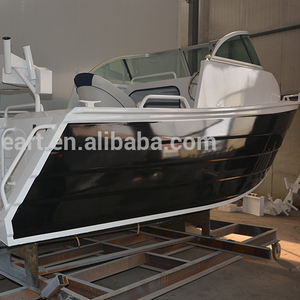
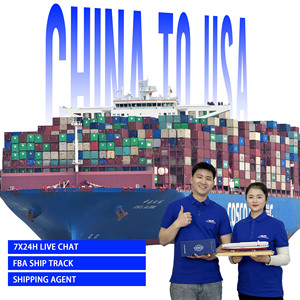
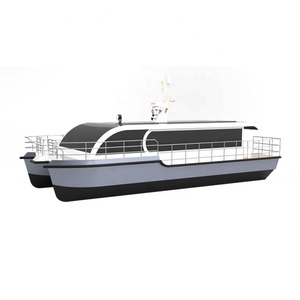
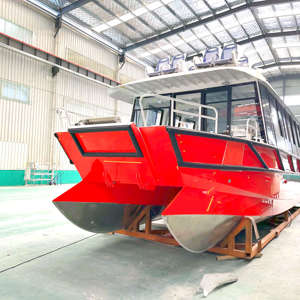
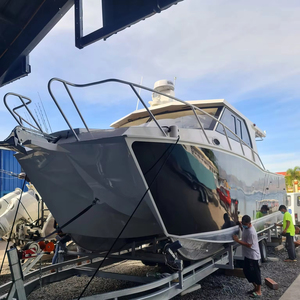
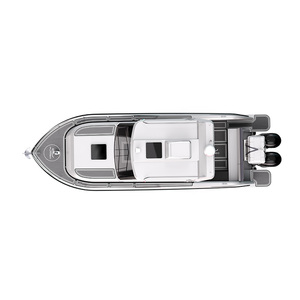
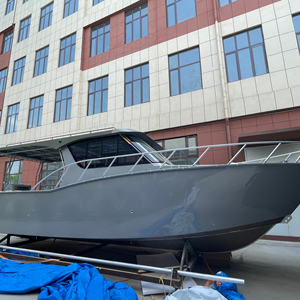
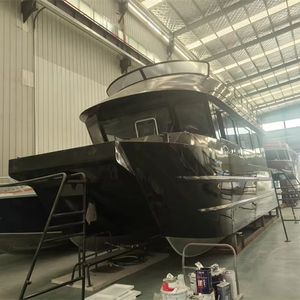
Navigating the global procurement landscape for industrial cargo storage units, commercial marine vessels, and floating logistics assets requires a rigorous understanding of both manufacturing engineering and cross-border freight compliance. As China reinforces its position as the premier manufacturing hub for marine-grade 5083 aluminum hulls, containerized cargo storage systems, and specialized charter craft, global procurement officers face the challenge of seamlessly bridging factory-floor production with international logistics lines.
Intertrans Express Inc., functioning as an FMC-licensed Non-Vessel Operating Common Carrier (NVOCC) and CTPAT-certified supply chain security partner, brings over 40 years of operational expertise to the movement of heavy machinery, commercial vessels, and cargo storage inventory across the Transpacific and intra-Asia corridors. Incorporating direct operational touchpoints in Qingdao, Shanghai, Ningbo, and global hubs in Los Angeles (HQ), New York, Toronto, and Bangkok, we ensure that every cargo asset sourced from Chinese manufacturers is verified for structural integrity, clear customs seamlessly, and arrives under audited bills of lading.
By bypassing third-party logistics brokers and managing documentation (AMS/ISF filings, IMDG dangerous goods clearance, and export customs) directly, buyers eliminate supply chain friction, optimize total landed cost (TCO), and protect their capital investments against unexpected demurrage or regulatory holds.
The international cargo storage and vessel procurement ecosystem is undergoing a structural transformation driven by decarbonization mandates, advanced material science, and supply chain regionalization. Overseas buyers must adapt to these macro-trends to preserve asset value and maximize operational longevity.
Traditional steel cargo containers and marine storage structures suffer high maintenance overhead due to saltwater oxidation. Chinese manufacturers are rapidly shifting toward high-tensile 5083-H116 aluminum-magnesium alloys. This material provides superior tensile strength (≥305 MPa), exceptional fatigue resistance, and an operational lifespan exceeding 25 years with minimal anti-corrosive coating upkeep.
Modern commercial charter craft and coastal storage barges feature modular, reconfigurable deck plates. Facilities can instantly convert passenger or utility space into secure, weather-sealed cargo storage zones fitted with twist-lock container tie-downs, enabling dual-use revenue models for commercial charter fleet operators.
Leading Chinese exporters are embedding smart telemetry into cargo storage holds and vessel hulls. Real-time sensors track interior humidity, vibration levels, door actuation, and thermal anomalies during transit, transmitting telemetry directly to fleet logistics dashboards via satellite links.
Procuring cargo storage systems and commercial vessels from China requires a holistic Total Cost of Ownership (TCO) evaluation. Relying solely on upfront FOB price quotes often hides backend costs related to specialized freight loading, tariff classification errors, and structural corrosion mitigation.
| Storage System Type | Primary Material Standard | Corrosion Resistance | Max Payload Capacity | Ideal Procurement Application |
|---|---|---|---|---|
| Aluminum Catamaran Cargo Craft | 5083-H116 Marine Alloy | Extreme (Saltwater Rated) | 5.5 – 18.5 Metric Tons | Coastal island cargo transfer, high-speed freight chartering |
| Cuddy Cabin Utility Vessel | 5052/5083 Grade Aluminum | High (Sealed Coating) | 1.2 – 3.8 Metric Tons | Short-sea rapid storage transport, light commercial duty |
| Heavy Duty Floating Barges | Q355B Structural Steel / Alloy | Moderate (Requires Anodes) | 50 – 500+ Metric Tons | Bulk industrial storage, harbor equipment staging |
| ISO Modular Cargo Holds | Corten Steel / Composite Liner | High (Industrial Paint) | 28.2 Metric Tons (20ft Container) | Intermodal land-sea storage, secure static cargo holding |
Shipping commercial boats, oversized aluminum hulls, and heavy cargo storage structures from China to international destination ports presents complex engineering and logistical challenges. Standard box containers are frequently unsuited for wide-beam vessels, necessitating Flat Rack (FR), Open Top (OT), or Roll-on/Roll-off (RORO) transport modes.
For wide-beam charter catamarans (such as 11.6m x 3.3m models), Intertrans Express designs customized cradles, high-tensile polyester lashing, and anti-abrasion padding. Our port captains oversee lifting at Qingdao and Shanghai docks to prevent hull twisting or tie-down stress fractures.
Failing to file Importer Security Filings (ISF 10+2) 24 hours prior to vessel loading in China results in immediate $5,000 CBP penalties and customs holds. Operating as an FMC-licensed NVOCC, we submit automated manifest system (AMS) data directly to US Customs, securing seamless release.
Our validated CTPAT status grants importers expedited customs entry processing, reduced physical inspection rates at US ports of entry (Los Angeles/Long Beach, NY/NJ), and priority processing during supply chain disruptions.
Whether moving single aluminum utility boats or multi-container industrial storage shipments, our global network guarantees direct carrier space, transparent tracking, and door-to-door execution.
Consult Our Logistics EngineersBelow are authoritative answers to common technical, legal, and operational questions encountered when sourcing cargo storage systems and commercial vessels from suppliers in China.
5083-H116 marine aluminum offers exceptional strength-to-weight ratios, high impact resistance, and complete immunity to osmosis (unlike fiberglass). Compared to steel, it does not rust, requires no expensive paint maintenance cycles in saltwater, and provides significantly higher resale asset value over a 25-year operational lifecycle.
Smaller craft (under 2.3m beam) can fit inside standard 40ft High Cube containers. Oversized commercial catamarans (e.g., 9m to 18m models) are shipped via Flat Rack (FR) equipment or Ro-Ro (Roll-on/Roll-off) vessels. Our team designs custom steel cradles to distribute hull weight evenly and secures mandatory ocean freight insurance.
An FMC (Federal Maritime Commission) licensed NVOCC acts as a legally bonded carrier capable of issuing official House Bills of Lading (HBL). This ensures direct contractual accountability, transparent freight rate pricing without hidden broker fees, and seamless resolution of port authority claims.
Essential documentation includes the Commercial Invoice, Detailed Packing List, Original Bill of Lading, Certificate of Origin (Form A or RCEP), CE Declaration of Conformity (for EU), Builder’s Certificate, EPA Engine Emissions Certification (for motorized craft), and timely ISF/AMS filings.
Yes. Leading Chinese manufacturers can retrofit deck spaces with insulated cold-chain cargo holds, explosion-proof battery storage bays, and specialized tie-down tracks for IMDG-regulated dangerous goods. Our team assists with verifying IMDG classification prior to vessel export booking.
Direct ocean transit from Qingdao/Shanghai to US West Coast ports (Los Angeles/Long Beach) typically averages 14 to 18 days. Transit to US East Coast ports via Panama takes 28 to 34 days, while European discharge ports (Rotterdam, Hamburg, Felixstowe) range between 32 and 40 days.
Connect with our senior logistics specialists and factory liaisons to obtain instant factory-direct quotations, technical vessel drawings, and door-to-door ocean freight estimates under audited NVOCC management.
Get a Quote