Explore our premium door-to-door, DDP, air, ocean, and consolidation brokerage capabilities customized for international procurement networks.
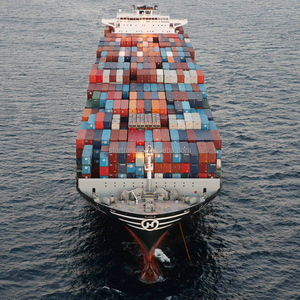
We leverage Tier-1 long-term contract allocations across Transpacific and Intra-Asia trade lanes, offering stabilized ocean freight rates and guaranteed equipment access during peak surge windows.
As a verified CTPAT partner and licensed NVOCC, we maintain stringent chain-of-custody oversight, accelerating U.S. Customs clearance while minimizing physical examination holds.
Dedicated port drayage, cross-border trucking, and transloading capabilities in key hubs including Los Angeles, Long Beach, New York, Toronto, and South East Asia corridors.
In the contemporary landscape of global supply chain management, cross-border procurement between international enterprise buyers and Chinese manufacturing clusters demands an elevated level of freight brokerage integration. As high-volume factories across Guangdong, Zhejiang, Jiangsu, and Shandong scale their production outputs, the role of a premier China freight brokerage manufacturer and logistics agent transitions from simple freight execution to comprehensive supply chain risk mitigation. Navigating complex international maritime regulations, tariff classifications, volatile spot rates, and strict customs compliance protocols requires an authoritative partner possessing deep operational roots in both origin and destination regions.
Historically, overseas importers engaged in B2B transactions with Chinese suppliers relied heavily on fragmented freight forwarders and decentralized logistics brokers. This legacy setup often resulted in transactional friction, unexpected port demurrage, opaque billing under DDP/DDU terms, and compliance vulnerabilities. Today’s supply chain benchmark demands end-to-end transparency, digital tracking integration, and strict regulatory adherence under FMC (Federal Maritime Commission) authority and CTPAT (Customs Trade Partnership Against Terrorism) certification.
An elite freight brokerage operates not merely as a intermediary, but as a structural architect of cross-border trade. By managing direct ocean carrier allocations, issuing proprietary Bills of Lading (B/L), transmitting automated Automated Manifest System (AMS) and Importer Security Filings (ISF) directly to U.S. Customs and Border Protection (CBP), and orchestrating multi-factory cargo consolidation, professional brokers provide scalable enterprise value. This infrastructure ensures that whether shipping Full Container Loads (FCL) or Less than Container Loads (LCL), landed costs remain predictable, transparent, and structurally optimized.
| Freight Service Mode | Target Cargo Profile | Regulatory & Filing Specs | Transit Efficiency | Landed Cost Impact |
|---|---|---|---|---|
| FCL Ocean Transport (20GP/40HQ) | High-volume industrial gear, factory runs, heavy bulk materials | FMC NVOCC B/L, ISF 10+2, Master B/L filing | 12 - 22 Days (Transpacific) | Lowest cost-per-CBM for scaled shipments |
| LCL Multi-Supplier Consolidation | Small-to-medium B2B orders, split-supplier components | Co-loaded House B/L, 7-10 Days Origin Free Warehouse | 15 - 25 Days (Hub-to-Hub) | Eliminates minimum container space waste |
| Express Air Freight & Charter | High-value electronics, medical devices, emergency inventory | IATA Air Waybill, DG Declaration, Priority Clearance | 3 - 7 Days Global Door-to-Door | Premium investment for urgent market access |
| DDP / DDU Door-to-Door Intermodal | E-commerce fulfillment, Amazon FBA, dock delivery | Integrated HTS Entry, Prepaid Duty/Tax, Port Drayage | Multimodal Optimized (Sea + Rail/Truck) | Total landed cost certainty, zero buyer overhead |
The global freight brokerage sector is undergoing a profound structural shift driven by technological convergence, dynamic regulatory shifts, and environmental mandates. Importers sourcing goods from Chinese manufacturers must realign their procurement frameworks with the following critical developments:
1. Predictive Supply Chain Digitization & Real-Time Milestone Visibility: Modern buyers no longer accept delayed tracking reports or manual status calls. The future of freight brokerage relies on automated IoT sensor deployment, satellite container tracking, and AI-driven predictive transit modeling. Advanced freight brokers integrate digital dashboards that feed milestone status directly to enterprise ERP systems, signaling potential weather delays, port congestion, or customs holds before they cascade into costly stockouts.
2. Decarbonization and Sustainable Maritime Shipping Protocols: With the International Maritime Organization (IMO) enforcing strict greenhouse gas reduction targets, ocean carriers and freight brokers are adopting green shipping lanes. Shippers now require carbon footprint transparency for each TEU moved. Leading freight brokerages are integrating low-emission vessel routing, bio-fuel offset credits, and electric terminal drayage fleet options to align with global Corporate Social Responsibility (CSR) metrics.
3. Advanced Regulatory Automation & Near-Instant Customs Screening: Customs authorities globally, including US CBP and European Union Tax & Customs jurisdiction, are enforcing zero-tolerance policies regarding trade compliance, Uyghur Forced Labor Prevention Act (UFLPA) audit trails, and HTS tariff accuracy. Advanced brokers utilize automated algorithmic screening to audit commercial invoices, packing lists, and origin credentials prior to vessel departure, preventing catastrophic seizures and terminal fines.
4. Flexible Multimodal Nearshoring & Multi-Country Consolidation Hubs: As manufacturing strategies expand across China and Southeast Asia (such as Thailand, Vietnam, and Malaysia), logistics brokers are establishing interconnected hub-and-spoke consolidation networks. By orchestrating unified ocean and air freight routing out of both Chinese ports (Ningbo, Shanghai, Shenzhen) and Southeast Asian regional facilities (Bangkok, Singapore), brokers afford international buyers total supply chain agility.
Founded on a commitment to operational precision and customer-centric freight management, Intertrans Express Inc. (Intertrans Group) represents over four decades of combined institutional experience in international ocean, air, and domestic logistics. Operating as a fully authorized FMC-licensed Non-Vessel Operating Common Carrier (NVOCC) and a certified CTPAT supply chain security partner, Intertrans provides enterprise-grade control over cross-border cargo movements.
Unlike standard freight brokers that subcontract critical operational steps to unverified third parties, Intertrans manages booking, B/L documentation, in-house AMS/ISF transmission, customs entry, and final-mile drayage through dedicated owned infrastructure. With strategic branch offices established in Los Angeles (Global HQ), New York, Toronto, and Bangkok, our operational coverage bridges time zones, providing unbroken oversight from factory floor pickup to final warehouse receipt.
Intertrans Express Inc.
2209 W Valley Blvd.
Alhambra, CA 91803, USA
Tel: (626) 299-1822
Intertrans Express Inc.
20 W Lincoln Ave. Suite 102
Valley Stream, NY 11580, USA
Tel: (516) 812-8500
Intertrans Express (Canada), Inc.
65 International Blvd. Suite 204
Etobicoke, ON M9W 6L9, Canada
Tel: (416) 674-9888
Intertrans Express, Inc.
582 Soi On Nut 17, Suan Luang
Bangkok 10250, Thailand
Tel: 02-1143360
Complex industrial shipments often require specialized compliance protocols. Intertrans maintains certified dangerous goods (DG) teams fully trained under IMDG (International Maritime Dangerous Goods) and IATA regulations. From lithium-ion battery transport to chemical compounds, our teams verify UN packaging compliance, prepare dangerous goods declarations, and secure specialized carrier approvals. Furthermore, for out-of-gauge (OOG) heavy industrial machinery, our project cargo division executes precise route surveys, port lashing inspections, flat rack/open-top equipment sourcing, and heavy-lift crane mobilization.
Gain actionable clarity on customs clearance, Incoterms, compliance filings, and cargo safety protocols.