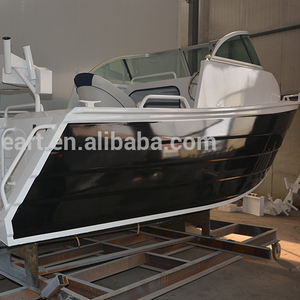
Direct factory-to-port ocean freight handling for specialized commercial vessels, aluminum catamarans, and luxury yachts manufactured in China maritime hubs.
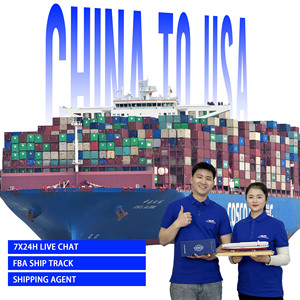
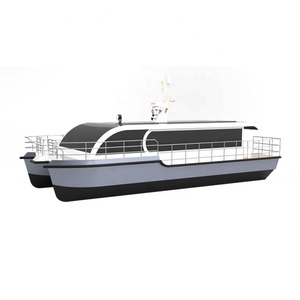
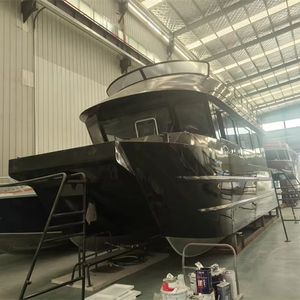
The modern maritime supply chain connecting China manufacturers to global markets across North America, Europe, and Oceania has entered an unprecedented era of structural transformation. As global buyers navigate fluctuating TEU slot capacities, shifting carrier alliance dynamics (such as the realignment among 2M, Ocean Alliance, and Gemini Cooperation), and heightened compliance mandates from international regulatory bodies, selecting a top-tier ocean freight supplier and NVOCC in China is no longer merely an operational task—it is a core strategic imperative for corporate resilience.
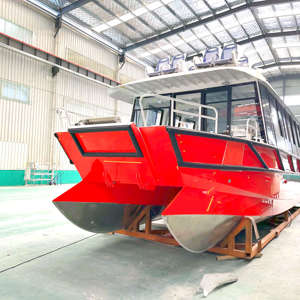
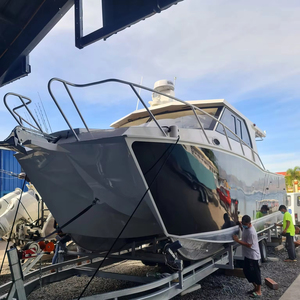
China continues to dominate global maritime exports, producing over 65% of the world’s commercial specialized vessels, structural aluminum catamarans, center-console sport yachts, and heavy industrial goods. Shipping these out-of-gauge (OOG) marine assets from primary manufacturing hubs like Qingdao, Ningbo, Shanghai, and Shenzhen requires sophisticated logistics engineering. Transporting an 11.6-meter catamaran or a commercial fishing vessel demands far more than basic container booking; it requires tailored breakbulk chartering, precision flat-rack cradling, marine lashing surveys, and strict compliance with the International Maritime Organization (IMO) SOLAS VGM (Verified Gross Mass) standards.
To achieve optimal landed costs and seamless transit integrity across Transpacific and Intra-Asia trade lanes, enterprise procurement officers must evaluate suppliers through the lens of Information Gain and Supply Chain Visibility. Key considerations include:
Full Container Load (20', 40', 40'HC) and Less Than Container Load consolidation programs engineered for cost efficiency, space guarantees, and direct port-to-port sailings.
End-to-end breakbulk freight handling for oversized boats, yachts, and heavy industrial equipment utilizing Flat Racks, Open Tops, and dedicated charter vessels.
Authorized NVOCC bill of lading issuance paired with in-house CTPAT supply chain security compliance, ensuring expedited customs clearance in North America.
Incorporated in 1999 by a visionary maritime leadership team backed by over 40 years of hands-on international shipping experience, Intertrans Express Inc. (Intertrans Group) operates as a premier Federal Maritime Commission (FMC) licensed Non-Vessel Operating Common Carrier (NVOCC) and a certified partner of the U.S. Customs and Border Protection CTPAT (Customs-Trade Partnership Against Terrorism) program.
Unlike asset-light freight brokers who outsource core operational responsibilities to unvetted third parties, Intertrans Express maintains direct administrative and operational control over the entire transportation file. With owned strategic corporate hubs situated in Los Angeles (HQ in Alhambra, CA), New York, Toronto, and Bangkok, supported by an audited network of global port agents, we bridge the communication gap between Asian manufacturing facilities and Western destination ports.
We issue our own legally recognized House Bills of Lading (HBL), take direct carrier accountability, and negotiate high-volume service contracts directly with ocean liner alliances.
Certified supply chain security infrastructure reduces U.S. and Canadian customs inspection ratios (MET/X-ray holds), safeguarding your cargo schedules against unexpected dwell times.
Direct EDI connection with U.S. Customs Automated Commercial Environment (ACE) allows our operations desk to submit manifest data 24-48 hours prior to vessel loading in China.
Certified dangerous goods (DG) handlers and maritime structural engineers trained in breakbulk lashing, marine survey verification, and heavy-lift crane loading operations.
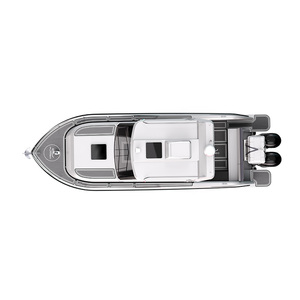
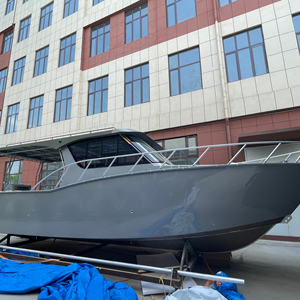
Purchasing commercial fishing catamarans, center console aluminum sport boats, or passenger charter vessels from China manufacturers involves precise technical procurement criteria. Marine assets are subject to stringent structural, hydrodynamic, and safety certifications before entering international territorial waters. When arranging export logistics for items such as the 11.6m Center Console Catamaran or Furreo 9m Luxury Charter Fishing Boat, procurement directors must analyze both manufacturing specs and ocean transport modes.
| Mode of Ocean Transport | Target Vessel Size / Specification | Lashing & Securing Protocol | Cost & Protection Index |
|---|---|---|---|
| Flat Rack Container (FR) | Beams up to 3.5m, Lengths up to 12m (e.g., 10m-11.6m Catamarans) | Custom steel cradles, polyester webbing straps, heat-shrink weather wrap | High Protection / Moderate Cost |
| Breakbulk Deck Cargo | Oversized commercial ships, Yachts >12m length or >4m height | Lifting lugs, bow/stern steel chocks, deck welding, marine surveyor approval | Maximum Capacity / Premium Charter Cost |
| Roll-on / Roll-off (Ro-Ro) | Vessels equipped with heavy-duty road trailers or launching cradles | Wheel chocks, internal deck tie-downs, weather-protected enclosed hold | High Protection / Vessel Availability Dependent |
| Standard 40' High Cube (Disassembled) | Mini boats, 5m Cuddy Cabins, dismantled consoles & outboard engines | Internal timber blocking, wire rope bracing, anti-humidity desiccants | Most Economical / Requires Reassembly |
When sourcing commercial passenger or charter boats from manufacturers in Qingdao, Ningbo, or Guangdong, global buyers must demand proof of international maritime compliance prior to ocean booking dispatch:
The global shipping industry is under dramatic regulatory and technological pressure to modernize. Importers and exporters leveraging China’s vast manufacturing network must realign their procurement strategies with four macro trends shaping international trade over the next decade:
Stricter Carbon Intensity Indicator (CII) and Energy Efficiency Existing Ship Index (EEXI) regulations are forcing ocean carriers to slow-steam or retire older feeder vessels. Shippers must build extra buffer days into Transpacific transit schedules.
Driven by the Digital Container Shipping Association (DCSA), 100% electronic Bill of Lading adoption by 2030 will eliminate physical paper couriers, speeding up title transfers and bank L/C releases for international transactions.
Enforcement of the U.S. Ocean Shipping Reform Act (OSRA-22) mandates transparent billing for container storage. Partnering with an FMC-licensed NVOCC ensures legal protection against unlawful port detention surcharges.
Moving high-value cargo like catamarans, heavy machinery, or retail ocean freight from point of origin in China to destination warehouses requires a structured, multi-stage operational workflow. Intertrans Express enforces a standardized 4-phase execution framework for every shipment file:
Verify cargo dimensions, HS Code classification, customs valuation, packing integrity, and IMO SOLAS VGM weight compliance prior to carrier booking release.
Issue FMC-licensed House Bill of Lading, secure vessel allocation, and file electronic AMS / ISF 10+2 data to US Customs 48 hours prior to vessel departure.
Real-time milestone monitoring across ocean voyages, tracking transshipment hubs, vessel AIS coordinates, and terminal berth schedules.
Seamless destination customs entry, CTPAT priority clearance, port terminal gate-out coordination, and final-mile appointment delivery to consignee dock.
Connect directly with Intertrans Express ocean logistics specialists across our Los Angeles, New York, Toronto, or Bangkok hubs for tailored vessel chartering, FCL/LCL rates, and customs brokerage guidance.