
Explore our certified end-to-end return processing, automated warehouse sorting, and international multimodal freight capabilities designed for global brand manufacturers and cross-border e-commerce operators.

In the contemporary global commerce paradigm, reverse logistics has evolved from a passive cost center into a cornerstone of sustainable supply chain architecture and brand equity management. Driven by the exponential growth of cross-border e-commerce (expected to exceed $2.1 trillion globally by 2026), international return rates have reached unprecedented levels. While traditional brick-and-mortar retail experiences return rates between 8% and 10%, direct-to-consumer (DTC) e-commerce platforms, Amazon FBA sellers, and omni-channel global electronics brands routinely face return rates ranging from 20% to as high as 35% in high-velocity categories such as consumer electronics, cosmetics, fast fashion, and automated home appliances.
For international buyers, brand owners, and logistics directors sourcing from China, managing the return merchandise authorization (RMA) lifecycle presents unique operational, regulatory, and financial hurdles. The friction involved in cross-border re-importation—including tariff barriers, customs classification complexities under General Administration of Customs China (GACC) regulations, fragmented parcel tracking, and high international freight costs—has historically led to massive value destruction, with millions of returned items abandoned, liquidated at penny-on-the-dollar valuations, or improperly landfilled.
"Modern reverse logistics is no longer merely about moving goods backward; it is a technology-driven engineering discipline that recaptures residual value through real-time ERP integration, automated secondary market disposition, and duty-free bonded re-manufacturing corridors."
Top Chinese reverse logistics manufacturers and logistics specialists have responded by building highly integrated, technology-first return supply chain networks. By coupling specialized overseas sorting facilities in North America and Europe with automated return fulfillment hubs in Chinese bonded zones (such as Shanghai, Shenzhen, and Ningbo), premier logistics partners like Intertrans Express Inc. and Maticexpress have established seamless circular supply chain frameworks. These solutions allow international enterprises to drastically compress disposition lead times, eliminate customs friction, and recover up to 75% of residual product value through professional grading, re-packaging, refurbishment, and secondary channel monetization.
| Operational Parameter | Traditional Cross-Border Returns | Next-Gen Chinese Reverse Logistics Model |
|---|---|---|
| Average Processing Lead Time | 45 - 90 Days (Manual Inspection) | 5 - 12 Days (Automated 3D Seeding & ERP Sync) |
| Customs & Duty Impact | Double Taxation & Tariff Friction | Bonded Repairs & Form 3311 Duty Drawback Exemptions |
| Sorting & Grading Throughput | 150 - 300 PPH (High Error Margin) | 1,200 - 4,800 PPH (Near-Zero Error Rate) |
| Value Recovery Rate | 10% - 25% (Bulk Liquidation/Scrap) | 55% - 80% (Refurbish, Re-pack, Re-stock) |
| Carbon & Waste Footprint | High Air Freight Carbon & Landfill Dumping | Circular Logistics & ESG-Compliant Secondary Disposition |
As global supply chains face tightening environmental mandates (such as the EU's Corporate Sustainability Due Diligence Directive and Digital Product Passport requirements), enterprise procurement leads must align with manufacturers and logistics integrators that implement advanced technological and regulatory frameworks. The next decade of reverse logistics procurement will be defined by five mega-trends:
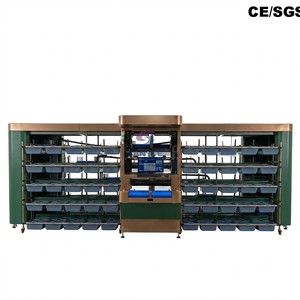
Leading Chinese return hubs are deploying high-speed automated sorting walls capable of handling 1,200 to 4,800 parcels per hour (PPH). Integrated with enterprise ERP systems via API, dynamic vision scanners identify SKU parameters, check warranty statuses, and direct parcels to designated sorting bins in real-time, reducing human error rates to below 0.02%.
Utilizing China’s Comprehensive Bonded Zones (CBZs), reverse logistics leaders offer "Return to Bonded Hub for Repair" models. Products enter Chinese bonded facilities without paying import tariffs, undergoing component-level repair, cosmetic refurbishing, and re-testing before re-exporting globally, preserving operational liquidity.
Procurement strategies are shifting toward localized overseas processing hubs in key consumption regions (Los Angeles, New York, Toronto, Hamburg). First-mile returns are inspected locally to filter non-salvageable waste, shipping only high-value items back to China via ocean LCL or rail freight to optimize landed costs.
Furthermore, circular economy compliance has transitioned from a corporate marketing gesture into a board-level procurement policy. Leading Chinese reverse logistics specialists are incorporating full material tracking, offering detailed certificates of destruction for non-repairable components, and extracting recoverable rare earths and metals in strict alignment with IMDG and local environmental protection directives.
Navigating international trade corridors requires deep regulatory credentials, infrastructure assets, and specialized operational knowledge. As an established FMC-licensed Non-Vessel Operating Common Carrier (NVOCC) and CTPAT-certified logistics enterprise with over 40 years of shipping legacy, our integrated network bridges the gap between origin factories in China and global retail destinations.
We operate as an FMC-licensed NVOCC and CTPAT-certified partner. This validation guarantees stringent supply chain security audits, expedited US Customs processing, in-house AMS/ISF transmission, and the authority to issue negotiable Bills of Lading, protecting clients against maritime legal risk.
Our logistics architecture connects seamlessly with enterprise platforms including SAP, Oracle, Shopify, and Amazon Seller Central. Clients maintain end-to-end milestone visibility—from customer RMA initiation to final destination delivery or warehouse restocking.
Leveraging owned operational offices in Los Angeles, New York, Toronto, and Bangkok alongside vetted carrier contracts (ocean FCL/LCL, priority air freight, cross-border rail, and drayage fleets), we engineer custom multimodal routings tailored to specific product margin profiles.
To ensure total operational transparency and financial compliance, our standardized international reverse logistics model follows a rigorous four-phase protocol designed to mitigate landed-cost volatility:
The end-consumer or B2B buyer initiates a return request. The item is routed via pre-paid local drayage or parcel courier to our regional processing node (e.g., Los Angeles or Hamburg). Outer shipping containers are scanned upon receipt, immediately updating the client's central ERP database.
At the regional node, automated vision systems and trained technicians grade the product based on standard SOPs:
Grade A: Unopened/Like New → Immediate local restocking and repackaging.
Grade B: Minor Cosmetic Defect → Local secondary channel liquidation or re-labeling.
Grade C/D: Technical Defect/High Value → Consolidated for bulk cross-border return to China.
Grade C/D goods are consolidated into ocean LCL or air freight shipments under specialized customs declarations. Upon arrival in China, cargo enters a Comprehensive Bonded Zone (CBZ) duty-free. Here, factory engineers perform component repair, firmware updates, or full remanufacturing without incurring traditional import VAT or tariffs.
Refurbished units undergo rigorous QA re-testing, receive new factory seals and packaging, and are re-entered into active international inventory. Items can be dispatched directly to target markets, maximizing asset recovery while keeping manufacturing loops completely closed.
Critical operational questions answered by our senior logistics compliance officers to help global brands optimize their reverse supply chain strategy:
Partner with China's leading reverse logistics specialists and licensed freight forwarders. Maximize asset recovery, streamline customs compliance, and lower your global RMA landed costs.