Select your target trade lane or freight modality below to request customized rate structures, space allocation guarantees, and door-to-door execution plans.
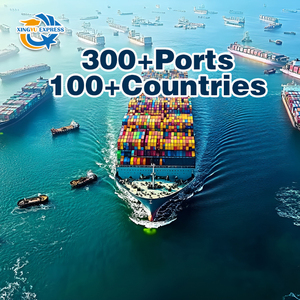
In an era defined by geopolitical recalibration, fluctuating freight indices, and heightened customs compliance rigor, establishing a resilient logistics backbone from China to major global commercial hubs is paramount for enterprise profitability.
As a leading premier China wholesale freight logistics supplier and exporter, Intertrans Express Inc. operates at the intersection of regulatory compliance, carrier capacity management, and digital freight execution. Modern international procurement requires far more than moving physical containers from Port A to Port B; it demands comprehensive risk engineering, automated customs pre-clearance, and seamless end-to-end visibility across ocean, air, rail, and final-mile drayage networks.
China remains the undisputed epicentre of industrial manufacturing, exporting millions of Twenty-Foot Equivalent Units (TEUs) annually across core maritime trade lanes, including the Transpacific Eastbound (TPEB), Asia-Europe Westbound (AEWB), and Intra-Asia routes. However, global buyers face unprecedented operational frictions: volatile spot ocean freight rates, capacity bottlenecks at origin gateways such as Shenzhen, Ningbo-Zhoushan, Shanghai, and Qingdao, stringent U.S. Customs and Border Protection (CBP) Partner Government Agency (PGA) inspections, and complex tax compliance frameworks under DDP (Delivered Duty Paid) Incoterms.
To overcome these systemic bottlenecks, enterprise buyers must move beyond traditional freight booking agents and partner with licensed Non-Vessel Operating Common Carriers (NVOCCs) and Customs-Trade Partnership Against Terrorism (CTPAT) certified logistics partners who hold direct carrier service contracts, manage owned destination nodes, and exercise direct operational control over the paperwork chain.
Founded on over four decades of deep operational mastery, Intertrans Express Inc. eliminates intermediary markup, mitigates customs detention risk, and delivers quantifiable landed-cost savings.
Operating under official Federal Maritime Commission (FMC) licensing, we issue our own legally binding Negotiable and Non-Negotiable Ocean Bills of Lading. This direct authority shortens the administrative chain, permits direct rate negotiations with global ocean alliances (Ocean Alliance, 2M, THE Alliance), and eliminates third-party broker markups.
As a validated partner in the U.S. Customs and Border Protection CTPAT program, our shipments enjoy green-lane priority clearance, significantly reduced physical inspection rates (MET/Customs Exams), and expedited processing through U.S., Canadian, and European port terminals.
We transmit Automated Manifest System (AMS) and Importer Security Filing (ISF 10+2) data directly to customs portals prior to vessel departure from China. Direct transmission eliminates $5,000 late-filing fines, prevents port holds, and guarantees compliance with strict 24-Hour Advanced Manifest rules.
Unlike virtual freight brokers who outsource destination handling to unvetted sub-contractors, Intertrans maintains owned and operated corporate offices in Los Angeles (HQ), New York, Toronto, and Bangkok. Our local teams oversee drayage, warehousing, and customs entry in real time.
Our certified operations team possesses expert knowledge of IMDG and IATA dangerous goods regulations. From lithium battery bulk shipments to oversized breakbulk and flat-rack heavy machinery, we orchestrate specialized lashing, marine surveys, and permits.
We pioneer comprehensive Delivered Duty Paid (DDP) door-to-door solutions for Amazon FBA sellers, enterprise wholesalers, and e-commerce brands. We handle all origin pickup, export customs, ocean/air freight, duty/tax disbursement, and appointment-scheduled warehouse delivery.
Short-term spot freight discounts often mask hidden downstream costs: port demurrage fees, detention penalties, improper HTS tariff classifications, and missed retail delivery windows. Intertrans Express constructs end-to-end logistics plans where sea freight rates, terminal handling charges (THC), bond fees, and final-mile drayage are optimized holistically—yielding an average 14.8% reduction in landed cost per SKU for our wholesale partners.
From single LCL pallets to complex multi-modal project cargo, we configure flexible routing architectures designed around your inventory velocity and supply chain KPIs.
Direct contract ocean transportation for 20'GP, 40'GP, 40'HC, Reefer, Open Top, and Flat Rack containers with vessel space guarantees during peak season.
Weekly buyer consolidation services combining cargo from multiple China suppliers into single co-loaded containers to optimize freight density and minimize import fees.
Priority airport-to-airport and door-to-door express air cargo options for high-value electronics, seasonal fashion apparel, and time-critical industrial components.
Complete turn-key DDP shipping covering origin factory pickup, export customs declaration, overseas freight, destination duty clearance, and scheduled dock delivery.
Licensed customs brokerage teams delivering accurate Harmonized Tariff Schedule (HTS) classification, Section 301 duty engineering, and PGA entry management.
Robust road transport networks executing port drayage from major marine terminals directly to distribution centers, cross-docks, and intermodal rail ramps.
| Transport Mode | Avg. Transit Time (China to US West Coast) | Avg. Transit Time (China to Europe Base Ports) | Cost Efficiency Index | Recommended Cargo Profile |
|---|---|---|---|---|
| Express Air Cargo | 2 – 4 Days | 3 – 5 Days | Premium High | Time-critical prototypes, high-value electronics, medical devices (<500 kg) |
| Standard Air Freight | 5 – 7 Days | 6 – 8 Days | Moderate High | Seasonal merchandise, inventory replenishment stock (500 kg – 3,000 kg) |
| Fast Sea Freight (Matson/EXX) | 11 – 14 Days | 18 – 22 Days | Balanced / Moderate | E-commerce fulfillment, Amazon FBA shipments, urgent wholesale goods |
| Standard Ocean FCL (Cosco/Evergreen) | 16 – 20 Days | 28 – 35 Days | Optimal High | Bulk wholesale commodities, machinery, heavy industrial goods (>15 CBM / Full 20'/40' GP) |
| Ocean LCL Consolidation | 18 – 22 Days | 30 – 38 Days | Cost Saver | Medium wholesale orders, multi-supplier consolidations (1 CBM – 14 CBM) |
Analyzing macro-economic shifts, regulatory evolutions, and technological transformations that will define China-global supply chain competitiveness over the next decade.
As global customs authorities step up tariff audits on cross-border e-commerce and wholesale imports, traditional "gray-market" DDP clearance practices are rapidly disappearing. Importers are increasingly adopting formal DDP structures backed by algorithmic Harmonized Tariff Schedule (HTS) mapping, non-resident importer (NRI) registrations, and legitimate duty mitigation programs such as Section 321 micro-shipment clearance or First Sale Rule valuation. Partnering with an FMC-licensed forwarder ensures that duty disbursements withstand rigorous customs scrutiny while avoiding unexpected retrospective tax bills.
Static tracking updates ("Vessel Departed Origin") are no longer sufficient for modern procurement teams. The future of China freight logistics lies in smart containers equipped with IoT telematics that provide real-time updates on GPS location, interior container temperature, relative humidity, shock levels, and door-opening events. This data enables enterprise buyers to dynamically adjust warehouse labor scheduling, predict supply chain bottlenecks before they occur, and automate cargo insurance claims processing in the event of transit damage.
While China remains the world’s central manufacturing hub, global procurement strategies are evolving into hybrid models. Forward-thinking enterprise buyers are leveraging multi-modal logistics corridors that combine primary manufacturing in China with final assembly or packaging in Southeast Asia (Thailand, Vietnam) or Mexico (Nearshoring to USMCA). Intertrans Express facilitates these complex multi-country consolidation moves, using owned regional infrastructure in Bangkok and Los Angeles to streamline transshipments without breaking the customs documentation chain.
Environmental, Social, and Governance (ESG) mandates are rapidly migrating from corporate reporting into logistics procurement contracts. With the International Maritime Organization (IMO) imposing stricter Carbon Intensity Indicator (CII) targets and the EU Emissions Trading System (EU ETS) penalizing maritime emissions, global shippers must track CO2 equivalent emissions per TEU-kilometer. We provide enterprise clients with certified carbon footprint reports, offering green ocean freight options powered by bio-LNG and green methanol fuels to meet zero-carbon targets.
Discover how advanced digital infrastructure, electronic documentation, and specialized hazmat protocols are reshaping freight forwarding from China.
The transition from paper-based original Bills of Lading to standardized electronic Bills of Lading (eBL) is accelerating. By utilizing DCSA-compliant blockchain protocols, eBL adoption reduces document courier turnaround from 7 days to minutes, eliminates fraudulent cargo releases, and slashes administrative overhead at destination ports.
With the explosive growth of renewable energy, electric mobility, and consumer electronics exports from China, dangerous goods shipping protocols (Class 9 Lithium Batteries, UN 3480 / UN 3481) have undergone rigorous standardization. Advanced thermal-runaway containment, specialized reefer monitoring, and pre-approved UN-certified packaging are now mandatory benchmarks.
Next-generation freight forwarding architecture leverages API integrations linking China export manifests directly with destination customs databases. Cargo data is audited by AI compliance engines hours after container loading, enabling "wheels-up" or "vessel-at-sea" customs pre-clearance that allows containers to bypass port staging yards immediately upon discharge.
Every shipment under Intertrans Express management follows a rigorous, auditable operational sequence designed to eliminate delays, errors, and unexpected costs.
We review product specifications, HS classifications, Incoterms, dimensions, and ready dates to issue optimized routing quotes and lock carrier space allocation.
Our inland fleet collects freight from your China suppliers, executes export customs clearance, and handles container loading at audited port terminals.
Vessel or aircraft departure triggers automated AMS, ISF 10+2, and ENS filings. Real-time telemetry tracking keeps you informed at every milestone.
Upon port arrival, our local teams execute entry clearance, manage terminal drayage, and complete final-mile delivery to your warehouse or Amazon FBA dock.
Clear, authoritative answers to common legal, operational, and financial questions regarding international freight forwarding from China.
An FMC-licensed Non-Vessel Operating Common Carrier (NVOCC) like Intertrans Express Inc. is authorized under federal maritime law to issue its own legally binding Bills of Lading, enter into direct service contracts with ocean carriers, and publish official tariff rates. Standard freight forwarders act merely as indirect agents who must pass documentation through third parties, adding middleman markups, legal ambiguity, and administrative delays.
Under DDP Incoterms, the seller or logistics supplier assumes total responsibility for all transport costs, export customs, ocean/air freight, marine insurance, destination customs entry fees, and import duties/taxes. This model locks in your landed cost upfront, shielding buyers from unpredictable port demurrage, terminal handling surges, and complex customs filing errors.
Standard cross-border shipments require a Commercial Invoice, Detailed Packing List, Ocean or Air Bill of Lading (B/L or AWB), and accurate 10-digit Harmonized System (HS) Codes. For U.S. imports, Importer Security Filing (ISF 10+2) data must be filed at least 24 hours prior to loading at China ports. Specialized cargo may also require Certificates of Origin, MSDS (Material Safety Data Sheets), or FDA/PGA release declarations.
Demurrage (charges for containers remaining inside the port terminal past free time) and Detention (charges for holding container equipment past dock return deadlines) can quickly escalate to thousands of dollars. We mitigate these risks by negotiating extended 14-to-21-day free time allowances directly with ocean carriers, filing customs pre-entries before vessel arrival, and securing pre-committed chassis for immediate port drayage.
LCL ocean freight is calculated per Revenue Ton (RT), which compares gross weight (in metric tons) against volume (in Cubic Meters / CBM), using a standard conversion ratio where 1 CBM equals 1,000 kg. Whichever value yields a higher charge is applied. Our weekly consolidation programs optimize cargo stowage to ensure buyers pay strictly for their net CBM footprint without arbitrary destination fees.
Yes. We specialize in Amazon FBA end-to-end logistics. We inspect vendor packaging to ensure compliance with FNSKU labeling, carton weight rules, and pallet dimensions, manage export/import customs clearance under DDP terms, and secure direct delivery appointments via Amazon’s Carrier Central portal across FBA fulfillment centers in North America and Europe.
Our owned offices across North America and Southeast Asia ensure real-time communication across time zones and direct oversight of every shipment file.
Partner with an FMC-licensed NVOCC and CTPAT-certified freight logistics leader. Request customized ocean or air rate quotes, carrier space allocations, and DDP landed-cost audits in real time.