Explore high-demand aluminum catamarans, luxury charter fishing yachts, and mini passenger vessels manufactured by top-tier Chinese shipyards, compliant with international maritime import standards.
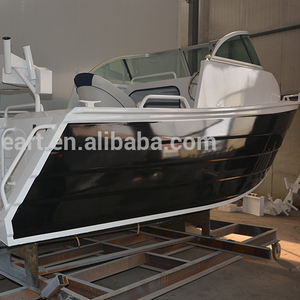
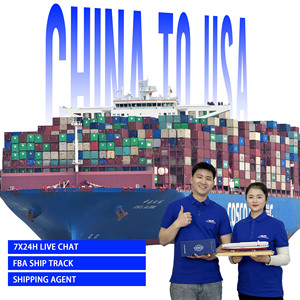
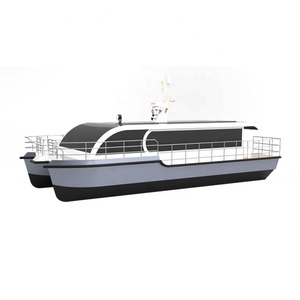
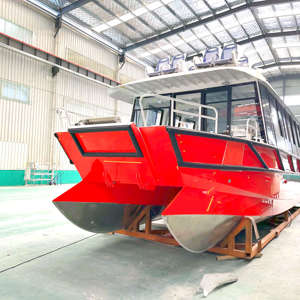
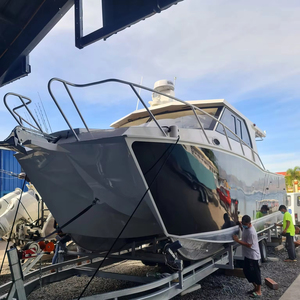
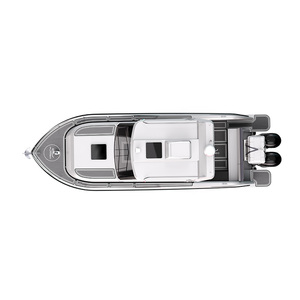
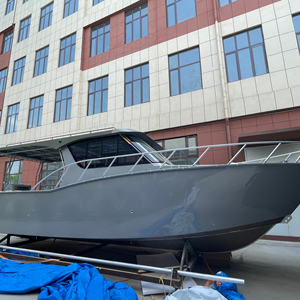
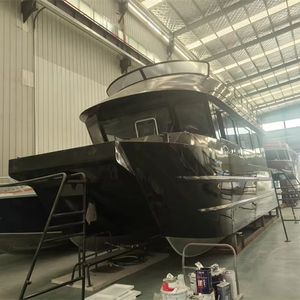
In the expanding global maritime market, sourcing commercial vessels—such as aluminum catamaran fishing boats, cuddy cabin sport yachts, and multi-passenger charter ships—directly from primary manufacturing hubs like Qingdao, Guangdong, and Zhejiang offers unprecedented capital efficiency. However, international buyers seeking direct factory-wholesale pricing encounter complex regulatory hurdles. Cross-border procurement is not merely an architectural acquisition; it is a multi-layered compliance workflow involving international maritime law, tariff classifications, and stringent border protocols.
Navigating China wholesale import clearance factories requires deep operational synchronization between factory production timelines, marine engineering validation (such as CE, USCG, and ABYC standards), and specialized logistics management. Importers must integrate end-to-end supply chain oversight—from factory-floor quality assurance to FMC-licensed NVOCC ocean freight forwarding, in-house Automated Manifest System (AMS) and Importer Security Filing (ISF 10+2), and customs brokerage clearance at destination ports across North America, Europe, and Oceania.
As global maritime regulations tighten and fuel efficiency dictates operational profitability, the wholesale procurement landscape for Chinese manufactured vessels is undergoing a structural evolution. Buyers who adapt to these emerging trends gain distinct competitive advantages in landed cost, structural durability, and charter profitability.
Traditional fiberglass (GRP) hull construction is rapidly giving way to structural marine-grade 5083-H116 aluminum alloys. Modern charter fleet operators prioritize aluminum due to its superior strength-to-weight ratio, zero water absorption, lower fuel consumption, and high resale value. Factory automation in Qingdao and Guangdong now incorporates robotic MIG/TIG welding techniques, drastically lowering production lead times while maximizing structural integrity.
Catamaran designs (such as 10m to 18m center console platforms) are dominating new factory order books. The dual-hull geometry reduces wave resistance, provides exceptional stability for commercial charter passengers, and optimizes deck space for multi-purpose commercial fishing or luxury rental operations. Factory engineering now includes integrated foil-assisted hydrofoils to further improve offshore cruising efficiency.
Forward-thinking Chinese shipyards are embedding NMEA 2000 smart bus architectures, lithium-iron-phosphate (LiFePO4) battery banks, and solar auxiliary systems directly during primary factory assembly. Furthermore, factories are offering pre-engineered transom brackets ready for high-efficiency twin outboard engines (e.g., 250HP to 450HP Yamaha/Mercury systems), allowing global buyers to import bare hulls or semi-rigged packages to optimize duty brackets.
Importing commercial vessels or heavy industrial goods from Chinese factories into markets like the United States, Canada, the United Kingdom, France, Germany, and Australia requires navigating dynamic regulatory ecosystems. A major friction point for importers is failing to separate factory production schedules from destination customs clearance compliance.
| Destination Region | Primary Compliance Standard | Filing Requirements | Recommended Shipping Mode | Customs Risk Mitigation |
|---|---|---|---|---|
| United States | USCG & ABYC Standards | AMS & ISF (10+2) Filing | 40' HC / Flat Rack / RoRo | CTPAT-Certified Clearance |
| European Union (FR, DE, NL) | CE RCD 2013/53/EU | ENS / ICS2 Advance Cargo | Breakbulk / Containerized | Origin Certificate Validation |
| United Kingdom | UKCA Maritime Regulations | Safety & Security (S&S) GB | Flat Rack / Ocean Freight | Direct Carrier Bill of Lading |
| Australia | AS/NZS Non-Standard Vessel | BICON Biosecurity Permit | Flat Rack / Cradle Lashing | Timber/Hull Fumigation Cert |
Purchasing directly from China wholesale factories solves the manufacturing equation, but executing flawless international delivery requires an experienced freight forwarding partner. Building upon over four decades of operational mastery, Intertrans Express Inc. provides the critical logistical infrastructure that bridges Chinese shipyards and global distribution points.
As a fully licensed Non-Vessel Operating Common Carrier (NVOCC) accredited by the Federal Maritime Commission (FMC), we issue our own proprietary House Bills of Lading (HBL). This eliminates intermediary brokers, shortens the legal documentation chain, and guarantees direct space allocations with major global ocean carriers (e.g., COSCO, MAERSK, CMA CGM) operating on Transpacific and Intra-Asia shipping lanes.
Intertrans Express is a validated partner in the U.S. Customs and Border Protection CTPAT (Customs-Trade Partnership Against Terrorism) program. For importers, CTPAT status translates directly into reduced examination rates, prioritized customs processing, faster terminal release times, and complete immunity from unnecessary container hold-ups at destination sea ports.
Fines for delayed or inaccurate Importer Security Filings (ISF) can reach $5,000 per violation. Our dedicated customs compliance team files Automated Manifest System (AMS) and ISF data directly into CBP databases well before cargo departure from Chinese ports, ensuring 100% regulatory clearance prior to vessel arrival.
Unlike freight brokers who outsource destination work to third parties, we operate our own branch offices in Los Angeles (HQ), New York, Toronto, and Bangkok. Our global presence ensures synchronized time-zone coverage, seamless port drayage, bonded warehousing, and final-mile flatbed delivery directly to your facility or marina dock.
Everything you need to know about factory procurement, tariffs, ocean logistics, and customs documentation.
Whether you are importing a single commercial charter catamaran or establishing a full wholesale distribution line, our FMC-licensed and CTPAT-certified team delivers seamless door-to-door execution with zero compliance friction.