Explore our top-tier commercial aluminum fishing vessels, cuddy cabin yachts, center console catamarans, and integrated ocean freight charter solutions engineered for global export compliance.
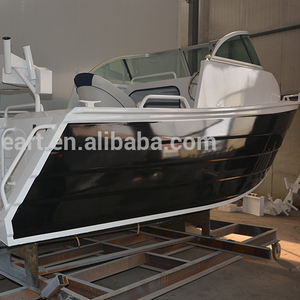
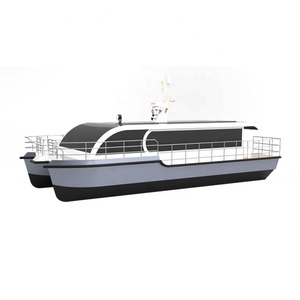
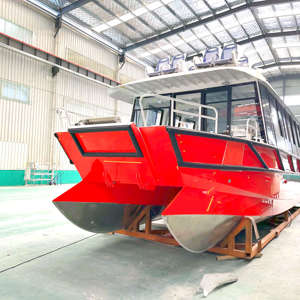
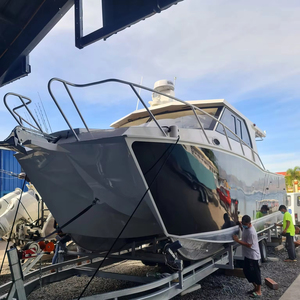
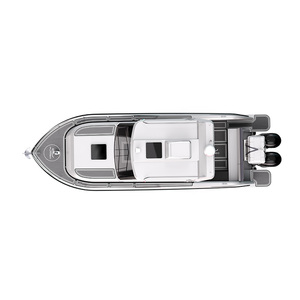
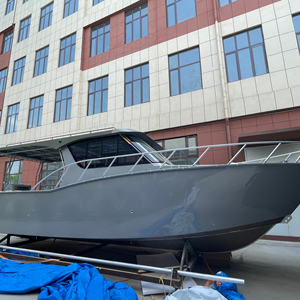
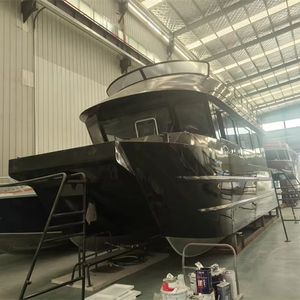
3D Hydrodynamic CAD modeling and Finite Element Analysis (FEA) ensure structural integrity, deep-V wave cutting efficiency, and optimized fuel economy across all custom hull builds.
Precision CNC laser cutting combined with double-pulse TIG/MIG welding guarantees unsinkable, dual-sealed buoyancy chambers meeting stringent CE, USCG, and RINA structural standards.
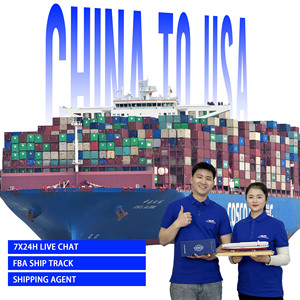
Powered by our FMC-licensed NVOCC and CTPAT-certified freight logistics integration. Seamless AMS/ISF filing, flat-rack containerization, and customs clearance for worldwide export.
The global commercial marine sector is undergoing a monumental paradigm shift. As charter operators, commercial fishing fleets, and marine resort enterprises seek operational longevity and reduced total cost of ownership (TCO), traditional fiberglass (GRP) hulls are rapidly giving way to precision-engineered marine-grade aluminum alloy vessels. At the epicenter of this transformation is our specialized Custom OEM Order Fulfillment Factory & Exporter ecosystem, which bridges modern naval architecture, automated robotic fabrication, and direct-carrier logistics execution.
This whitepaper outlines the structural, financial, and logistical considerations required for institutional buyers, fleet managers, and international importers sourcing custom aluminum vessels—ranging from 5-meter cuddy cabins to 18-meter commercial center console catamarans—directly from leading shipyards in Qingdao with seamless delivery to ports across North America, Europe, and Oceania.
Key Strategic Insight: Sourcing OEM vessels requires evaluating not only hull metallurgy and CAD buoyancy calculations but also the underlying international freight pipeline. Integrating FMC-licensed NVOCC freight operations into factory fulfillment cuts intermediate forwarding costs by 15–22% while eliminating demurrage risks at destination ports.
When engineering high-end commercial charter boats and workboats, material selection dictates structural lifespan, impact resistance, and payload efficiency. Unlike standard structural steel or composite fiberglass, marine-grade Al-Mg alloys (specifically 5083-H116 and 5086-H116) offer an unparalleled strength-to-weight ratio and exceptional immunity to stress corrosion cracking in extreme marine environments.
| Material Metric | 5083-H116 Marine Aluminum | Traditional Fiberglass (GRP) | Structural Steel |
|---|---|---|---|
| Tensile Strength (MPa) | 275 - 350 MPa | 140 - 220 MPa | 400 - 500 MPa |
| Specific Gravity (g/cm³) | 2.66 (Ultra-Lightweight) | 1.5 - 1.9 | 7.85 (Heavy) |
| Impact Energy Absorption | High Plastic Deformation (Does not fracture) | Brittle Cracking / Delamination | Moderate Rigid Deformation |
| Hull Lifespan & Recyclability | 40+ Years (100% Recyclable Scrap Value) | 15-20 Years (Landfill Trash) | 20+ Years (High Maintenance Rust) |
Our OEM factory utilizes CNC plasma and laser cutting beds to precision-slice aluminum plates with sub-millimeter tolerances. Structural longitudinal stringers and transverse frames are continuous-welded using dual-pulse TIG/MIG techniques. Furthermore, every hull produced features sealed buoyancy airtight compartments injected with high-density closed-cell polyurethane foam, rendering the vessel virtually unsinkable even under severe hull breach conditions (CE Category B/C compliance).
B2B boat buyers rarely require off-the-shelf recreational models. Commercial charter operations in the Florida Keys, Mediterranean coastlines, or Australian barrier reefs demand specialized deck layouts, specific deadrise angles, and customized powertrain outfitting. Our OEM engineering office supports complete custom modularity across several key structural vectors:
A primary bottleneck in overseas OEM vessel procurement is international logistics execution. Shipping out-of-gauge (OOG) marine cargo, wide-beam catamarans (e.g., 3.3m beam), and multi-unit boat orders requires strict regulatory compliance, heavy-lift lashing, and complex ocean freight scheduling.
To eliminate third-party logistics disconnects, our manufacturing ecosystem works in tandem with our in-house FMC-Licensed NVOCC (Non-Vessel Operating Common Carrier) and CTPAT-Certified freight forwarding framework. Founded on over 40 years of international logistics experience, this integrated supply chain delivers distinct advantages for global importers:
Because our logistics division operates as an FMC-licensed NVOCC with owned offices in Los Angeles, New York, Toronto, and Bangkok, we issue direct house bills of lading and manage automated AMS (Automated Manifest System) and ISF (Importer Security Filing) in-house. This prevents destination port holds, expensive customs fines, and demurrage surcharges for buyers in North America and Europe.
For vessels up to 2.35 meters in beam, models are engineered with custom removable hardtops to allow direct loading inside standard 40ft High Cube (40HC) ocean containers, dramatically reducing transpacific freight rates. For larger 10m to 18m catamarans, our logistics team designs certified steel cradles for Flat-Rack (FR) or Breakbulk vessel stowage, complete with weather-proof shrink wrapping and IMDG/IATA compliant securing.
Naval procurement data reveals clear emerging trends that commercial boat buyers must incorporate into their multi-year purchasing strategies:
A. Telemetry & Smart Fleet Management: Modern charter operators require real-time remote monitoring. OEM builds are increasingly specified with CAN-bus digital switching, remote GPS tracking, engine diagnostic telemetry, and automated bilge monitoring to reduce fleet operational risk.
B. Hybrid & Electric Auxiliary Propulsion Readiness: As environmental regulations tighten around marine protected areas (MPAs) in Europe and North America, OEM hulls are engineered with reinforced battery banks and solar-hardtop integration, allowing seamless future retrofit of hybrid-electric drives.
C. Fleet Standardization & Interchangeable Spares: Commercial operators are moving away from mixed-brand fleets. Sourcing standardized OEM batches of 5m to 12m aluminum vessels ensures uniform maintenance protocols, shared spare parts inventory, and predictable resale valuations.
Our structured four-stage manufacturing and export workflow guarantees total quality assurance from initial CAD sign-off to final dockside delivery:
| Fulfillment Phase | Engineering & Operational Milestones | Quality & Compliance Checks |
|---|---|---|
| Phase 1: Design & Specification | 3D CAD modeling, deck layout customization, engine weighting & balance analysis. | FEA Stress Analysis, CE Category Rating Sign-off. |
| Phase 2: Fabrication & Assembly | Precision CNC laser plate cutting, stringer grid welding, hull plating assembly. | Dye penetrant weld inspection, airtight chamber pressure test. |
| Phase 3: Outfitting & Sea Trials | Electrical wiring, fuel system pressure testing, console rigging, water flotation trials. | Full-throttle sea trial performance & stability certification. |
| Phase 4: Export & Freight Logistics | Custom cradle fabrication, shrink wrap sealing, container loading, AMS/ISF filing. | FMC NVOCC Bill of Lading issuance & CTPAT security audit. |
Clear, authoritative answers regarding order minimums, international certifications, custom engineering capabilities, and ocean freight logistics.
We exclusively use certified 5083-H116 and 5086-H116 marine-grade aluminum plate for hull bottoms, sides, and structural ribs. These alloys offer superior corrosion resistance in salt water, high tensile strength, and excellent impact absorption compared to standard 6061 or 5052 series aluminum.
As an FMC-licensed NVOCC forwarder, we manage end-to-end shipping directly from our shipyard. Smaller boats are loaded inside 40ft High Cube containers using custom sliding frames. Oversized catamarans and commercial charter vessels are secured onto Flat Rack (FR) containers or shipped via Breakbulk ocean freight with custom steel shipping cradles and protective shrink wrapping.
Yes. Our naval architects design all vessels to meet international safety and structural standards, including CE (Category B Offshore / Category C Inshore), US Coast Guard (USCG) foam flotation guidelines, and Australian AS/NZS 1799 standards. Full compliance documentation is provided with every shipment.
For custom OEM commercial builds, our MOQ is 1 unit for vessels over 9 meters, and 2-4 units for smaller cuddy cabins (to optimize container loading space). Production lead time typically ranges from 45 to 75 days depending on customization complexity, deck outfitting, and sea trial schedules.
Absolutely. We offer complete OEM customization including custom marine-grade epoxy painting, vinyl wrap branding, custom console configurations, seating arrangements, baitwell placements, and T-top hardtop designs tailored to your corporate charter identity.
Connect directly with our naval engineering desk and international logistics specialists to request factory pricing, CAD customization, and direct door-to-port ocean freight quotations.