Cuddy Cabin
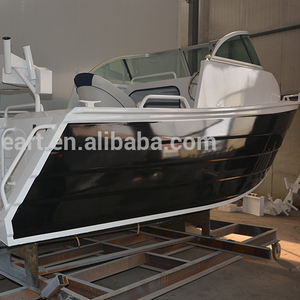
High-specification aluminum vessels, custom cuddy cabin yachts, and tailored maritime export solutions engineered for global commercial operators and private fleet charterers.
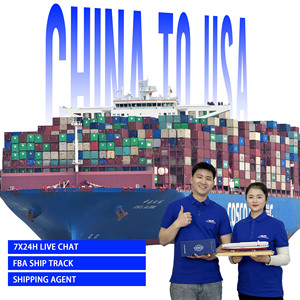
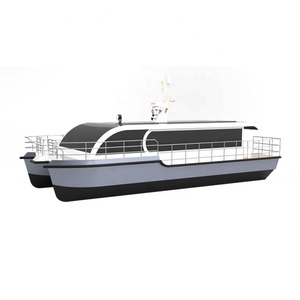
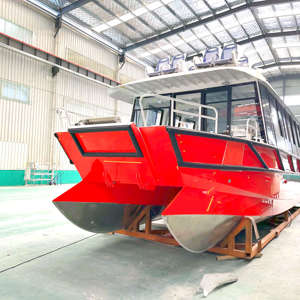
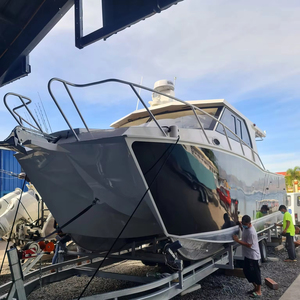
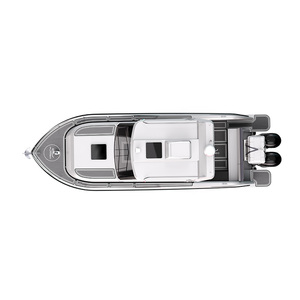
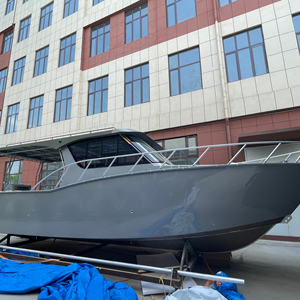
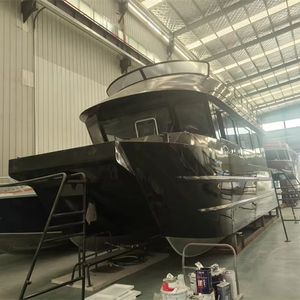
In an increasingly interconnected global economy, procurement executives, commercial vessel operators, and OEM/ODM marine equipment buyers face complex structural shifts. Managing international supply chains for high-value capital assets—such as 5m to 18m commercial aluminum catamaran vessels, cuddy cabin sport yachts, and out-of-gauge express freight—demands seamless integration between manufacturing excellence and regulatory-compliant logistics infrastructure.
This industry white paper evaluates the multi-tiered requirements of contemporary OEM/ODM cargo sourcing. It outlines critical future trends in maritime transport, highlights technology shifts shaping export logistics, and defines the essential operational benchmarks required for international trade compliance, ocean freight forwarding, and project cargo execution across Transpacific and intra-Asia trade lanes.
Core Strategic Takeaway: Modern OEM/ODM procurement extends beyond factory-gate manufacturing costs (FOB). Achieving competitive landed cost optimization requires end-to-end control via an FMC-licensed Non-Vessel Operating Common Carrier (NVOCC) with in-house AMS/ISF automated clearance capabilities and CTPAT security validation.
By synchronizing custom vessel fabrication with specialized heavy-lift transport, breakbulk stowage, and expedited air/ocean logistics, global enterprises eliminate transit bottlenecks, prevent costly demurrage penalties, and protect asset integrity from port of loading to final destination installation.
Anticipating regulatory updates, material science advances, and supply chain shifts driving global vessel manufacturing and cargo execution through 2030.
Global buyer preferences are shifting rapidly toward marine-grade 5083-H116 and 6061-T6 aluminum hulls over traditional fiberglass. Offering superior strength-to-weight ratios, operational fuel efficiency, and 100% recyclable lifecycles, aluminum center-console catamarans and passenger charter vessels dominate international fleet upgrades due to lower total cost of ownership (TCO).
International Maritime Organization (IMO) decarbonization mandates demand cleaner propulsion configurations. OEM/ODM suppliers are designing modular transom brackets capable of accommodating high-output four-stroke outboard engines (e.g., 250HP to 600HP dual setups), hybrid electric systems, and alternative fuel routing to comply with stringent regional emissions zones in North America and Europe.
Shipping fully assembled 9m to 18m commercial vessels across oceans presents out-of-gauge (OOG) challenges. Procurement strategies now mandate integrated logistics planning early in the naval architecture phase, ensuring hull dimensions align with standard 40ft Flat Rack containers, open-top equipment, or scheduled breakbulk vessel stowage to minimize ocean freight surcharges.
The convergence of advanced CAD/CAM naval engineering, automated regulatory filing systems, and IoT-enabled supply chain monitoring has redefined global vessel manufacturing and cargo forwarding. Key technological advancements include:
3D precision CNC laser cutting and robotic seam welding allow OEM/ODM manufacturers in hubs like Qingdao to customize deck layouts, center console helm positions, and commercial passenger seating arrangements with millimeter-level accuracy without expanding build timelines.
Modern express freight networks utilize direct API conduits to U.S. Customs and Border Protection (CBP). Electronic filing of Automated Manifest System (AMS) and Importer Security Filing (ISF 10+2) prior to vessel departure eliminates port-of-entry holds, customs audits, and storage fees.
High-value international vessel shipments are now monitored using IoT sensor arrays attached to cradle lashings. Real-time telemetry records multi-axis tilt, shock impact, ambient humidity, and GPS coordinates throughout ocean transit across Transpacific shipping lanes.
Backed by over 40 years of shipping expertise, Intertrans Express Inc. offers a unified logistics and forwarding framework tailored for global B2B exporters and vessel buyers.
As a fully licensed Non-Vessel Operating Common Carrier (FMC #01999N), Intertrans Express Inc. issues negotiable Bills of Lading, manages direct ocean carrier service contracts, and maintains dedicated container allocations on premier ocean lines.
Certified under the U.S. Customs and Border Protection CTPAT program, our logistics protocols guarantee rigorous physical security, audited access controls, and expedited customs processing at major U.S. ports of entry.
With corporate-owned operation centers in Los Angeles (HQ), New York, Toronto, and Bangkok, our hands-on staff oversees physical cargo handling, drayage dispatch, and import/export documentation across time zones without external brokers.
From FCL container shipping and weekly LCL consolidations to complex dangerous goods (DG/IMDG/IATA) declarations, heavy-lift project cargo, and final-mile domestic truckload drayage, we manage every link under one accountable file.
Expert insights addressing vessel chartering, regulatory documentation, international freight routing, and customs protocols.
Connect with our senior maritime chartering and logistics specialists to optimize your landed costs, secure direct carrier vessel space, and streamline customs clearance.