Explore our engineering-grade structural steel hub systems, heavy-duty marine mooring bollards, portable trailer platforms, and integrated digital terminal hardware designed for continuous industrial throughput.
Backing modern enterprise supply chains with certified heavy infrastructure, zero-delay terminal handoffs, and multi-national logistics compliance.
An authoritative technical analysis for supply chain directors, terminal engineers, and international procurement managers on optimizing throughput velocity and hardware durability.
Core Supply Chain Mandate: Modern cross-docking operations replace long-term inventory storage with continuous movement. Achieving sub-2-hour dock-to-truck throughput requires seamless synergy between heavy industrial building frames, precise marine terminal interface hardware, and licensed multi-modal transport execution.
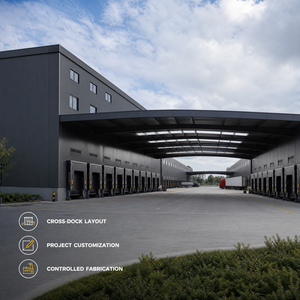
The foundation of any high-velocity logistics network is the physical facility frame. Traditional warehouses are optimized for vertical rack storage, featuring tight column spacing and deep storage bays. Conversely, prefabricated steel structure cross-docking distribution centers are engineered with clear-span web trusses (ranging from 30m to over 90m clear span) to maximize unobstructed floor area.
Utilizing high-tensile Q355B or ASTM A572 Grade 50 structural steel, these distribution shed frames support high-density dock doors arranged directly opposite each other (I-configuration, T-configuration, or L-configuration hubs). This layout allows inbound ocean containers or long-haul trailers to unload on one facade while outbound staging happens simultaneously on the opposite facade. Anti-corrosive galvanized structural coatings ensure decades of structural integrity under relentless forklift traffic and chemical wash-downs.
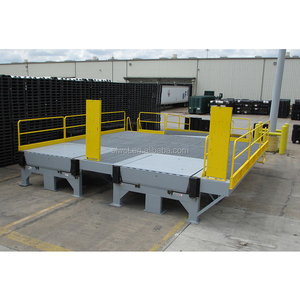
When fixed cement ramps are absent or operational surges demand flexible dock door scaling, industrial facilities depend on heavy-duty mobile dock hardware. The 15-Tons Portable Steel Trailer Cross Dock Platform serves as a vital bridge between ground level and container floors.
Engineered with heavy-duty structural I-beams, diamond-plate steel traction decking, and dual-speed hydraulic landing gear, these mobile dock ramps enable rapid yard setup. Capable of handling fully loaded 15-ton forklifts and pallet jacks without deflection, they eliminate bottlenecks in temporary logistics staging areas, rail yards, and port container freight stations (CFS).
Cross-docking extends beyond inland truck ramps; maritime port terminals represent the critical node where vessel container handling shifts to intermodal drayage. Maritime cross-docking berths require specialized mooring hardware capable of enduring massive dynamic shear forces from ocean swells and tidal drift.
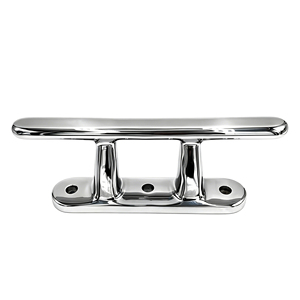
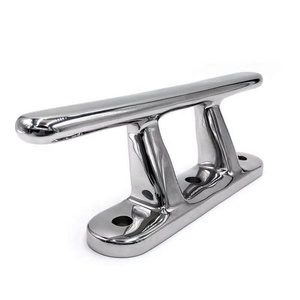
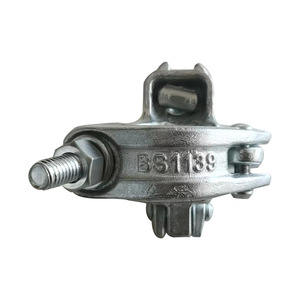
Our 316 Stainless Steel Marine Double Cross Bollards (10-inch and 12-inch Slant 80-degree configurations) are investment-cast from austenitic Grade 316 stainless steel, offering superior corrosion resistance in high-salinity marine environments. The 80-degree angled dual-bitt geometry distributes mooring line stress evenly, preventing line slip during rapid load transfers from container ships to barges or terminal ramps. Coupled with Galvanized Forged Rotating Docking Couplers and internal suspension beam buckle bolts, these structural fasteners securely tie down temporary dock gangways, overhead cranes, and modular terminal platforms.
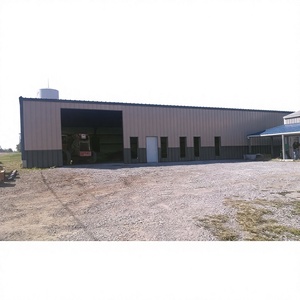
Large clear-span steel buildings with optimized column-free floor layouts engineered specifically for high-frequency loading dock arrays.
15-ton rated portable steel trailer platforms featuring diamond non-slip surfaces and quick-deploy hydraulic height adjustments.
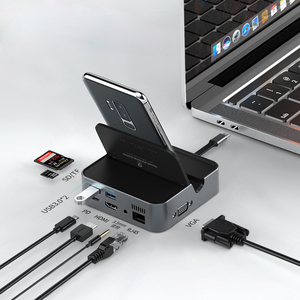
9-in-1 Multi-function Type-C high-speed data dock hubs enabling real-time terminal scanner, camera, and display connectivity at edge sorting stations.
Direct component comparison for structural steel buildings, mobile platform hardware, marine mooring bitts, and fastener assemblies.
| Equipment / Component Category | Material / Metallurgy Standard | Load Capacity / Rating | Key Operational Benchmark | Target Application |
|---|---|---|---|---|
| Prefab Steel Cross-Dock Warehouse | Q355B / ASTM A572 Grade 50 Steel | Wind: Up to 180 km/h; Snow: 0.5 kN/m² | Clear-span clear space > 45 meters | Regional Logistics Hubs & E-commerce Distribution |
| 15-Ton Portable Cross Dock Platform | Heavy Heavy-Duty Formed Structural Channel Steel | 15,000 kg (33,000 lbs) Axle Load | Adjustable range: 1.1m – 1.85m dock height | Container Trailer Loading / Off-Dock Surge Operations |
| Marine Double Cross Bollard (12") | Austenitic Stainless Steel 316 / CF8M | Proof Load: 450 kN to 800 kN | Slant 80-degree geometry, mirror polish finish | Maritime Container Berths & Ship Docking Mooring |
| British Rotating Docking Coupler | Drop-Forged Carbon Steel (Hot-Dip Galv) | Slip Resistance Load > 12.5 kN | 360-degree rotation with suspension beam bolts | Structural Dock Scaffolding & Heavy Crane Rigging |
| 9-in-1 IoT Terminal Dock Station | Anodized Aircraft-Grade Aluminum Shell | 10Gbps USB 3.2 Gen 2 / 4K @ 60Hz Display | Multi-protocol pass-through with 100W PD Charging | Cross-dock scanning stations & Terminal PCs |
Key technological shifts reshaping enterprise procurement, facility construction, and cross-border freight routing over the next decade.
Global logistics operators are moving away from traditional concrete tilt-up buildings toward prefabricated modular steel structures. Structural steel offers a recyclability rate exceeding 95%, significantly reducing embodied carbon footprints. Furthermore, modern clear-span roofs are specifically designed to carry heavy solar PV arrays, transforming cross-dock facilities into zero-emission energy microgrids that charge electric yard tractors and delivery fleets.
The cross-docking hub of 2025+ is fully integrated with automated guided vehicles (AGVs), autonomous mobile robots (AMRs), and vision-guided forklift fleets. Dock platforms now incorporate embedded sensor arrays, automatic vehicle restraint systems, and digital edge-computing hubs (such as high-speed Multi-function Type-C Docking Stations) to continuously transmit real-time telemetry from loading bays directly into Enterprise Resource Planning (ERP) databases.
Geopolitical shifts and supply chain regionalization have caused a massive surge in cross-docking volume along key nearshoring routes—particularly from Asian manufacturing hubs through Shenzhen to North America, Europe, and Latin America. Shippers increasingly demand integrated DDP (Delivered Duty Paid) and DDU (Delivered Duty Unpaid) transport agent services that combine factory-gate pickup, ocean consolidation, cross-border drayage, and rapid final-mile delivery under a single bill of lading.
Intertrans Express Inc. bridges physical industrial hardware procurement with fully licensed, turn-key international freight forwarding execution.
Operating as an FMC-licensed Non-Vessel Operating Common Carrier and CTPAT-validated partner since 1999, we issue proprietary bills of lading and manage high-security supply chain compliance.
Our owned office network in Los Angeles (HQ), New York, Toronto, and Bangkok provides localized operational supervision over both origin export loading and destination customs release.
Eliminate third-party clearance handoffs. Our licensed brokers file Automated Manifest System (AMS) and Importer Security Filings (ISF) directly to CBP, preventing cargo holds and demurrage risks.
In-depth answers regarding cross-docking infrastructure engineering, load tolerances, international freight logistics, and custom manufacturing capability.
A: Prefabricated steel structure buildings offer significant structural and financial advantages. First, they allow for massive clear-span designs (>45 meters without interior support columns), giving forklifts and automated sorting systems unobstructed freedom of movement. Second, factory-prefabricated steel components allow for 40% faster on-site assembly. Third, steel structures are inherently flexible, providing superior seismic resistance and high wind load ratings up to 180 km/h, while being easily expandable as logistics volumes scale.
A: Portable steel dock platforms allow logistics terminals to create instant loading dock capacity in open container yards without investing in permanent concrete construction. Rated for 15-ton axle loads, these platforms feature hydraulic height adjustments that seamlessly match any trailer height (1.1m to 1.85m), enabling heavy forklifts to drive directly from ground level into container beds for fast 20-minute container stripping and stuffing cycles.
A: Marine double cross bollards installed at commercial port docks and cross-docking barge terminals are constantly exposed to marine saltwater spray, high humidity, and heavy industrial friction. Grade 316 stainless steel contains 2-3% molybdenum, which provides exceptional resistance to pitting and crevice corrosion compared to standard 304 stainless steel or painted cast iron. This ensures zero structural degradation under extreme mooring line tensions up to 800 kN.
A: Under DDP (Delivered Duty Paid) and DDU (Delivered Duty Unpaid), our transport team handles the entire cross-docking supply chain end-to-end. We pick up goods directly from factories in Shenzhen or major manufacturing hubs, perform ocean FCL/LCL transport, handle port-side customs entry, execute container devanning at our destination cross-dock facilities (e.g., Los Angeles, New York, Toronto), and arrange appointment-based truckload delivery directly to the buyer's warehouse or retail distribution center under one seamless rate and bill of lading.
A: British cross rotating docking couplers are heavy drop-forged steel fasteners used to join 48.3mm structural scaffolding tubes at any angle (360-degree rotation). Featuring internal suspension beam buckle bolts, they provide rigid load-bearing connection points for temporary dock staging frameworks, perimeter safety barriers, overhead conveyor mounts, and modular ramp access systems, meeting rigorous BS1139 and EN74 structural scaffolding standards.
A: As a certified CTPAT (Customs-Trade Partnership Against Terrorism) partner and licensed NVOCC, Intertrans Express Inc. transmits AMS (Automated Manifest System) and ISF (Importer Security Filing) data directly to U.S. and Canadian Customs well ahead of vessel arrival. Our validated supply chain security protocols reduce government customs inspection rates, eliminate terminal hold fees, and guarantee priority drayage release from port container freight stations.