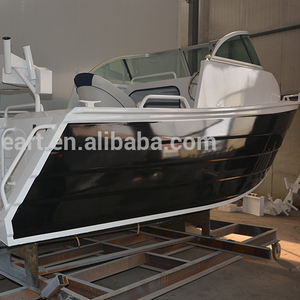
Engineered with high-tensile marine-grade aluminum and certified for international watercraft transport, our commercial catamarans, charter yachts, and workboats serve the demanding coastal conditions of the Pacific Northwest and global maritime corridors.
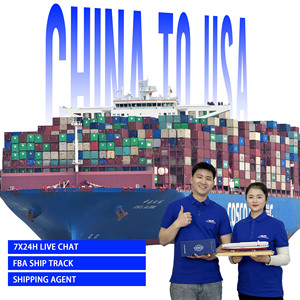
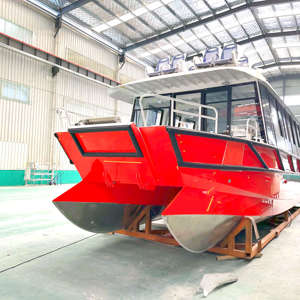
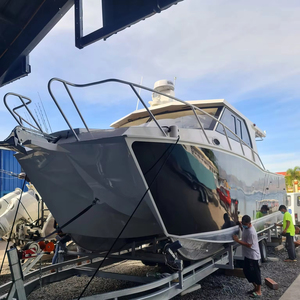
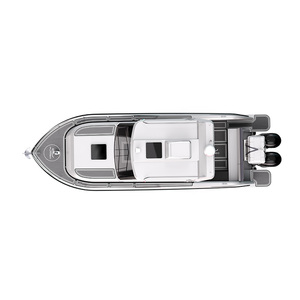
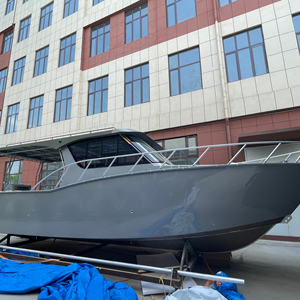
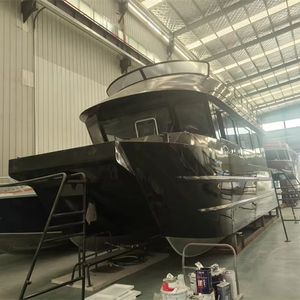
The Pacific Northwest (PNW), anchored by the Port of Seattle and the Northwest Seaport Alliance (NWSA) comprising Tacoma, serves as North America's premier gateway for Transpacific maritime trade. For commercial marine operators, fishing consortiums, eco-tourism charter fleets, and regional ferry authorities, securing high-performance, cost-effective commercial vessels is a paramount strategic priority. The demand for bulk ocean freight of heavy-lift marine craft—specifically commercial-grade aluminum catamarans, center console fishing vessels, and passenger excursion yachts—has grown by over 18% year-over-year in the Puget Sound ecosystem.
As a specialized bulk freight factory and exporter serving the Seattle market, our dual infrastructure bridges direct manufacturer-level vessel fabrication in major shipbuilding hubs like Qingdao with end-to-end, FMC-licensed NVOCC freight forwarding. Negotiating the complex logistics of out-of-gauge (OOG) ocean freight, breakbulk stowage, and stringent U.S. Customs and Border Protection (CBP) entries requires deep technical expertise. Importing commercial vessels into Washington state involves precise coordination between origin shipyards, ocean carriers, marine terminal operators (MTOs), and localized inland transport providers.
Traditional vessel acquisition models force buyers to handle boat builders and freight brokers separately. This fragmented structure introduces major vulnerabilities, including cradle mismatches on flat-rack containers, unexpected terminal demurrage fees at Port of Seattle Terminals 5 and 18, and delayed Importer Security Filings (ISF 10+2). By unifying marine engineering with fully bonded FMC NVOCC authority and CTPAT supply chain security, we deliver turnkey dockside handoffs with guaranteed transit schedules and predictable landed costs.
Seattle’s unique geographic position—serving as the primary supply conduit for Alaska’s rugged commercial fishing fleets, the San Juan Islands charter networks, and British Columbia cross-border maritime lanes—requires commercial craft built to withstand heavy seas while maintaining superior fuel efficiency. Our deep-V aluminum hull designs, constructed from certified 5083-H116 plate alloy, deliver the precise structural resilience demanded by Pacific Northwest captains.
Commercial vessel buyers in the Seattle market require rigorous documentation regarding naval architecture, structural tolerances, CE/USCG compliance, and international shipping configurations. Below is a comprehensive data breakdown of our core export vessel series optimized for Transpacific transport to Seattle terminals.
| Vessel Model / Class | Hull Material & Thickness | Beam / Draft Specifications | Max Payload / Passenger Capacity | Transpacific Shipping Configuration | Primary Application in PNW |
|---|---|---|---|---|---|
| 5m Cuddy Cabin Mini Yacht | 5083-H116 Aluminum (5mm Bottom / 4mm Side) | 2.15m Beam / 0.35m Draft | 6 Persons / 650 kg | 20ft High Cube Container (2 Units Stacked) | Puget Sound Coastal Charter & Recreational Sportfishing |
| 9m Furreo Luxury Charter | Marine-Grade Alloy (6mm Bottom / 5mm Side) | 2.85m Beam / 0.48m Draft | 8 Passengers + 2 Crew / 1,200 kg | 40ft Flat Rack with Custom Steel Cradle | San Juan Islands Excursion & Island Transfer |
| 10m Catamaran Fishing Vessel | Dual-Hull Twin Sponson (6mm Plate) | 3.10m Beam / 0.52m Draft | 12 Passengers / 2,100 kg | 40ft Flat Rack (OOG Width Logistics) | Offshore Commercial Salmon & Halibut Fleet Operations |
| 11.6m Center Console Catamaran | Precision Cut 5083 Hull (8mm Keel / 6mm Hull) | 3.30m Beam / 0.55m Draft | 14 Passengers / 2,800 kg | Breakbulk Vessel Deck Stowage / MFI Ro-Ro | Alaska Waters Commercial Chartering & Deep-Sea Charter |
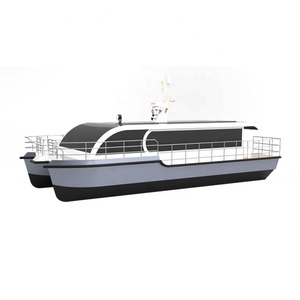
| 18m Commercial Catamaran Ferry | Heavy-Duty Marine Plate Structure | 4.80m Beam / 0.85m Draft | 45 Passengers / 6,500 kg | Heavy Lift Breakbulk Charter Ship Direct to Seattle | Inter-Island Ferry Services & Eco-Tourism Passenger Fleet |
Every vessel manufactured for export to the U.S. market undergoes strict hydro-dynamic testing, ultrasonic weld inspection, and non-destructive testing (NDT) before factory sign-off. Furthermore, because shipping wide-beam catamarans across the Pacific involves complex aerodynamic and hydrostatic stresses, our engineering department designs custom-welded structural steel shipping cradles verified by marine surveyors to prevent any dynamic movement during trans-oceanic passage.
Over four decades of logistics operational excellence combined with modern marine manufacturing capabilities.
As a fully licensed Non-Vessel Operating Common Carrier (NVOCC) regulated by the Federal Maritime Commission, we issue our own ocean Bills of Lading (B/L). This eliminates intermediate freight brokers, secures contracted ocean rates with major ocean alliances, and provides absolute legal accountability from factory origin to Seattle delivery.
Our Tier-2 CTPAT (Customs-Trade Partnership Against Terrorism) certification status accelerates U.S. Customs clearance upon arrival at Port of Seattle Terminals. Compliant security protocols dramatically reduce customs hold frequencies, inspection costs, and clearance delays for enterprise vessel buyers.
Transporting wide-beam catamarans and commercial fishing vessels demands expert project cargo management. Our operational desks in Los Angeles, New York, Toronto, and Bangkok coordinate specialized flat-rack lashing, IMDG/IATA dangerous goods documentation, and over-dimensional drayage permits.
Avoid costly U.S. Customs penalties ($5,000+ per late filing) with our direct Automated Manifest System (AMS) and Importer Security Filing (ISF) data links. Our trade specialists submit accurate cargo manifests 72+ hours prior to vessel departure from origin ports in Qingdao or Shanghai.
All exported commercial vessels carry CE Certification and structural engineering compliance documentation aligned with ABYC (American Boat and Yacht Council) and USCG standards, backed by a 5-year structural hull warranty for total peace of mind.
From factory floor fabrication tracking in China to real-time ocean vessel GPS monitoring and final port drayage in Seattle, our clients receive centralized milestone updates under a single accountable point of contact.
Operating commercial watercraft in the Seattle maritime zone requires specific hull characteristics and propulsion choices tailored to regional environmental conditions. Below are four key deployment scenarios where our exported bulk vessels excel:
Seattle acts as the home port for hundreds of commercial fishing vessels that migrate north to Bristol Bay and Southeast Alaska each spring. Alaska’s short, intense fishing seasons demand absolute equipment reliability. Our 10m to 18m aluminum catamarans feature reinforced bow structures, heavy-duty gunwales for crab pot hauling, large insulated fish holds, and self-bailing decks. Exported via flat-rack ocean freight into Seattle, these vessels undergo immediate local commissioning before setting sail for Alaska.
The eco-tourism market in Washington State—focused on whale watching, island hopping, and private chartering—requires vessels that combine low noise, exceptional stability, and high passenger capacity. Our 11.6m Center Console Catamaran and 9m Furreo Luxury Charter Yacht utilize dual sponson catamaran designs that minimize roll in choppy waters like the Strait of Juan de Fuca. Built with twin outboard setups (up to 300HP each), these craft achieve rapid cruising speeds while burning up to 25% less fuel than equivalent monohull displacement vessels.
Port maintenance, dive operations, and waterfront security around Elliott Bay require rugged, low-maintenance workboats. Aluminum’s superior strength-to-weight ratio makes our 5m and 9m cuddy cabin utility boats ideal for daily commercial duties. Resistant to saltwater corrosion without requiring continuous gelcoat painting, these boats significantly reduce operating expenditure (OPEX) for maritime operators based in King, Pierce, and Snohomish counties.
With Seattle situated just 100 miles south of the Canadian border, many regional operators service cross-border routes between Washington and Vancouver/Victoria, BC. Our freight forwarding team manages multi-jurisdictional customs entries, handling U.S. Customs formal entries as well as Canadian CBSA documentation for seamless cross-border vessel chartering and equipment relocations.
The Seattle maritime sector is undergoing a rapid technological evolution driven by Washington State's aggressive decarbonization mandates, the Northwest Seaport Alliance’s Clean Air Strategy, and shifting consumer preferences toward eco-friendly marine operations. Commercial vessel buyers and logistics directors must navigate three major macro trends over the next five years:
Seattle’s maritime charter operators are rapidly transitioning from traditional diesel inboards to high-output outboard engines and hybrid-electric powertrains. Our factory designs now feature modular engine transoms capable of accommodating electric outboard setups (such as Torqeedo and Evoy systems) alongside heavy-duty solar array roof mounts on catamaran hardtops.
Rising fuel costs in the Pacific Northwest make vessel weight a critical financial variable. Utilizing 5083-H116 and 5086 aluminum alloys reduces hull displacement by up to 35% compared to traditional fiberglass or steel hulls. This weight reduction directly translates into higher speed-per-horsepower ratios and reduced carbon intensity per passenger-mile.
The Port of Seattle and Port of Tacoma are incentivizing low-emission logistics chains. Our CTPAT-certified freight program leverages paperless electronic customs filing, automated terminal gate clearance, and low-emission drayage trucks to minimize carbon footprints throughout the Transpacific transit route.
Detailed answers to critical regulatory, logistical, and technical questions regarding bulk boat exports to Washington State.
Vessels under 2.5m beam can often fit inside standard 40ft High Cube containers. However, commercial catamarans with beams ranging from 3.0m to 3.5m are shipped using 40ft Flat-Rack containers with over-width (OOG) approvals, or via Breakbulk deck stowage on specialized heavy-lift vessels. Our FMC-licensed NVOCC team handles custom cradle engineering, marine lashing certifications, and ocean carrier stowage approvals directly into Seattle Terminals.
Commercial aluminum vessels imported into the United States generally fall under HTS Code 8901 (passenger/ferry vessels) or 8902/8903 (fishing vessels and yachts). Standard duty rates range between 1.5% and 3.7% depending on classification and propulsion setup. Additionally, harbor maintenance fees (HMF) of 0.125% and merchandise processing fees (MPF) apply at entry. Our licensed customs brokers prepare exact HTS duty estimates prior to vessel shipment.
As a CTPAT-certified freight forwarder, our shipments are categorized as low-risk by U.S. Customs and Border Protection. This designation grants priority processing, significantly reducing the likelihood of physical or X-ray exams (VACIS scans) at Seattle terminals 5, 18, or Tacoma’s Husky Terminal, saving buyers $500–$2,000 per container in exam and demurrage fees.
Yes. All commercial passenger and charter vessels manufactured for export can be built to comply with USCG 46 CFR regulations (Subchapter T for small passenger vessels) as well as ABYC design standards. Hull identification numbers (HIN), capacity plates, and fuel system compliance certificates are provided for seamless state registration with the Washington Department of Licensing (DOL).
Standard manufacturing lead time for commercial aluminum catamarans (9m–12m) ranges from 60 to 90 days depending on custom charter specifications. Transpacific ocean transit from Qingdao/Shanghai to Seattle takes approximately 14 to 18 days on direct ocean express services, plus 3–5 days for U.S. Customs clearance and port drayage.
Absolutley. Beyond ocean transportation and customs clearance, our domestic logistics division arranges specialized hydraulic boat trailers, over-weight/over-dimensional state transport permits, and pilot car escorts to haul your vessel directly from the Seattle marine terminal to your designated shipyard, marina, or launch ramp anywhere in Washington, Oregon, or Idaho.
Whether you are expanding a commercial charter fleet in the San Juan Islands, procuring heavy-duty aluminum fishing catamarans for Alaska, or requiring turnkey Transpacific project cargo forwarding, Intertrans Express Inc. delivers 40+ years of operational excellence. Contact our specialized marine logistics team today for factory-direct quotes and comprehensive freight estimates.