Customized Heavy-Lift Vessels, Marine Support Barges, and Breakbulk Equipment Dedicated to Egypt's Infrastructure and Energy Sectors
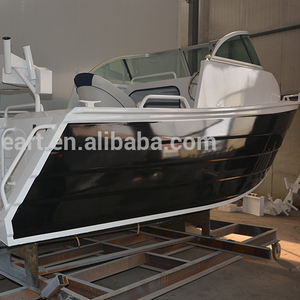
Compact high-maneuverability aluminum craft utilized for Suez Canal harbor hydrographic surveys, offshore rig crew transfers, and preliminary project cargo route reconnaissance.
Get a Quote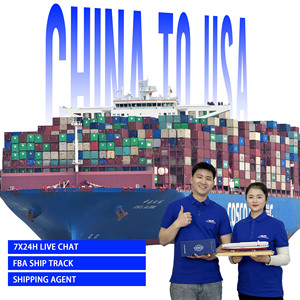
Full and part-charter vessel options connecting US, European, and Asian manufacturing hubs directly to Alexandria, Ain Sokhna, and Damietta ports for oversized industrial machinery.
Get a Quote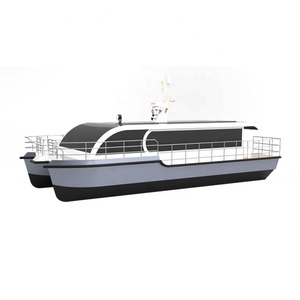
High-stability twin-hull catamaran engineered for coastal offshore gas field operations in the Mediterranean Zohr gas field and Red Sea wind farm logistics support.
Get a Quote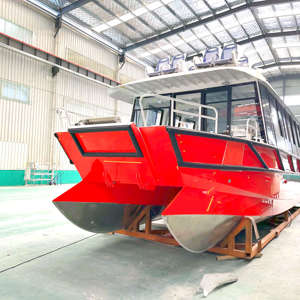
CE-certified high-speed aluminum catamaran designed for naval security escort, offshore pipeline inspection, and emergency technician dispatch in Egyptian territorial waters.
Get a Quote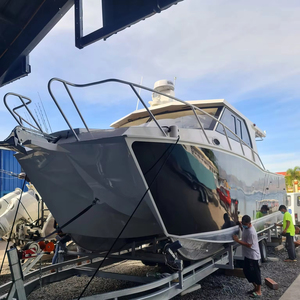
Reinforced marine-grade 5083 aluminum hull boat ideal for shallow draft port construction, dredging monitoring, and canal maintenance operations across SCZONE projects.
Get a Quote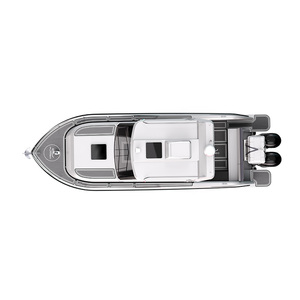
Twin 250HP powered vessel crafted for rapid executive transportation between mainland Egyptian ports, offshore maritime infrastructure installations, and floating storage units (FSUs).
Get a Quote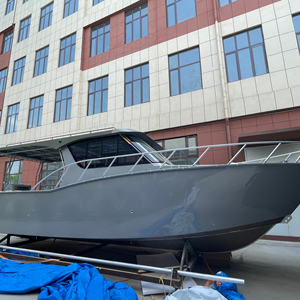
Robust passenger transfer boat for harbor pilotage, maritime security patrols, and workforce transit across major Egyptian marine terminals including East Port Said and Sokhna.
Get a Quote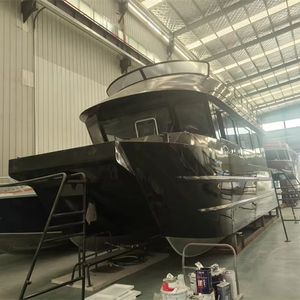
Multi-role marine platform suited for coastal logistics coordination, offshore oilfield supply runs, and security oversight in rugged Red Sea and Gulf of Suez conditions.
Get a QuoteThe Arab Republic of Egypt stands at the strategic crossroads of global trade, anchored by the Suez Canal Economic Zone (SCZONE) and propelled by unprecedented infrastructure investments under Egypt Vision 2030. Importing oversized project cargo—ranging from gas turbines and wind turbine blades to heavy industrial boilers, transformers, and marine vessels—into Egypt demands specialized engineering, flawless regulatory clearance, and deep local port intelligence.
As an FMC-licensed NVOCC and CTPAT-certified global logistics partner with over four decades of combined operational expertise, Intertrans Express Inc. offers end-to-end heavy-lift breakbulk, flat rack, open top, and roll-on/roll-off (RoRo) transport solutions customized specifically for the Egyptian market. We bridge global origin points in North America, Europe, and Asia with key Egyptian arrival hubs including Alexandria, Dekheila, Damietta, East/West Port Said, Ain Sokhna, and Safaga.
Transporting non-containerized cargo requires detailed CAD-based stowage plans, marine structural stability calculations, and specialized equipment deployment:
Tailored Heavy-Lift Solutions aligned with Egypt's National Strategic Infrastructure Projects
Transporting heavy electrolyzers, ammonia storage tanks, and high-capacity transformers to the Ain Sokhna Green Hydrogen Corridor and Ras Shokeir renewable energy zones.
Delivery of massive structural steel spans, heavy piling rigs, pre-fabricated concrete bridge girders, and HVAC chillers for the monorail and CBD mega-structures.
Precise marine transport and heavy-haul road dispatch for reactor pressure vessels, steam generators, and extreme-weight components to the Matrouh Governorate.
Offshore equipment chartering, heavy drill rig mobilization, and pipeline segment transport servicing the Zohr gas field and Western Desert petroleum concessions.
Specialized flatbed and extensible trailer transport for 80+ meter wind turbine blades, tower sections, and nacelles to Gulf of Suez and Zafarana wind parks.
Intermodal barge transshipment transferring heavy breakbulk from ocean vessels directly onto river barges via the Nile navigation canal to inland upper Egypt industrial cities.
The Egyptian logistics and freight sector is undergoing a profound digital and physical infrastructure transformation. Project directors and global EPC contractors must navigate key macro trends to optimize total landed cost and prevent operational bottlenecks:
Egypt's Ministry of Finance enforces the National Single Window for Foreign Trade Facilitation (Nafeza). All project cargo shipments must obtain an Advanced Cargo Information (ACI) number at least 48 hours prior to vessel departure from origin port. Failure to secure an ACI number results in cargo rejection at Egyptian ports and compulsory return to origin at the carrier's expense.
Intertrans Express Inc. streamlines this process by executing direct electronic filing of bills of lading, packing lists, and commercial invoices through the Nafeza portal, eliminating delays at customs checkpoints.
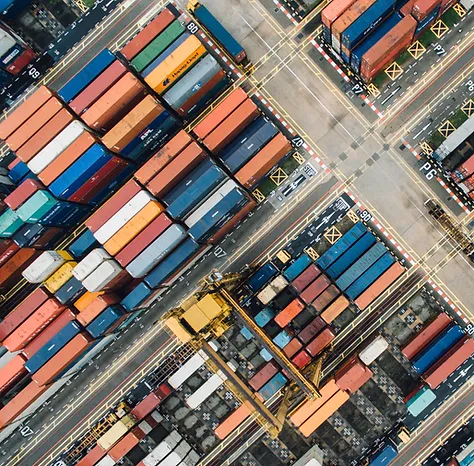
The mega-expansion of Sokhna Port and East Port Said has transformed Egypt into a dominant Mediterranean-Red Sea transshipment hub. With deeper quays (up to 18 meters draft) and newly installed super post-Panamax shore cranes, these ports can now accommodate the world’s largest breakbulk heavy-lift carriers. EPC contractors can leverage Sokhna as a primary entry point for heavy capital goods destined for Upper Egypt and the Red Sea industrial parks.
To reduce road congestion and bridge wear along the Cairo-Alexandria highway network, the Egyptian General Authority for River Transport (RTA) has modernized River Nile waterways. Heavy machinery up to 600 metric tons can now be directly discharged from ocean vessels onto river barges at Damietta or Alexandria, navigating inland directly to power plants in Beni Suef and Asyut.
Standard freight forwarders often treat project cargo as enlarged containerized shipping. In contrast, Intertrans Express Inc. conducts preliminary civil engineering surveys of Egyptian highway bridges, overhead utility wire clearances, and port quay bearing limits. We prevent costly structural delays by matching exact cargo specifications with certified hydraulic SPMT configurations and pre-cleared military/road authority permits.
Selecting the right project cargo transport supplier is the single most critical factor in mitigating risks for multi-million-dollar infrastructure investments in the Middle East & North Africa (MENA) region.
We issue our own legally binding Bills of Lading, granting complete control over contract terms, ocean carrier negotiation, and destination release mechanisms without third-party broker friction.
Validated by U.S. Customs and Border Protection, our supply chain security protocols ensure expedited customs processing, reduced physical inspection rates, and enhanced security for sensitive industrial cargo.
Founded in 1999 by veterans with four decades of international freight experience, our team has navigated every major shift in international maritime law, port congestion cycles, and heavy haulage engineering.
Headquartered in Los Angeles (Alhambra, CA), with owned branch facilities in New York, Toronto, and Bangkok, complemented by dedicated port operations agents stationed at all major Egyptian terminals.
Fully qualified to handle hazardous project materials including industrial gases, chemicals, explosives for mining, and lithium-ion storage units with strict adherence to international maritime dangerous goods regulations.
We arrange physical route reconnaissance across Egypt, civil engineering permits from the Egyptian Highway Authority, and dedicated military/police escorts for super-heavy movements.
Essential Answers for Procurement Officers, EPC Contractors, and Importers in Egypt
Under the Egyptian Nafeza system, the local importer or Egyptian entity must register the shipment on the Nafeza portal to generate a 19-digit Advanced Cargo Information (ACI) number. The overseas exporter must provide signed commercial invoices, packing lists, and bills of lading bearing this ACI number. Intertrans Express Inc. assists origin suppliers in submitting verified digital documents directly through CargoX to ensure compliance before vessel loading.
The selection depends on the final delivery site. For projects in Cairo, the New Administrative Capital, or Red Sea wind farms, Ain Sokhna Port is optimal due to its direct highway connections and modern heavy-lift berth capabilities. For projects in Northern Egypt or Alexandria industrial zones, Alexandria or Dekheila Port is preferred. For Upper Egypt projects along the Nile, Damietta Port provides seamless direct barge transshipment opportunities.
Standard axle load limits in Egypt are generally restricted to 13 metric tons per single axle on primary highways. Cargo exceeding 50 metric tons total gross weight or dimensions beyond 4.5 meters height and 3.5 meters width require a special heavy-haul permit from the General Authority for Roads, Bridges and Land Transport (GARBLT). Intertrans Express Inc. arranges multi-axle hydraulic trailers (SPMTs) to distribute weight and manages all civil bridge stability approvals and police escorts.
Cargo destined for Egyptian desert regions (such as the Western Desert or Red Sea coast) faces extreme ambient temperatures, airborne dust, sandstorms, and high coastal humidity. We employ heavy-duty corrosion-inhibiting shrink wrap (VCI), customized waterproof tarpaulins, heat-sealed foil vacuum packaging, and reinforced wooden crating certified under ISPM-15 standards to prevent environmental degradation during transit and outdoor port storage.
Yes. Through our network of licensed customs brokers at all major Egyptian ports, we coordinate customs entry, tariff classification under the Egyptian Customs Unified Tariff, and physical inspections by the General Organization for Export and Import Control (GOEIC). We ensure all required Conformity Certificates (CoC) and technical documentation are verified prior to vessel arrival to avoid demurrage and detention fees.
Commercial workboats, catamarans, and survey vessels can be transported as deck cargo via container breakbulk on flat rack containers, or via dedicated Roll-on/Roll-off (RoRo) and heavy-lift breakbulk vessels. Our engineering team designs custom steel cradles, calculates lift-on/lift-off (LoLo) rigging points, and supervises lashing onto ocean vessels to guarantee zero structural stress during ocean transit.