Verified heavy-equipment chartering, specialized containers, and intermodal transport assets customized for Korean maritime-rail logistics corridors.
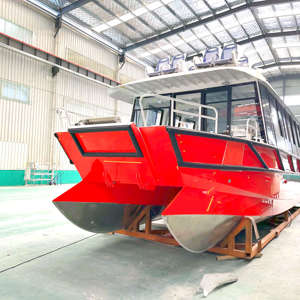
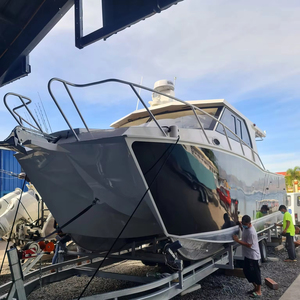
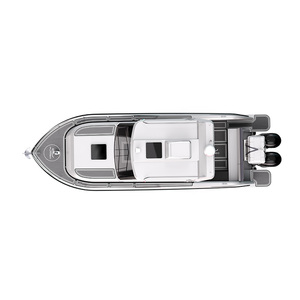
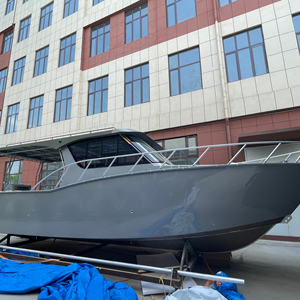
As global supply chains demand heightened resilience, lower carbon intensity, and predictable lead times, South Korea’s industrial sector increasingly relies on hybrid land-sea intermodal rail networks. Positioned as a major high-tech manufacturing, automotive, and shipbuilding power, South Korean enterprises require robust raw material inputs and direct export routes to Central Asia, Eastern and Western Europe, and the Middle East.
Connecting the Korean peninsula to international railway systems—such as the Trans-China Railway (TCR), the Trans-Siberian Railway (TSR), and the Trans-Mongolian Railway (TMGR)—demands specialized factory-to-rail intermodal freight coordination. Through sea-rail ferry connections operating from major Korean maritime gateways (Busan, Incheon, Pyeongtaek) to Chinese feeder ports (Qingdao, Lianyungang, Tianjin), industrial suppliers can move containerized, out-of-gauge (OOG), and breakbulk cargo across Eurasia in under 22 days—cutting ocean transit times by up to 50%.
| Corridor Route | Primary Modal Transfer | Average Transit Time | Target Cargo Commodities |
|---|---|---|---|
| Korea – Lianyungang – Central Asia (TCR) | Sea-Rail Ferry + TCR Express | 12 – 16 Days | Automotive Parts, Machinery, Consumer Electronics |
| Korea – Vladivostok – Europe (TSR) | Coastal Feeder + TSR Rail Wagons | 18 – 22 Days | EV Batteries, Chemical Resins, Heavy Industrial Craft |
| Korea – Qingdao – Eastern Europe | RO-RO / Container Vessel + Rail Intermodal | 16 – 20 Days | High-Value Tech Components, Solar Modules |
| Korea Domestic Inland Freight Link | Korea National Railway (Korail) Drayage | 1 – 2 Days | Raw Steel, Bulk Chemicals, Industrial Equipment |
In-depth operational workflows demonstrating how South Korean factories, importers, and global buyers leverage railway freight networks for maximum efficiency.
Connecting automotive clusters in Gyeonggi-do, Asan, and Ulsan directly to Eurasian assembly plants. Precision temperature-controlled reefer containers on flatcars ensure lithium-ion battery modules maintain optimal thermal range during long-haul transit.
Semiconductor manufacturing facilities in Cheongju and Gumi utilize shock-absorbed, low-vibration rail wagons. Combined with CTPAT-verified customs pre-clearance, sensitive lithography parts bypass port congestion for just-in-time delivery.
Industrial vessel components, structural steel from Pohang, and marine chartering hardware are lashed using heavy-duty flat-rack rail platforms. Direct RO-RO sea connections at Busan Port eliminate multi-stage handling risks.
Understanding South Korea's logistics environment requires analyzing both macro-economic shifts and national infrastructure mandates. Key trends shaping rail freight strategies for Korean factories and global suppliers include:
Over four decades of proven logistics governance, FMC-licensed NVOCC authority, and specialized multimodal carrier management.
As a fully bonded, FMC-licensed Non-Vessel Operating Common Carrier (NVOCC) and certified CTPAT partner, we issue direct house bills of lading (HBL) and execute seamless customs entries, eliminating third-party broker delays at Korean and US ports.
With proprietary offices operating in Los Angeles (HQ), New York, Toronto, and Bangkok—backed by dedicated agency desks in Busan and Seoul—our internal staff oversees your shipment from factory pick-up to railhead final delivery.
Handling out-of-gauge machinery, commercial vessel hulls, and heavy industrial equipment requires rigorous engineering. Our teams prepare precise weight distribution plans, IMDG/IATA dangerous goods compliance, and certified lashing at rail hubs.
We analyze railway tariff structures, ocean feeder schedules, chassis demurrage risk, and customs duty classifications to deliver transparent, single-invoice logistics solutions with zero hidden terminal fees.
Expert answers addressing customs procedures, track gauge transitions, transit times, and equipment options for Korean trade corridors.
Connect with our senior logistics architects to engineer a high-reliability, cost-optimized sea-rail freight solution tailored for your industrial cargo.