Empowering Bangladesh’s export-import ecosystem with automated sorting systems, overseas warehouse return hubs, and FMC-licensed multimodal transport.

In the contemporary global trade paradigm, reverse logistics is no longer merely a secondary operational requirement; it is a critical strategic imperative that dictates profit margins, ESG compliance, and customer retention. Bangladesh, as the world's second-largest Ready-Made Garment (RMG) exporter and an emerging hub for consumer electronics assembly, faces unprecedented complex challenges in handling returned merchandise, defective raw materials, and overstock inventory.
As an FMC-licensed Non-Vessel Operating Common Carrier (NVOCC) and CTPAT-certified global supply chain architect, our organization delivers specialized reverse logistics solutions engineered to bridge Bangladesh’s manufacturing ecosystem—including key economic zones such as Dhaka (Gazipur, Ashulia), Chittagong EPZ, Mongla, and Benapole—with global consumer markets across North America, Europe, and Asia.
Information Gain Insight: Under Bangladesh Customs Policy and National Board of Revenue (NBR) directives, importing returned goods back into Export Processing Zones (EPZs) or Special Economic Zones (SEZs) without incurring prohibitive customs duties requires strict alignment with Bangladesh Bank Foreign Exchange (FE) regulations, Advance Payment Guarantees, and Bonded Warehouse Operations.
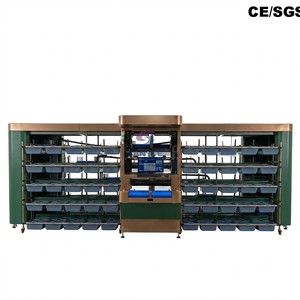
Our specialized reverse logistics framework simplifies the intricate legal, financial, and logistical barriers inherent in repatriation workflows. By deploying automated sorting technologies, high-efficiency 3D seeding walls, and overseas bonded consolidation hubs, we transform potential supply chain losses into recoverable value for Bangladeshi manufacturers and international brands.
The dynamics of reverse logistics vary significantly across industry sectors. Our reverse supply chain infrastructure is tailored to the distinct operational realities of Bangladesh's primary industrial sectors:
High-volume textile returns originating from European and North American retail networks are consolidated at our overseas hubs. Items are inspected, re-sorted via automated 3D seeding walls (up to 4,800 PPH), re-labeled, and either re-routed to discount channels or returned under duty-free bonded status to Dhaka/Chittagong for repair.
For Bangladesh's growing domestic electronics manufacturers (light engineering & consumer durables), returned sub-assemblies, defective PCBs, and heavy machinery parts require precise Return Merchandise Authorization (RMA) tracking, cross-border customs declarations, and specialized freight lashing.
Managing individual consumer returns from global e-commerce platforms back to Bangladeshi sellers via LCL + Express matrix channels. We eliminate astronomical single-item shipping costs through overseas micro-warehousing and regional containerized return consolidations.
Managing reverse flows through standard forward-freight channels leads to high duty assessments, prolonged warehouse holds, and inventory depreciation. The table below illustrates the operational parameters of our integrated reverse logistics ecosystem serving Bangladesh:
| Operational Vector | Traditional Forward Channels | Intertrans Integrated Reverse Logistics |
|---|---|---|
| Customs Handling (NBR/EPZ) | Treated as new import; subject to full duty and taxes | Duty-exempt Return/Repair filing under Bonded Status |
| Sorting Efficiency | Manual processing (approx. 200–400 PPH, high error rate) | Automated 3D Seeding Wall (1,200–4,800 PPH, <0.01% error) |
| Data Integration | Siloed paper documentation & disconnected B/L | Real-time API / WMS / ERP system synchronization |
| Freight Optimization | Costly parcel express or fragmented air cargo | Multi-modal sea/air LCL consolidation & rail matrix |
| Compliance Assurance | High risk of regulatory fines and foreign exchange holds | FMC-licensed NVOCC & CTPAT validated chain of custody |
As Bangladesh approaches its milestone graduation from Least Developed Country (LDC) status in 2026, the nation’s trade infrastructure is undergoing rapid modernization. Importers, exporters, and logistics managers must align with several macro trends:
With the European Union implementing the Corporate Sustainability Due Diligence Directive (CSDDD) and the Digital Product Passport (DPP), Bangladeshi RMG manufacturers are required to prove full product lifecycle traceability. Reverse logistics enables post-consumer garment collection, industrial fabric recycling, and compliant return-to-factory rework loops.
Bangladesh Customs’ deployment of the National Single Window system is streamlining cross-border documentation. Our digital reverse logistics platform interfaces directly with electronic clearance procedures, drastically shortening turn-around times at Chittagong Port (Custom House Chittagong) and Hazrat Shahjalal International Airport (Dhaka).
Incorporated in 1999 by a management team with over four decades of maritime and aviation experience, Intertrans Express Inc. operates as a premier FMC-licensed NVOCC and CTPAT-certified logistics provider. Our capabilities extend across key global hubs including Los Angeles (HQ), New York, Toronto, and Bangkok, fully supporting trade routes connected to Bangladesh.
FMC-licensed NVOCC issuing proprietary Bills of Lading, guaranteeing cargo security and reducing third-party reliance.
Deploying 1200-4800 PPH automated 3D seeding wall systems for high-speed cosmetics, apparel, and electronic returns.
Verified supply chain security processes ensuring expedited customs inspections and priority handling across U.S. ports.
Speak with our reverse logistics specialists to reduce return processing costs, automate inventory sorting, and ensure complete regulatory compliance for your international trade routes.
Contact Us