Tariff Prepaid Oversized Cargo Trucking & Freight Service
Comprehensive DDP and duty-prepaid heavy haulage from Chinese manufacturing hubs directly to Melbourne job sites with zero customs friction.
Get a Quote
Direct factory manufacturing support and turnkey freight solutions engineered for heavy machinery, modular units, and out-of-gauge (OOG) equipment entering Victoria.
Comprehensive DDP and duty-prepaid heavy haulage from Chinese manufacturing hubs directly to Melbourne job sites with zero customs friction.
Get a Quote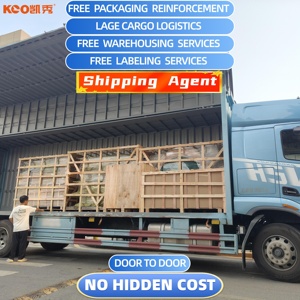
Full door-to-door logistics with real-time GPS tracking for large industrial assets, heavy machinery, and direct factory consignments.
Get a Quote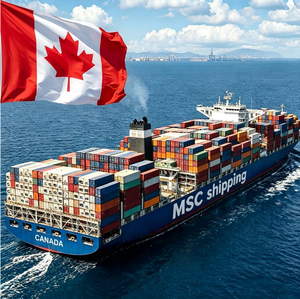
Guangzhou and Ningbo port dispatch utilizing Open Top (OT) and Flat Rack (FR) containers tailored for Melbourne commercial distributors.
Get a Quote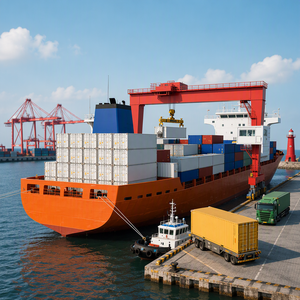
Optimized carrier ocean routes reducing landed costs for heavy industrial machinery, structural steel, and infrastructure components.
Get a Quote
Rapid air cargo forwarding for urgent high-value industrial replacements, project-critical parts, and heavy assemblies into Melbourne Airport (MEL).
Get a Quote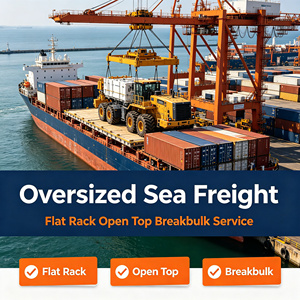
Engineered vessel chartering, marine surveys, lashing, and heavy lift vessel discharge at Port of Melbourne (Webb & Swanson Docks).
Get a Quote
Specialized transport packaging, weather-proofing, and custom protective rigging solutions for transit across international sea lanes.
Get a Quote
End-to-end management for pre-fabricated building modules, large commercial fixtures, and oversized industrial factory shipments.
Get a QuoteVictoria’s industrial and civil sectors are undergoing an unprecedented infrastructure transformation. From major urban road and rail expansions—such as the West Gate Tunnel and the Victorian Big Build—to renewable energy hubs in regional Victoria, the demand for high-capacity industrial machinery, structural steel modules, and specialized heavy-lift equipment has skyrocketed. Chinese original equipment manufacturers (OEMs) and heavy machinery factories in hubs like Jiangsu, Shandong, Guangdong, and Zhejiang have emerged as primary sourcing partners for Melbourne procurement managers, engineering contractors, and commercial distributors.
However, procuring and transporting out-of-gauge (OOG) and heavy-lift cargo from Chinese factory floors to job sites in Greater Melbourne (spanning Port Melbourne, Dandenong, Campbellfield, Laverton, and Geelong) involves multifaceted logistics and regulatory challenges. Shippers must navigate complex compliance regimes governed by the Australian Border Force (ABF), the Department of Agriculture, Fisheries and Forestry (DAFF) for biosecurity control, and the National Heavy Vehicle Regulator (NHVR) for VicRoads arterial road transport permits. Achieving a seamless supply chain requires combining factory-level quality verification in China with engineered ocean stowage and precise Australian port clearance.
Under the China-Australia Free Trade Agreement (ChAFTA), Australian importers can reduce preferential customs tariffs to 0% on vast categories of heavy machinery, mining equipment, and prefabricated steel assemblies (under HS Chapters 73, 84, and 87). Achieving this requires meticulous factory-issued Certificates of Origin (Form COO), precise tariff classification, and auditable non-manipulation certificates during transshipment.
When sourcing oversized industrial goods, structural components, or heavy machinery from Chinese manufacturers, Melbourne procurement executives must look beyond basic manufacturing unit costs. Ensuring structural integrity during ocean transport and compliance with Australian Standards (AS/NZS) requires strict quality assurance at origin:
Selecting the optimal maritime transport method directly influences freight safety, terminal handling costs at the Port of Melbourne (Swanson Dock vs. Webb Dock East), and total transit lead time. Below is an engineering comparison matrix for ocean freight selection:
| Transport Mode | Suitable Cargo Specs | Port Handling at Melbourne | Biosecurity Risk (DAFF) | Cost Efficiency Index |
|---|---|---|---|---|
| Flat Rack Container (FR) | Heavy width/height over-gauge machinery up to 45T | Standard container terminal crane (Swanson Dock) | Medium (Requires tarping & clean wash) | High (Utilizes liner service schedules) |
| Open Top Container (OT) | Over-height machinery, vertical pumps, overhead cranes | Top-lift container gantry cranes | Low-Medium (Sealed under heavy duty tarps) | High (Liner reliability) |
| Breakbulk Charter (BB) | Un-containerizable heavy lift >50T, long bridge beams | MIRRAT Webb Dock East / Mobile harbor cranes | High (Exposed deck/hold inspections) | Optimal for massive project volumes |
| RO-RO Vessel (Roll-on/Roll-off) | Wheeled excavators, motor graders, tracked cranes on trailers | Webb Dock East dedicated RO-RO ramps | Very High (Tread/undercarriage soil risk) | High safety (No crane lifting required) |
Different commercial sectors across Greater Melbourne and regional Victoria require tailored oversized logistics execution pathways:
Importing massive excavators, pilling rigs, and crushers destined for industrial hire fleets along Dandenong South and Campbellfield. Requires strict DAFF washing certification and VicRoads night-haulage permits.
Direct shipment of modular commercial building frames and heavy steel bridges via flat-rack clusters. Tailored for rapid erection along West Gate Tunnel and urban renewal zones.
Logistics coordination for oversized power transformers, wind turbine tower sections, and heavy battery storage units requiring specialized multi-axle hydraulic platform trailers.
Moving oversized freight into Melbourne requires thorough mastery of local regulatory steps before vessel arrival:
Australia maintains strict biosecurity measures globally. Heavy machinery manufactured in China must comply with the Brown Marmorated Stink Bug (BMSB) seasonal measures (typically operating between September 1 and April 30). Target high-risk goods manufactured in or shipped from China must undergo approved offshore treatment—such as heat treatment or sulfuryl fluoride fumigation—prior to boarding. Failure to present valid offshore treatment certificates results in immediate vessel re-export orders or expensive, delayed onshore deconsecration at Port Melbourne quarantine yards.
Transporting cargo exceeding standard Australian vehicle limits (2.5 meters wide, 4.3 meters high, or 19.0 meters combination length) onto Victorian arterial roads—such as the M1 CityLink, M80 Ring Road, or Monash Freeway—requires approval from the National Heavy Vehicle Regulator (NHVR):
With over four decades of operational excellence, Intertrans Express Inc. provides seamless global freight forwarding for oversized cargo, backed by full regulatory licensing and international carrier contracts:
Expert answers regarding customs clearance, port handling, biosecurity, and heavy transport across Victoria.
All imported new and used machinery arriving at Port of Melbourne terminals (Swanson Dock or Webb Dock) is flagged by Australian Customs for DAFF biosecurity evaluation. Inspections occur at accredited Approved Arrangement (AA) sites. Machinery must be completely clean of dirt, mud, seeds, and raw timber packaging. Having your factory in China conduct certified pre-shipment pressure washing dramatically reduces quarantine hold times and prevents costly re-cleaning fees in Melbourne.
To eliminate Australia’s standard 5% import tariff on oversized heavy machinery and prefabricated steel items, importers must submit a valid ChAFTA Certificate of Origin (Form COO) issued by authorized Chinese body agencies (such as CCPIT or China Customs). The product’s 8-digit HS Code on the certificate must exactly match the Australian Customs entry declaration, proving origin compliance.
Standard Class 1 Oversize Overmass (OSOM) route permits processed through the National Heavy Vehicle Regulator (NHVR) for movement within Greater Melbourne take between 5 to 10 working days. However, super-loads requiring electrical utility overhead lifts, bridge structural engineering approvals, or Victoria Police escorts require up to 4 to 6 weeks of advance route survey planning.
For single pieces of machinery or modular units weighing under 45 metric tonnes that fit within standard container ship dimensions, Flat Rack (FR) or Open Top (OT) containers on scheduled liner vessels are significantly more cost-effective than chartering a breakbulk vessel. Breakbulk chartering becomes economical primarily for project cargo volumes exceeding hundreds of cubic meters or single items over 50 metric tonnes that exceed container gantry crane limits.
Under DDP terms managed by Intertrans Express, the seller/forwarder assumes 100% responsibility for ocean freight, Australian customs entry, GST/duty payments, biosecurity clearances, port terminal handling charges (THC), and final heavy-lift trucking directly to your nominated site. This eliminates unexpected financial surcharges and administrative friction for Melbourne buyers.
During the active BMSB risk season (September 1 through April 30), DAFF classifies targeted manufactured goods (including heavy machinery, vehicles, and steel products) shipped from target countries as subject to mandatory offshore fumigation or heat treatment prior to vessel departure. Intertrans Express coordinates certified treatment at Chinese export ports (Ningbo, Shanghai, Shenzhen) to ensure immediate port release upon Melbourne entry.
Partner with an FMC-licensed NVOCC and CTPAT certified forwarder with over 40 years of heavy lift and out-of-gauge shipping experience. Get direct route quotes, biosecurity guidance, and tailored DDP logistics today.
Get a Quote