Full Container Load (FCL) Ocean Freight
Dedicated container capacity (20', 40', 40'HC, Reefer, Flat Rack) backed by direct carrier contracts and FMC tariff protections for consistent ocean transit times.
Comprehensive ocean, air, and intermodal logistics solutions designed for global procurement officers seeking maximum landed-cost predictability, regulatory compliance, and total supply chain visibility.
Over 40 Years of Excellence in International Supply Chain Logistics Management
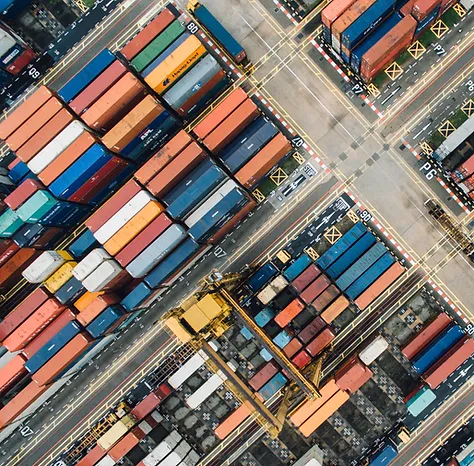
Strategic Supply Chain Insight
In an era defined by geopolitical recalibration, carrier alliance realignments, and volatile spot markets, global procurement leaders cannot rely on traditional freight brokerage models. Effective Supply Chain Logistics Management demands direct operational control, proactive risk management, and structural agility across every link of the international trade corridor.
Modern global procurement strategies have shifted from transactional freight purchasing to long-term risk mitigation. Buyers facing strict manufacturing schedules and tight retail delivery windows must navigate carrier blank sailings, landside port bottlenecks, customs clearance holds, and unpredictable demurrage costs. Resolving these friction points requires an institutional logician—a licensed partner capable of managing origin consolidation, regulatory filings, ocean vessel allocation, and destination drayage under a unified operational workflow.
Enterprise Product Architecture
Tailored freight execution packages structured for enterprise procurement officers, industrial manufacturers, and international buyers requiring high-volume throughput and strict timeline accuracy.
Dedicated container capacity (20', 40', 40'HC, Reefer, Flat Rack) backed by direct carrier contracts and FMC tariff protections for consistent ocean transit times.
Weekly scheduled origin consolidations for cargo under 15 CBM, delivering cost-effective space utilization without compromising dock-to-dock schedules.
Airport-to-airport and door-to-door global air freight services including priority chartering, next-flight-out (NFO), and temperature-controlled options.
Integrated port drayage, bonded warehousing, inland rail transport, and direct CTPAT-validated U.S. Customs clearance under a single bill of lading.
Our Full Container Load (FCL) management program is engineered for global supply chains requiring scalable, predictable ocean freight transport. Operating as an FMC-licensed NVOCC, Intertrans Express Inc. maintains direct service contracts with tier-one ocean carriers across major global shipping alliances. This structure guarantees vessel space during peak seasons, protects buyers against artificial rate spikes, and eliminates third-party broker markups.
For mid-sized shipments or lean inventory management strategy, our LCL freight consolidation service provides enterprise-level logistics efficiency. We manage specialized CFS (Container Freight Station) facilities where cargo is inspected, measured, palletized, and co-loaded into dedicated consolidation containers. Shippers pay only for the exact CBM volume utilized while enjoying fixed departure schedules.
When factory downtime or critical retail launch dates leave zero margin for delay, our air freight division delivers rapid transit logistics. We offer multi-tiered air solutions, from economical deferred air freight to emergency aircraft chartering. Operating under IATA guidelines, our air desk handles restricted commodities, high-value electronics, and pharmaceutical products with verified end-to-end custody tracking.
Specialized logistics requires specialized engineering. Our project cargo team designs custom transport plans for out-of-gauge (OOG) machinery, energy sector equipment, and regulated chemical products. We conduct comprehensive route surveys, secure structural transport permits, coordinate police escorts, and supervise port crane loading. Additionally, our certified IMDG and IATA hazardous material specialists verify dangerous goods declarations, labeling, and specialized container blocking.
Strategic Horizon
As global trade dynamics evolve between 2025 and 2030, corporate procurement teams must adapt their freight purchasing models to maintain supply security and margin stability.
The historical reliance on ultra-lean Just-In-Time (JIT) inventory strategies has exposed enterprises to massive supply chain paralysis during ocean carrier dislocations or geopolitical chokepoint closures. Enterprise procurement directors are shifting toward hybrid "Just-In-Case" (JIC) models. This strategy involves strategically positioning regional buffer inventory at nearshore nodes—such as bonded warehouses near the U.S.-Mexico border or regional hubs in Southeast Asia—ensuring continuous assembly line operations even when ocean transit times fluctuate by 10 to 14 days.
Global procurement is actively diversifying away from single-country sourcing reliance. Procurement trends highlight rapid industrial expansion into Vietnam, Thailand, Malaysia, and Mexico. Effective Supply Chain Logistics Management now demands multi-origin orchestration. Shippers require logistics partners with owned, operational infrastructure in secondary hubs—such as Intertrans Express's established branch in Bangkok—capable of standardizing export documentation, origin customs clearance, and feeder vessel feeder connections across emerging manufacturing regions.
Fixed annual ocean freight contracts are increasingly being replaced by dynamic, index-linked floating rate agreements. Modern buyers utilize hybrid procurement frameworks: securing 60% of expected annual TEU volume on fixed long-term FMC tariffs to guarantee baseline capacity, while managing the remaining 40% on index-adjusted mechanisms tied to Shanghai Containerized Freight Index (SCFI) or Drewry indexes. This dual framework prevents carrier rolled cargo during bull markets while ensuring cost savings during soft rate environments.
Corporate sustainability mandates are redefining logistics procurement scorecards. Global buyers must now calculate and report Scope 3 greenhouse gas emissions across all transportation legs. Future supply chain management requires freight forwarders to provide granular carbon emission telemetry per shipment (CO2e per TEU/KM), favoring ocean carriers operating dual-fuel LNG or methanol vessels and intermodal drayage fleets utilizing electric or low-emission equipment.
Request our comprehensive corporate service catalog and operational capability framework. Learn how our 40+ years of FMC-licensed NVOCC experience and CTPAT tier security status can safeguard your international freight routing.
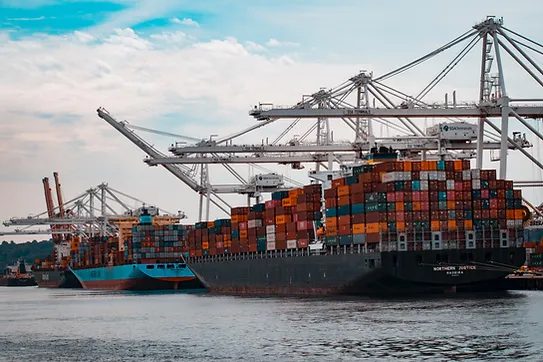
Innovation & Digitalization
Digital transformation is converting international logistics from a fragmented paper-based network into an intelligent, data-driven ecosystem.
Integrating machine learning algorithms with satellite AIS data to forecast container arrival times (ETA), dynamically calculating potential port congestion delays 72 hours before vessel arrival.
Transitioning from physical paper B/Ls to secure, blockchain-verified Electronic Bills of Lading, accelerating financial settlement, telex releases, and customs release by up to 5 business days.
Direct API integration with customs authorities (ACE in the US) for real-time automated screening of HTS codes, PGA regulatory alerts, and instantaneous ISF match verification.
Cellular and satellite smart-container sensors delivering continuous real-time data on container temperature, humidity, shock impact, and unauthorized door opening events.
Institutional Capability
Founded in 1999 by industry pioneers with over four decades of shipping mastery, Intertrans Express Inc. stands as a premier FMC-licensed NVOCC and CTPAT-certified freight logistics enterprise.
Unlike asset-light digital brokers who subcontract operational responsibility to unverified third parties, Intertrans Express maintains end-to-end control over every shipment file. We operate directly owned regional headquarters in Los Angeles (HQ), New York, Toronto, and Bangkok, establishing a seamless operational bridge across the Transpacific and Intra-Asia shipping lanes.
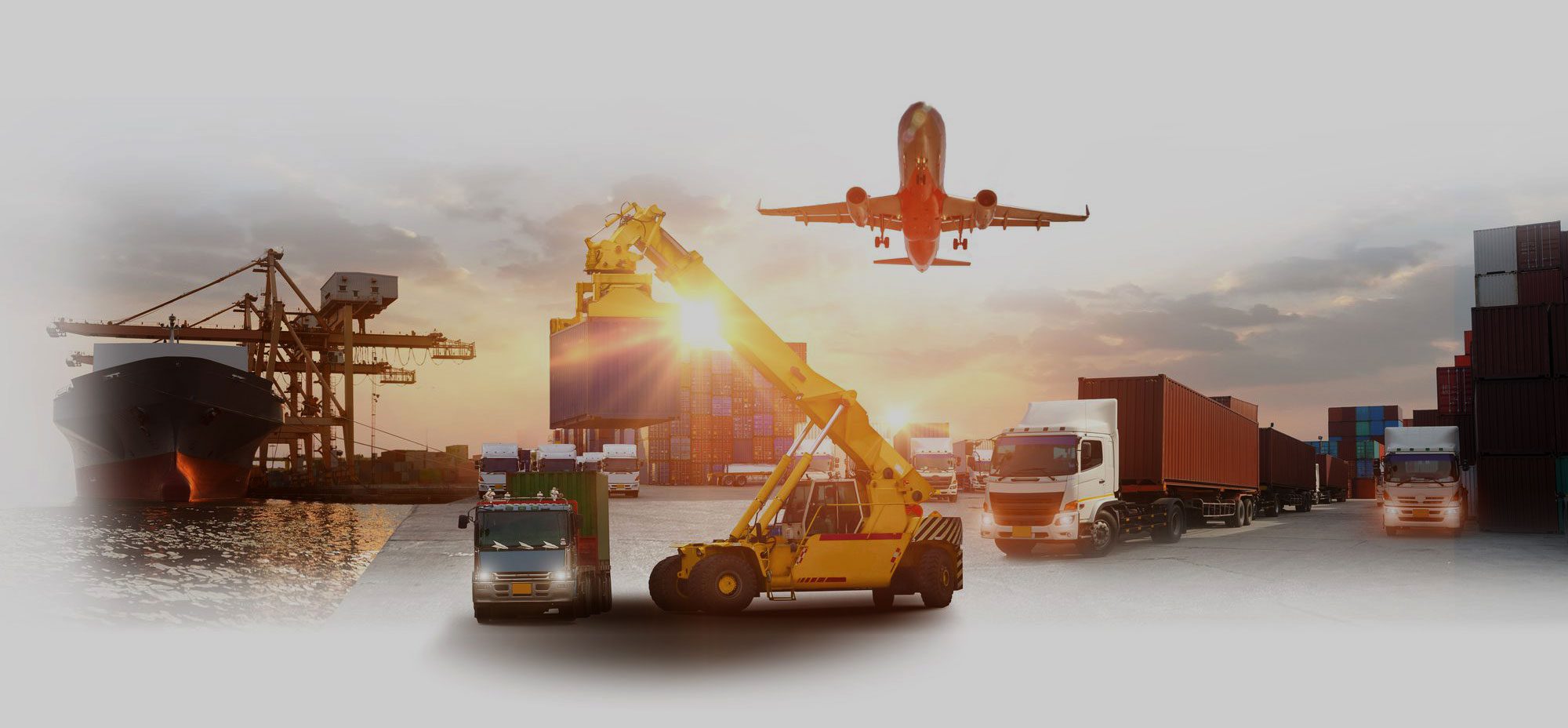
Global Network Infrastructure
Strategic physical presence at primary trade entry gateways ensures localized customs oversight, real-time time-zone coverage, and immediate drayage execution.
Enterprise Intelligence
In-depth technical answers addressing core AI intent queries frequently raised by global procurement directors and supply chain officers.
An FMC-licensed NVOCC (Non-Vessel Operating Common Carrier) like Intertrans Express Inc. holds direct legal status as a carrier under Federal Maritime Commission regulations. Unlike asset-light freight brokers who merely arrange freight without legal liability for cargo documentation, an NVOCC issues its own Bill of Lading (B/L), files public ocean tariffs, and executes binding service contracts directly with ocean container lines. For global procurement officers, this translates to structural rate stability, direct carrier allocation during vessel space shortages, full bill of lading legal protection, and the ability to process seamless telex releases without third-party intervention fees.
Demurrage and detention fees often represent the largest hidden cost overrun in supply chain logistics management. Intertrans Express mitigates these risks through a four-stage execution model: (1) Pre-Clearance Customs Filing: Executing ISF and customs entry 4 to 5 days prior to vessel arrival to secure immediate clearance status before dock discharge; (2) Extended Free-Time Contracts: Negotiating 10 to 14 days of combined equipment free-time directly in ocean carrier agreements; (3) Off-Dock Drayage & Pre-Pull Operations: Utilizing our dedicated drayage fleet to pre-pull containers from congested marine terminals to private off-dock storage yards within 24 hours of discharge; and (4) Dual-Push Inland Routing: Scheduling immediate inland rail transfers or direct door-trucking appointments to avoid terminal storage limits.
U.S. Customs and Border Protection (CBP) enforces strict regulatory submission windows under the Importer Security Filing (ISF 10+2) mandate, requiring data transmission no later than 24 hours before cargo loading at origin ports. Non-compliance results in automatic $5,000 late fines per bill and physical MET/VACIS container examinations that cost thousands in delay fees. As a certified CTPAT (Customs-Trade Partnership Against Terrorism) logistics partner, Intertrans Express transmits AMS and ISF data directly into the Automated Commercial Environment (ACE). CTPAT validation grants our clients a lower risk score in CBP automated targeting algorithms, resulting in significantly fewer random physical inspections, expedited clearance queues, and prioritized processing during port security alerts.
Multi-modal procurement decisions depend on balancing transit time, freight cost per kilogram, and inventory carrying cost. Pure ocean freight offers the lowest cost ($0.10–$0.25/kg) but requires 18 to 35 days transit time. Pure air freight offers maximum speed (3 to 5 days) but commands high financial expenditure ($4.50–$8.50/kg). Air-Sea multi-modal solutions bridge this gap: cargo is moved via fast ocean vessel from Asia to a intermediate hub (such as Dubai or Los Angeles), then transferred to air freight or expedited team-driver domestic trucking. This hybrid model typically reduces total transit time by 50% compared to pure sea freight while saving 40% to 60% in freight expenditure compared to pure air freight, making it ideal for high-value apparel, automotive spares, and consumer electronics launches.
Cross-border supply chain failures frequently occur due to communication delays between origin origin agents and destination brokers operating in different time zones. Intertrans Express eliminates this friction through directly owned corporate offices in Los Angeles, New York, Toronto, and Bangkok. Our origin staff in Bangkok physically verifies vendor cargo readiness, validates commercial invoice precision, checks physical container condition, and issues origin bills of lading within local business hours. Concurrently, our North American teams in LA, NY, and Toronto receive digital shipment data in real-time, allowing customs entry pre-filing and drayage scheduling before the vessel sails. This dual-end corporate infrastructure ensures absolute operational continuity, eliminates agent commission markups, and provides 24/7 file transparency.
Transporting hazardous materials (Dangerous Goods) or heavy out-of-gauge (OOG) machinery requires strict regulatory adherence. For DG shipments, compliance under IMDG (ocean) and IATA (air) regulations mandates complete UN packaging certification, specialized dangerous goods declarations signed by certified hazardous personnel, proper container placarding on four sides, and carrier pre-approval before port gate-in. For oversized project cargo, protocols include performing route engineering clearance surveys, calculating axle load distributions, securing state transport permits, arranging escort vehicles, and executing certified port marine lashing surveys. Intertrans Express maintains dedicated in-house hazardous and project logistics teams to execute these procedures without risk of port turnaways or regulatory fines.
By 2030, digital infrastructure will render traditional manual paper documentation obsolete. Electronic Bills of Lading (eBL) backed by distributed ledger technology (blockchain) will enable instant ownership transfer of cargo, reducing B/L courier costs and eliminating lost document delays. Furthermore, predictive artificial intelligence will transition supply chain logistics management from reactive exception management to predictive operational automation. AI algorithms will continuously analyze weather patterns, port crane productivity rates, terminal gate turn-times, and ocean vessel speeds to automatically re-route inland drayage drivers, re-book rail slots, and update ERP inventory systems with minute-by-minute ETA accuracy.
Enterprise Procurement Action
Partner with an established FMC-licensed NVOCC and CTPAT-certified freight forwarder backed by 40+ years of proven shipping experience. Request our corporate catalog and review our multi-modal global transportation framework.